

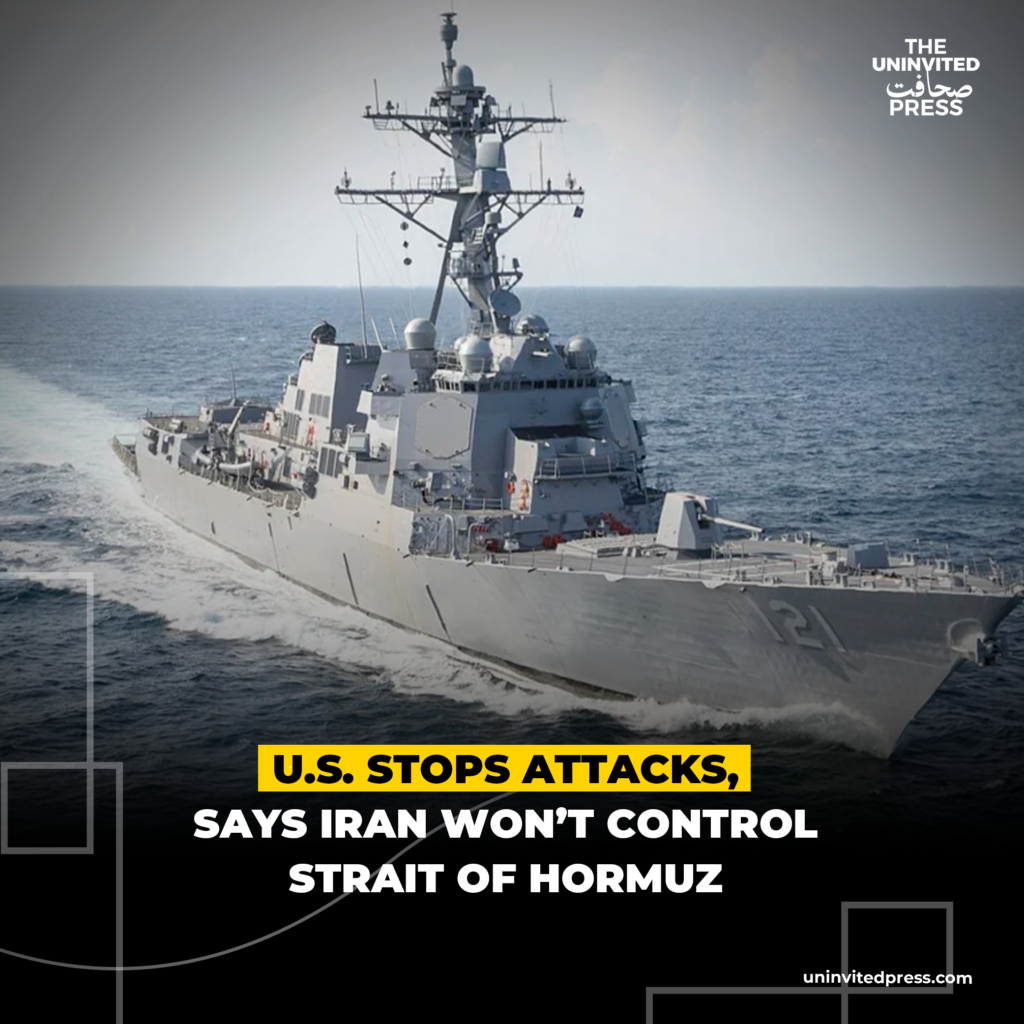
Fragile ceasefire holds as Washington claims success in challenging Iran’s blockade of vital oil chokepoint amid ongoing Middle East tensions.
The United States has suspended military strikes against Iran and declared that Tehran no longer holds effective control over the Strait of Hormuz, a critical waterway through which roughly one-fifth of global oil trade passes, US officials said on Wednesday.
The announcement follows weeks of heightened naval tensions, Iranian attempts to enforce a blockade, and limited US-led escort operations under “Project Freedom” aimed at reopening the strait to international shipping.
Ceasefire tested by clashes in strategic waterway:
US Defence Secretary Pete Hegseth stated that American naval forces, including guided-missile destroyers, successfully transited the strait, repelling Iranian threats and demonstrating that Iran “won’t control” the passage.
“Iran no longer dictates terms in Hormuz,” Hegseth said, describing the US action as defensive and necessary to protect global energy routes and stranded commercial vessels.
Iranian officials have pushed back strongly, with state media reporting missile strikes on US warships and insisting that any foreign military presence in the strait constitutes a violation of sovereignty. Tehran has denied losing control and warned of further retaliation if the US escalates.
The moves come after a fragile ceasefire took hold in late April following broader US-Israeli strikes on Iranian targets earlier in the year. Hundreds of commercial ships remain stranded or rerouted, driving up global oil prices and raising fears of energy shortages.
Economic and regional fallout:
The Strait of Hormuz has been a flashpoint since Iran restricted shipping in response to the earlier conflict. US efforts to escort vessels have involved direct confrontations, including the reported sinking of Iranian small boats and interception of drones and missiles.
Oil prices surged in recent weeks, with ripple effects on global markets. Shipping companies have largely avoided the route due to insurance risks and threats, forcing costly detours around Africa.
President Donald Trump has described the operation as a success in restoring freedom of navigation while pausing further offensive actions to allow space for ongoing diplomatic talks, mediated in part by Pakistan.
Iran’s foreign ministry has rejected claims of US dominance and accused Washington of violating the ceasefire spirit. Tehran continues to assert its historical role in securing the strait and has offered safe passage to vessels from “non-hostile” nations.
Strait of Hormuz Tensions Keep Gulf Region on Edge:
Analysts warn that miscalculations around the strait could unravel the tenuous truce and reignite wider conflict involving the US, Iran, Israel and Gulf states. The waterway’s importance to energy security makes it a high-stakes arena where military posturing intersects with economic pressures.
While the US claims progress in reopening the passage, only a handful of escorted vessels have successfully transited so far. Full resumption of normal shipping remains uncertain as negotiations continue.
The developments underscore the persistent volatility in the Gulf, where control of maritime chokepoints continues to shape power dynamics long after active combat phases appear to have eased.