

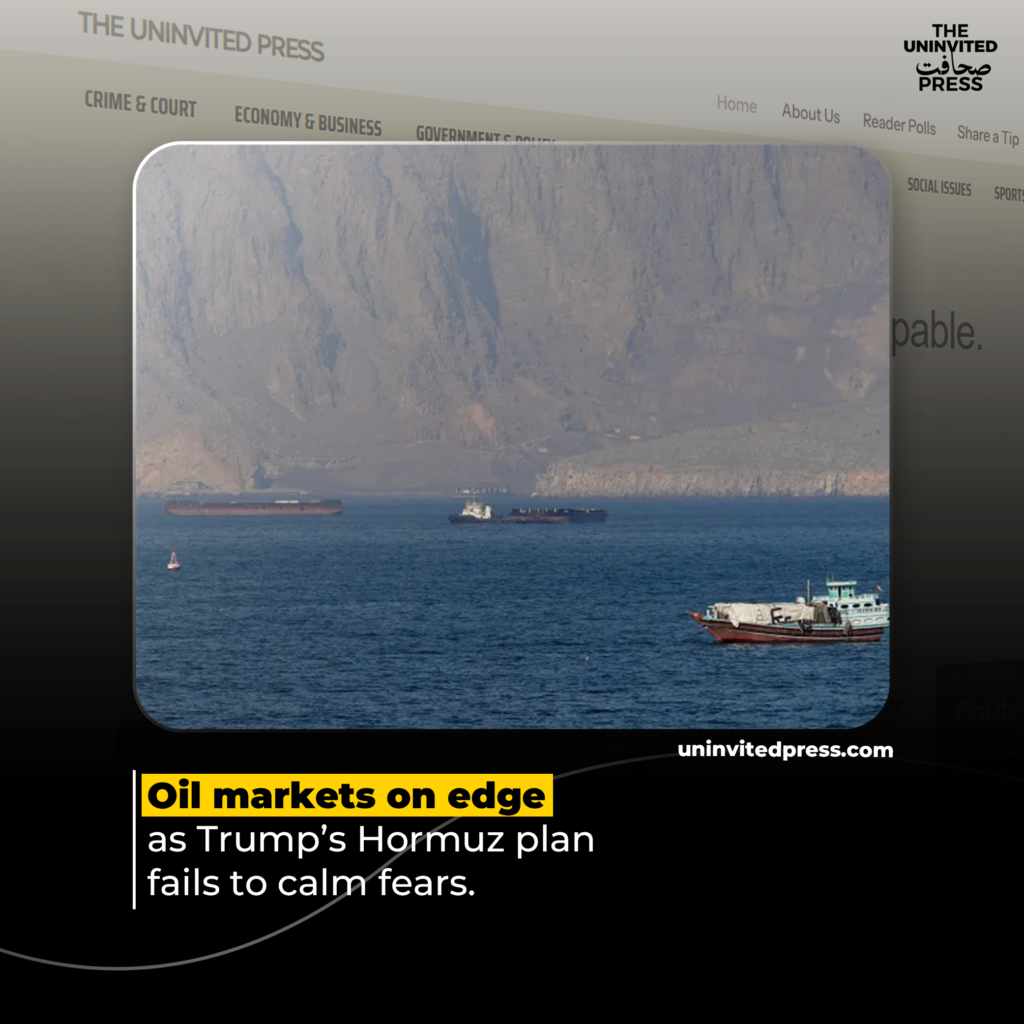
Crude prices remain volatile amid concerns that US proposal to secure the Strait of Hormuz could heighten tensions with Iran rather than stabilise energy routes.
Global oil markets stayed tense on Monday as investors digested details of a reported plan by Donald Trump to strengthen control over the Strait of Hormuz, with many analysts warning that the approach risks escalating conflict rather than reassuring markets.
Ongoing Market Volatility:
Brent crude futures hovered above $75 per barrel, while WTI remained sensitive to any headline concerning the Gulf. Despite Trump’s rhetoric suggesting a firm stance would safeguard shipping lanes, traders appeared unconvinced.
“Markets were hoping for clarity and de-escalation signals, but the Hormuz plan so far reads more like confrontation than diplomacy,” said Amrita Sen, chief oil analyst at Energy Aspects. “Any perceived threat to Iranian interests in the strait tends to push risk premiums higher.”
The plan, which reportedly includes enhanced naval presence and potential restrictions on Iranian activity, comes at a delicate time when fragile ceasefires and indirect talks have been attempting to lower temperatures in the region.
Oil Route at Risk Amid Renewed Tensions:
The Strait of Hormuz has long been a flashpoint. Iran has in the past threatened to block the waterway in response to military or economic pressure, a move that could send oil prices soaring above $100 per barrel and trigger global economic shockwaves.
Analysts point out that previous “maximum pressure” campaigns under Trump’s first term led to heightened incidents, including attacks on tankers and oil facilities in 2019. A return to similar policies could unravel recent diplomatic efforts involving Gulf states, China, and European mediators.
Gulf Cooperation Council countries, while supportive of secure shipping, are also wary of being caught in the crossfire. Saudi Arabia and the UAE, major oil exporters, have quietly urged restraint to protect fragile post-conflict stability.
Oil Price Volatility Concerns Grow Worldwide:
Higher and more volatile oil prices would hit importing nations in Asia and Europe particularly hard, while benefiting US shale producers in the short term-a dynamic that fits Trump’s “America First” energy agenda but raises concerns about global energy security.
Developing economies across the Global South, already struggling with inflation and debt, could face renewed pressure if energy costs spike.
“The Hormuz plan might play well domestically in the US, but for the rest of the world, especially the Middle East and Asia, it introduces unnecessary uncertainty,” said a senior Gulf-based energy diplomat who declined to be named.
As markets await concrete details and possible reactions from Tehran, the coming days are likely to remain volatile. Any escalation-whether rhetorical or military-could rapidly translate into higher pump prices worldwide.