

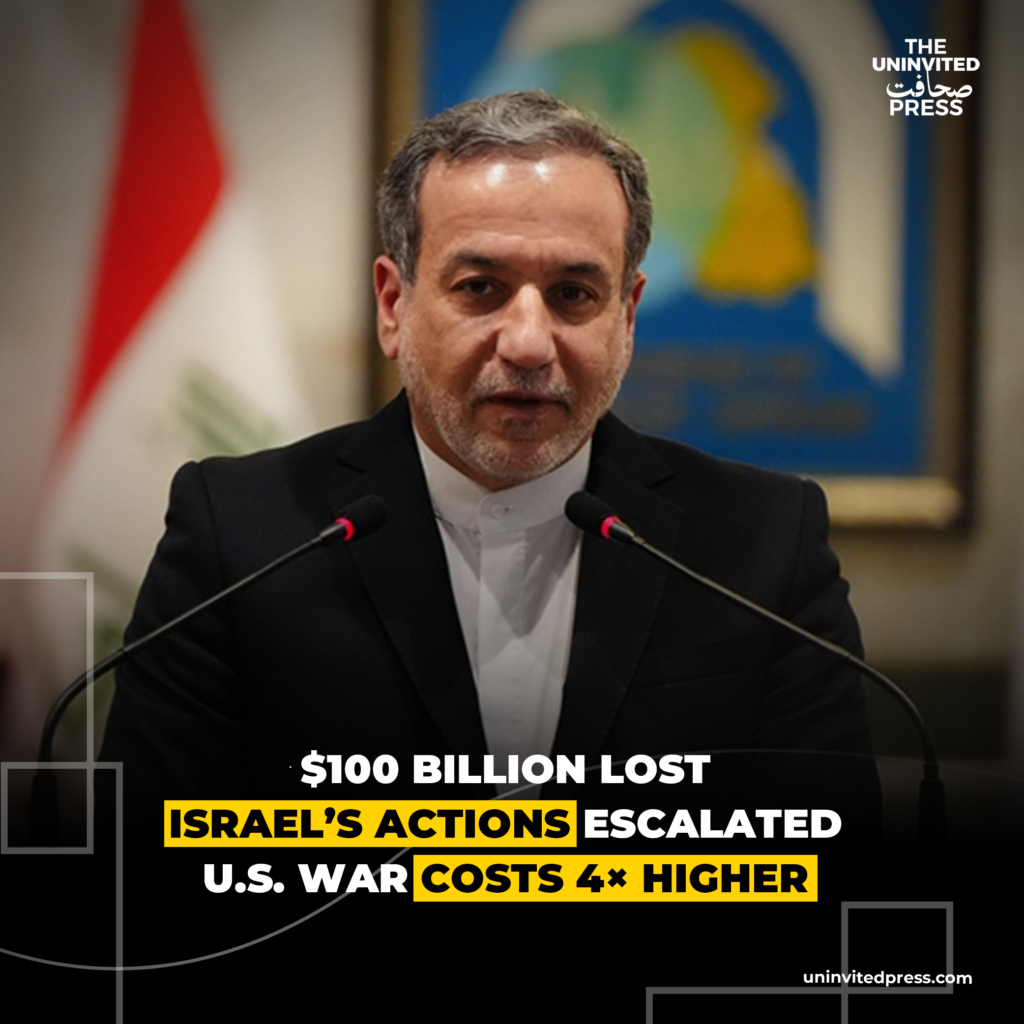
Abbas Araghchi claims American taxpayers have already footed a $100bn bill-four times the Pentagon’s official estimate-as regional fallout from Israel’s escalation continues.
Iran’s Foreign Minister Abbas Araghchi has sharply criticised the United States for understating the financial burden of its military involvement in the conflict with Iran, claiming the real cost to American taxpayers has reached $100 billion-quadruple the figure publicly acknowledged by the Pentagon.
In a statement posted on X (formerly Twitter), Araghchi accused Washington of deception, directly linking the spiralling expenses to Israeli Prime Minister Benjamin Netanyahu’s decision to escalate the confrontation.
“The Pentagon is lying,” Araghchi wrote. “Netanyahu’s gamble has directly cost America $100bn so far, four times what is claimed. Israel First always means America Last.”
Pentagon's lower estimate meets scepticism:
The Pentagon told US lawmakers this week that Operation Epic Fury-the US-led campaign involving strikes on Iranian targets alongside Israel-has cost approximately $25 billion to date, largely on munitions, deployments and operational expenses.
However, multiple US media reports and congressional sources suggest even this figure may be understated, with internal estimates reportedly closer to $40-50 billion when factoring in damaged bases, equipment losses and broader logistical costs.
Araghchi’s claim amplifies growing domestic criticism in the US over the war’s price tag, especially as it comes amid reports of rising energy prices, strained military stockpiles and questions about long-term commitments in the Middle East.
“Iran Blames Israel for Triggering Costly US Involvement in Conflict”:
Iranian officials have consistently framed the conflict as a direct result of Israeli aggression, arguing that Netanyahu’s push for confrontation dragged Washington into an unnecessary and costly quagmire.
The war erupted following Israeli strikes on Iranian nuclear and military sites earlier this year, prompting Iranian retaliation and subsequent US involvement to support its ally. A fragile ceasefire is currently holding, but tensions remain high with fears of renewed fighting.
Araghchi’s remarks echo a broader regional narrative that portrays US policy in the Middle East as overly beholden to Israeli interests at the expense of American strategic and economic priorities.
War Costs Debate:
Analysts note that the true economic toll extends beyond direct military spending. Indirect costs-including higher oil prices, disrupted global trade routes, increased defence budgets and potential long-term reconstruction-could push the burden on US households even higher, as Araghchi suggested.
The Iranian foreign minister claimed the monthly cost per American household is already around $500 and rising. As Washington grapples with domestic political divisions over the war, calls are growing for greater transparency on spending and a reassessment of unconditional support for Israel’s military campaigns.
Whether Araghchi’s $100 billion figure holds up under independent scrutiny remains to be seen, but it has undeniably intensified the debate over the real price of escalation in the volatile region.