

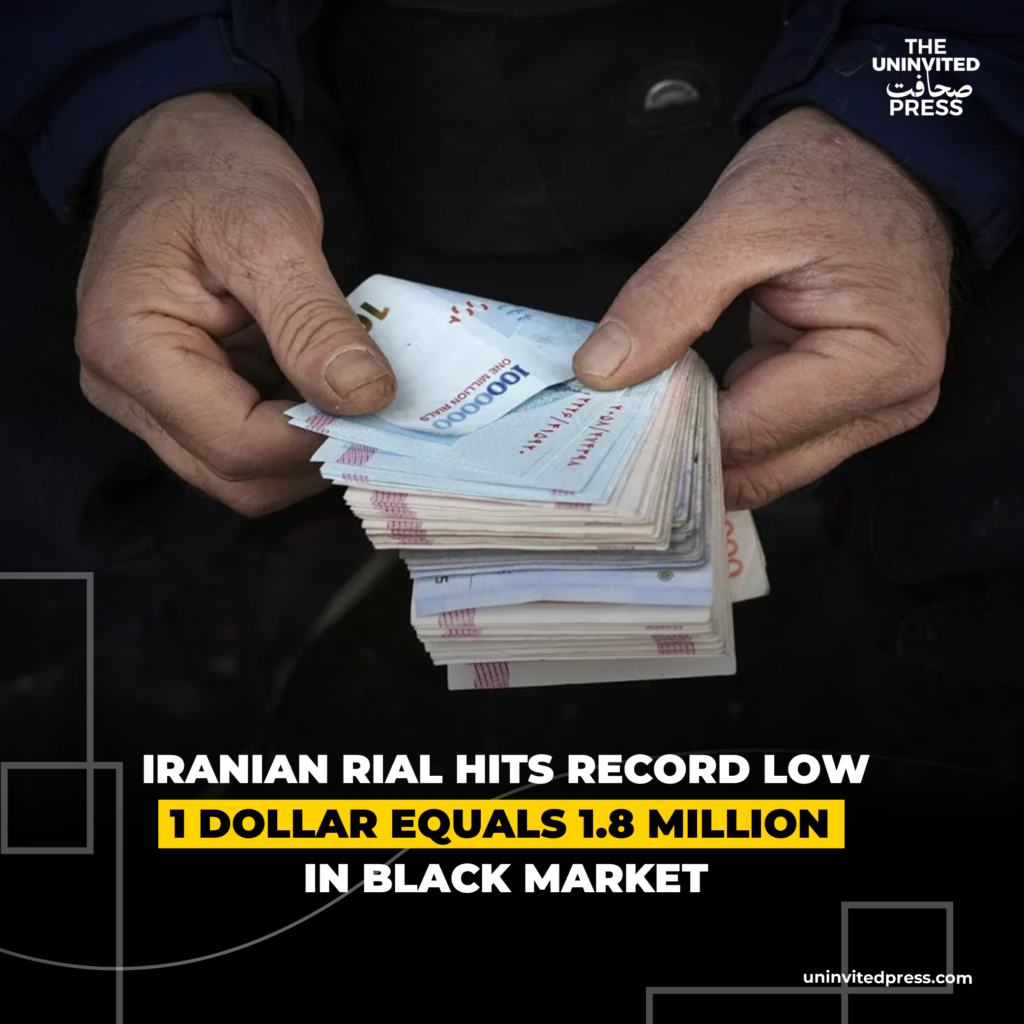
1 USD equals 1.8 million rials on black market amid US sanctions, naval blockade and fragile regional ceasefire.
Iran’s currency, the rial, has plummeted to a historic low, with one US dollar trading at around 1.8 million rials on the black market, exacerbating the economic hardships faced by ordinary Iranians already reeling from years of sanctions and recent military tensions.
The sharp depreciation, reported by currency tracking platforms and Iranian media, comes as a fragile ceasefire holds following clashes involving the US, Israel, and Iran, coupled with a US-led naval blockade that has severely restricted trade.
Currency Collapse Fuels Inflation Fears:
The rial began sliding sharply in recent days, hitting the record low on Wednesday as demand for hard currency surged. Experts say the fall is driven by a rush to buy dollars amid uncertainty, compounded by long-standing structural weaknesses in Iran’s economy.
“Many imported goods-from food and medicine to spare parts and raw materials-are priced in dollars,” said an economist in Tehran who declined to be named. “This will translate directly into higher prices for basic necessities, hitting the poorest hardest.”
Iran’s official exchange rate remains heavily controlled, but the black market rate is what most Iranians rely on for real-world transactions. The currency has lost the vast majority of its value over the past decade, reflecting the cumulative impact of US “maximum pressure” sanctions reimposed under previous and current administrations.
Rial Crisis Deepens Amid US-Iran Tensions:
The latest collapse coincides with heightened US-Iran tensions. President Donald Trump’s administration has maintained a hardline approach, including naval measures aimed at curbing Iranian oil exports and financial flows. Iranian officials have described the blockade as “economic warfare” designed to strangle the country’s economy.
Tehran has blamed the currency crisis on foreign aggression, while attempting to stabilise the market through interventions and promises of increased oil sales. However, analysts note that decades of isolation, mismanagement, and corruption have left the economy highly vulnerable.
“The rial’s fall is not just about the current crisis-it reflects deep structural problems,” said Dr. Karim Sadjadpour, a senior fellow at the Carnegie Endowment for International Peace. “Even with a ceasefire, restoring confidence will require significant diplomatic and economic shifts.”
The Iranian rial has fallen sharply, pushing up prices of essential goods and worsening economic pressure on households already facing inflation and unemployment. Despite central bank assurances of support, confidence remains weak as currency markets in Tehran show continued volatility. The ongoing decline has raised concerns about possible social unrest if economic conditions keep deteriorating.