

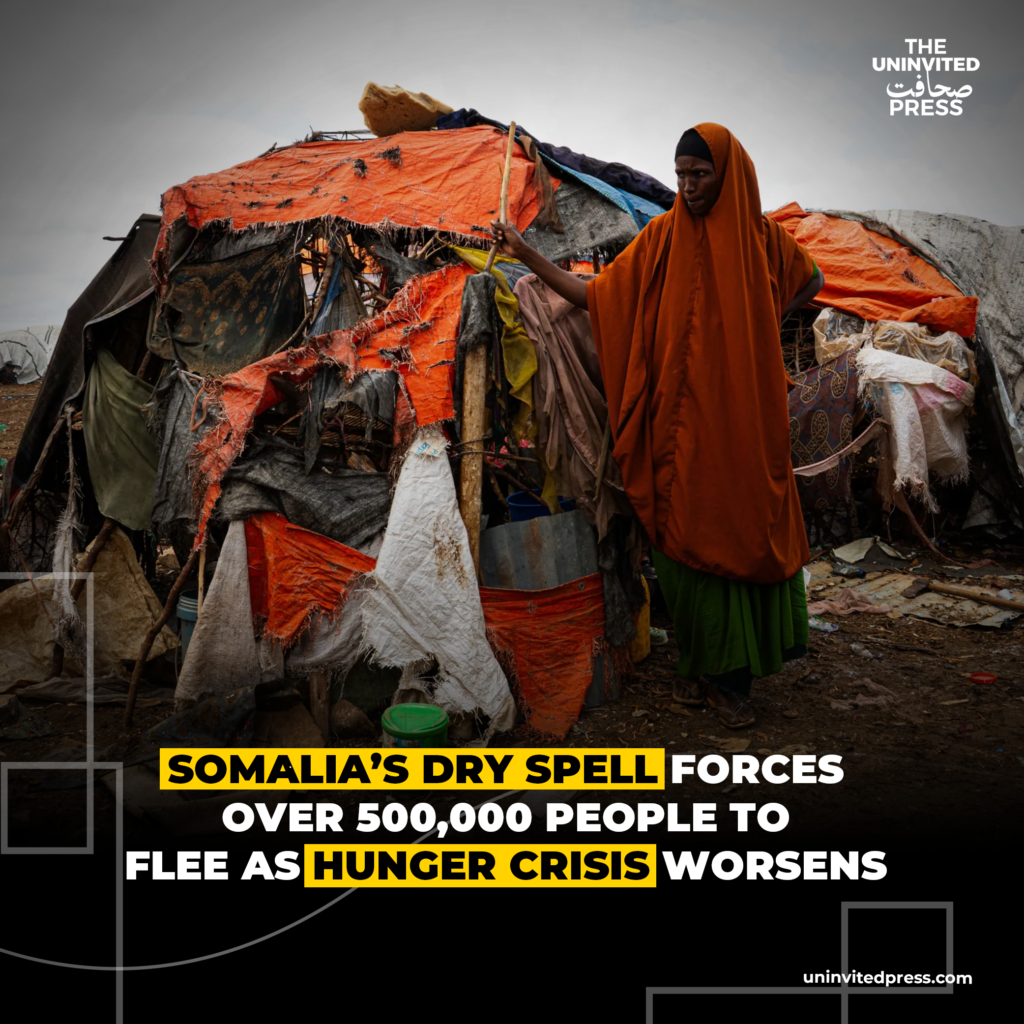
Drought-driven displacement surges across the Horn of Africa nation, compounding one of the world’s most protracted humanitarian emergencies amid funding shortfalls and climate shocks.
A severe dry spell has triggered mass displacement in Somalia, with more than 500,000 people forced from their homes so far this year-over 90 percent of them by drought-as the country grapples with deepening hunger that now threatens millions.
The latest wave of movement adds to an already staggering 3.3 million internally displaced Somalis, many of whom have been uprooted multiple times by recurring climate shocks, conflict and economic hardship.
Families in rural areas, particularly pastoralists and farmers, are abandoning parched lands after livestock deaths and failed crops, seeking refuge in overcrowded displacement camps where food, water and shelter are in desperately short supply.
Lives disrupted by severe drought:
In camps dotted across the country, scenes of makeshift shelters pieced together from tattered tarps and scavenged materials have become commonplace. Women and children, who make up the majority of the newly displaced, bear the brunt of the crisis.
One such camp resident, like many others, stands amid the harsh reality of survival-her meagre belongings exposed to the elements as she waits for aid that often arrives too late or not at all.
The International Organization for Migration (IOM) reported nearly 62,000 drought-related displacements in just the first months of 2026 across several districts, with projections warning of up to 125,000 more in the coming quarter even if rains arrive.
Rising food insecurity impacting millions:
According to the latest Integrated Food Security Phase Classification (IPC) analysis, 6.5 million Somalis — nearly one in three-are experiencing high levels of acute food insecurity (IPC Phase 3 or above), a near-doubling from last year. This includes around two million people in Emergency (Phase 4) conditions.
More than 1.8 million children under five are projected to suffer acute malnutrition this year, with nearly half a million facing severe cases that can be life-threatening without urgent treatment.
The crisis has been exacerbated by four consecutive seasons of poor or failed rains, soaring food prices, and reduced humanitarian funding, which has forced aid agencies to scale back operations.
Worsening Humanitarian Crisis in Somalia:
Somalia faces a deepening crisis driven by climate change, conflict, and long-term underdevelopment. Displaced families are increasingly vulnerable to disease, violence, and eviction.
Aid groups, including the UN Office for the Coordination of Humanitarian Affairs and International Organization for Migration, warn of rising starvation risks as funding remains insufficient. While the upcoming Gu rainy season may bring slight relief, urgent humanitarian support is needed to prevent further deterioration.