

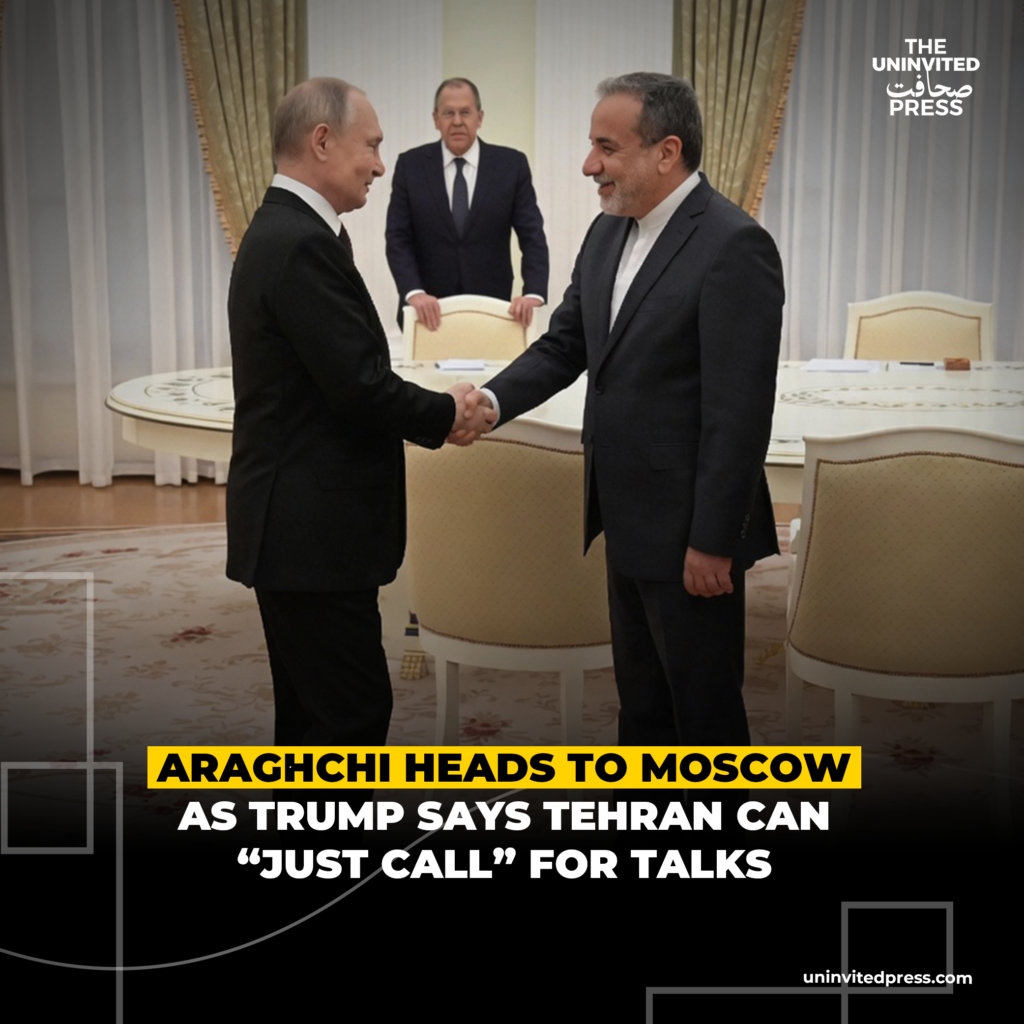
Tehran seeks Russian support as Trump dismisses need for direct negotiations and urges Iran to “just call”
Iranian Foreign Minister Abbas Araghchi has arrived in Russia for high-level talks with President Vladimir Putin, as Tehran intensifies diplomatic efforts to secure backing amid a fragile ceasefire and stalled negotiations with the United States.
The meeting comes as part of a whirlwind regional tour that included stops in Pakistan and Oman, where discussions focused heavily on reopening the Strait of Hormuz and broader de-escalation measures. Araghchi’s visit to Moscow underscores Iran’s strategy of rallying key allies like Russia to strengthen its negotiating position with Washington.
Diplomatic efforts continue amid fragile truce:
Iranian state media reported that Araghchi landed in St. Petersburg ahead of the meeting with Putin on Monday. The Iranian ambassador to Moscow said the discussions would cover the latest status of ceasefire negotiations, regional developments, and coordination between Tehran and Moscow.
The trip follows Iran’s recent proposal, conveyed through Pakistani intermediaries, offering to reopen the strategically vital Strait of Hormuz in exchange for de-escalation steps, while postponing more complex issues such as its nuclear programme.
Trump issues blunt warning to Tehran:
US President Donald Trump has downplayed the need for formal US envoy visits, stating that Iranian leaders can simply “call” if they want to talk. “If they want to talk, they can call us,” Trump said, adding that the US “holds all the cards” in the current standoff. The remarks came as hopes for direct high-level engagement appeared to fade after Trump scrapped planned envoy trips.
Iranian officials have expressed frustration with Washington’s approach, with Araghchi reportedly stressing that threats and pressure will not yield results. Tehran continues to insist on guarantees regarding its “red lines,” particularly on nuclear sovereignty and maritime security in the Gulf.
Russia’s role in regional diplomacy:
Russia, a long-standing ally of Iran and a key player in Middle East affairs, is expected to offer political support and possibly mediation channels. Putin and Araghchi have met previously, and Moscow has consistently criticised US and Israeli military actions in the region while calling for a political solution.
Analysts say Iran is seeking to leverage its partnerships with Russia and China to counterbalance US pressure and ensure any eventual agreement safeguards its core interests.
The ongoing diplomatic manoeuvres occur against the backdrop of a tense but holding ceasefire, with both sides accusing each other of violations and the global economy still feeling the effects of disruptions in the Strait of Hormuz.
As Araghchi concludes his Moscow visit, attention will turn to whether these back-channel efforts can bridge the wide gaps between Tehran and Washington or if the fragile truce risks unravelling amid mutual distrust.