

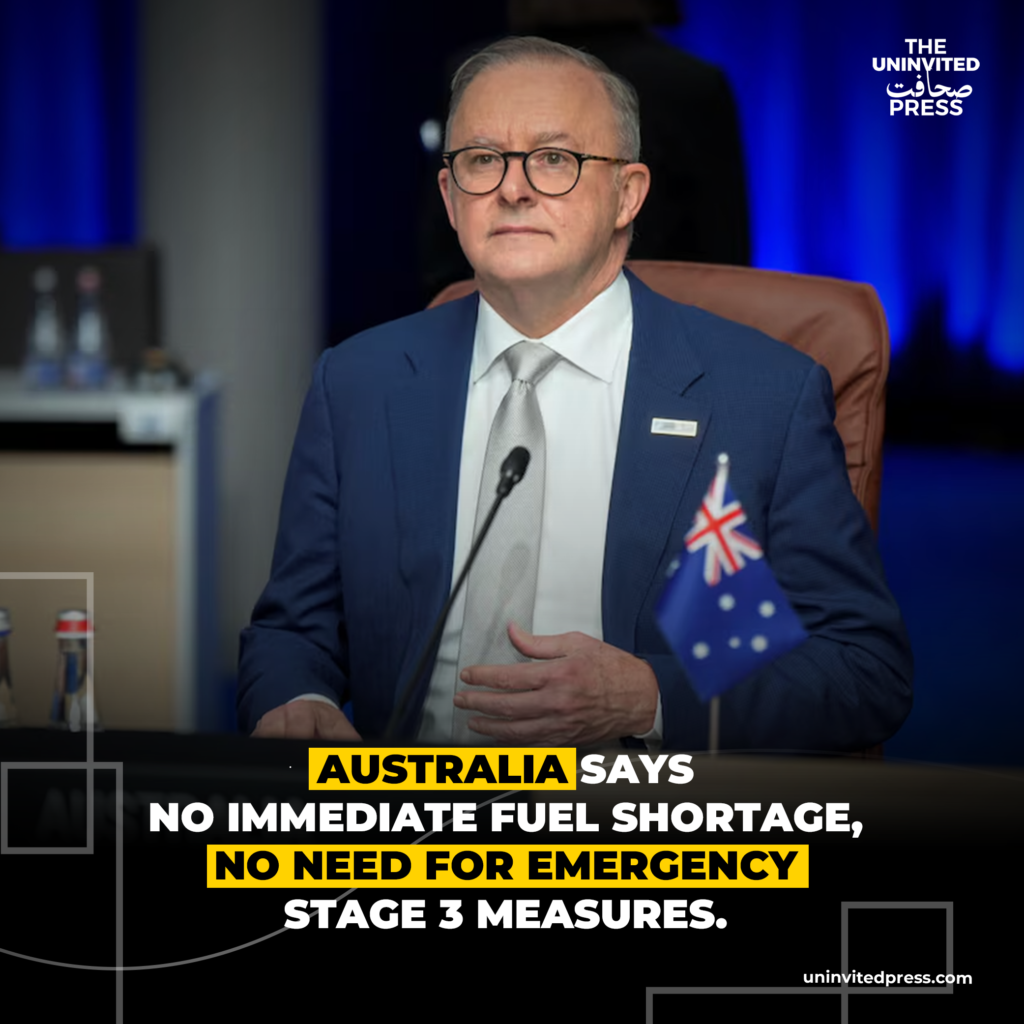
Prime Minister Anthony Albanese says reserves are holding and emergency Stage 3 rationing measures are not required, as government secures additional diesel cargoes amid disruptions in the Strait of Hormuz.
Australian Prime Minister Anthony Albanese has assured the public that there is no immediate fuel shortage and no need to activate emergency Stage 3 measures under the national fuel security plan, despite ongoing disruptions to global oil supplies caused by the Iran war and the effective closure of the Strait of Hormuz.
Speaking during a media update, Albanese emphasised that Australia’s fuel reserves remain sufficient in the short term, with recent figures showing around 46 days’ worth of petrol stocks, alongside steady levels of diesel and jet fuel. The government has also secured over 200 million litres of additional diesel from Asian suppliers, with cargoes expected to arrive in late May or early June.
Government downplays panic buying and regional outages:
Energy Minister Chris Bowen has repeatedly stated that while some service stations-particularly in regional and rural areas-have experienced temporary diesel shortages, the overall national supply picture is stable. The number of stations reporting outages has declined in recent days, though high demand driven by panic buying has exacerbated localised problems in states like New South Wales, Victoria and Queensland.
The government has implemented several measures to ease pressure, including halving fuel excise for three months, releasing portions of strategic reserves, and relaxing fuel quality standards to allow domestic refineries to increase output. A national Fuel Supply Taskforce has been meeting regularly to coordinate with industry and states.
The country imports approximately 80 percent of its refined fuels, much of which originates from refineries in Singapore, South Korea and Malaysia that rely on crude oil shipments through the Strait of Hormuz-a vital chokepoint now severely disrupted by the US-Iran conflict.
Gulf Tensions Disrupt Fuel Supply as Australia Braces for Energy Impact:
The escalation in the Gulf, including reported attacks on shipping and naval blockades, has sent shockwaves through international energy markets. Shipping traffic through the Strait of Hormuz has plummeted, leading to cancelled or delayed fuel deliveries to Australia and sharp price increases at the pump. Diesel prices have risen significantly, affecting farmers, truck operators and the broader supply chain for food and goods.
Some experts warn that if disruptions persist, Australia could face deeper challenges, potentially requiring tougher measures such as formal rationing under the Liquid Fuel Emergency Act-provisions the government has so far avoided triggering.
Opposition voices and industry groups, including the National Farmers’ Federation, have expressed concern over potential food price hikes and economic impacts on transport-dependent sectors, urging faster diversification of supply sources and long-term investment in energy security.
Albanese’s government has engaged in “fuel diplomacy,” including agreements with regional partners, to mitigate the crisis. Officials insist these efforts, combined with existing stockpiles, mean Australians can continue normal activities without immediate drastic restrictions.
PM Urges Calm Amid Fuel Concerns:
While ruling out Stage 3 emergency measures for now-which could involve fuel rationing and transaction limits-the prime minister has urged the public not to engage in panic buying, warning that such behaviour only worsens temporary shortages in certain areas.
The situation remains fluid, with the government monitoring developments in the Middle East closely. Further updates on supply timelines and potential additional measures are expected in coming weeks.