

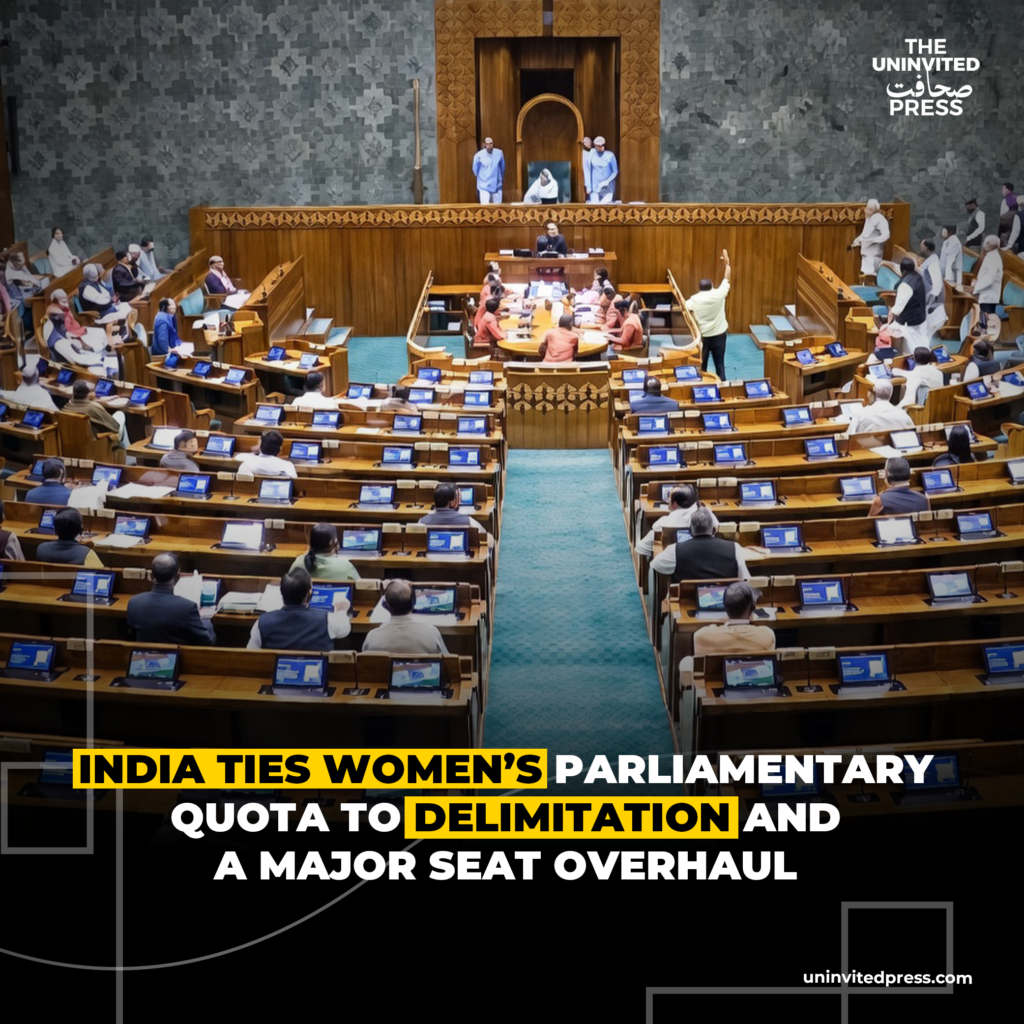
Government pushes to implement 33% women’s reservation by 2029 using 2011 census data, but critics accuse ruling party of using gender reform to redraw political map in favour of northern states.
The Indian government has introduced bills in Parliament linking the long-delayed 33% women’s reservation in the Lok Sabha and state assemblies to a major electoral overhaul and delimitation exercise. The proposal aims to operationalise the Women’s Reservation Act passed in 2023.
Under the Constitution (131st Amendment) Bill, 2026 and the Delimitation Bill, 2026, the Lok Sabha strength could increase from 543 to around 850 seats to ensure women’s quota without reducing existing representation. The government says the move will ensure fair representation based on population.
The bills were presented during a special parliamentary session on April 16, 2026, and could enable implementation of the women’s quota from the 2029 general elections if delimitation is completed in time.
North-South divide resurfaces:
The proposal has triggered strong political debate, with opposition parties accusing the BJP-led government of using women’s reservation as a cover for a politically driven delimitation exercise.
Southern states fear losing parliamentary influence due to slower population growth, while northern states are expected to gain more seats, potentially shifting power in Parliament.
Congress leader Mallikarjun Kharge and others have called it “delimitation disguised as women’s quota,” arguing it could disadvantage smaller and southern states.
Critics also say the use of older census data may fast-track the process ahead of 2029, while over 60 women’s organisations are demanding that the quota be implemented immediately on existing seats without linking it to delimitation.
Government defends ‘pragmatic’ approach:
Supporters of the bills, including BJP leaders, insist the linkage is practical. Expanding the total number of seats, they argue, allows the 33 percent women’s quota to be introduced without displacing current MPs and ensures “one person, one vote, one value” by aligning constituencies with population realities frozen since the last delimitation decades ago.
Parliamentary Affairs Minister Kiren Rijiju urged the opposition to support women’s empowerment rather than obstruct the process. The government has assured that elections until 2029 will continue on the basis of current seat numbers.
The reservation, once implemented, would apply by rotation to different constituencies, with sub-quotas for Scheduled Castes and Scheduled Tribes women within the women’s seats. It would also extend to state assemblies and union territories with legislatures.
Parliamentary Reform Plan Sparks Political Resistance:
If passed, the reforms would mark one of the biggest overhauls of India’s parliamentary system in decades, potentially making the Lok Sabha one of the largest lower houses in the world and raising concerns over cost, efficiency, and infrastructure.
Opposition parties, including the DMK and Trinamool Congress, warn the changes could deepen federal imbalance and disadvantage southern states, calling for safeguards for regions with lower population growth.
The three bills face strong resistance in Parliament and require a two-thirds majority to pass. The debate continues over whether the reforms will strengthen women’s representation or lead to political redrawing of power under the guise of gender equality.