

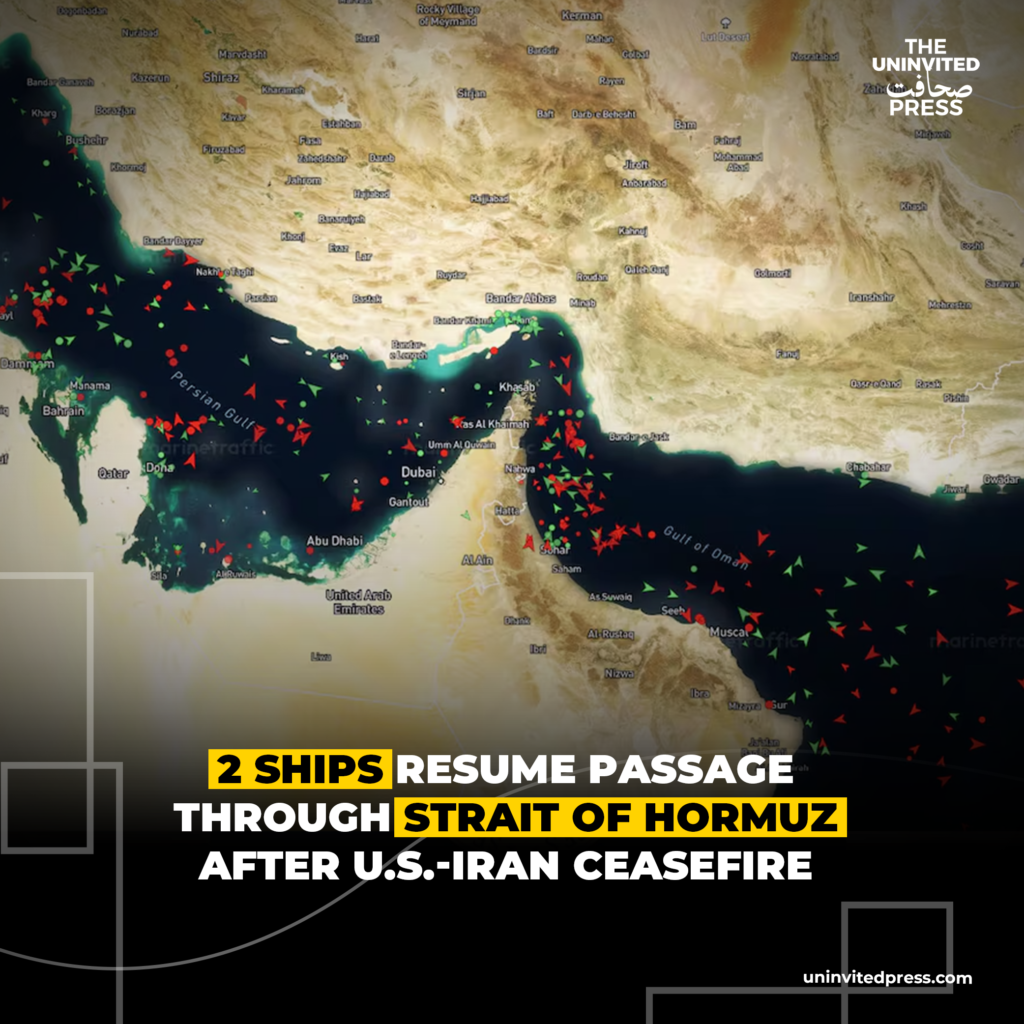
Only two vessels have crossed the vital waterway so far, raising questions over full reopening amid ongoing caution from ship operators and persistent regional tensions.
Just hours after a two-week ceasefire was announced between the United States and Iran, ship-tracking data showed the first limited movement through the Strait of Hormuz, a critical chokepoint for global energy supplies.
According to maritime monitoring services, two cargo ships-a Greek-owned bulk carrier and a Liberia-flagged vessel-transited the narrow strait on Wednesday, marking the initial signs of resumed passage following weeks of near-total disruption.
The ceasefire, agreed late on Tuesday, includes provisions for “safe passage” through the strait, which carries roughly one-fifth of the world’s oil and significant volumes of liquefied natural gas. Iran had effectively restricted traffic during the recent escalation, allowing only a handful of vessels deemed non-hostile.
Maritime Traffic Remains Limited Despite Ceasefire:
Hundreds of tankers and other vessels continue to linger in the Persian Gulf and surrounding areas, with operators exercising extreme caution over insurance risks, unclear rules of engagement, and the overall security situation.
Data from tracking platforms like MarineTraffic and Kpler indicate that daily transits have plummeted from an average of around 138-150 ships before the conflict to just a trickle in recent weeks. On Wednesday, only a small number of vessels were recorded crossing, with no immediate signs of large queues forming for passage.
Shipowners have cited the need for clearer guarantees on safety and coordination, particularly regarding Iranian naval oversight and potential fees or permissions required for transit. Some reports suggest Iranian authorities are still issuing warnings or requiring permits for certain vessels.
US President Donald Trump hailed the ceasefire as a step towards stability, tying it directly to the reopening of the strait and suggesting it could help ease global energy pressures. However, the White House has pushed back against Iranian claims that the waterway remains largely closed, describing reports of an “uptick” in traffic.
Iranian officials have maintained a more reserved stance, framing the truce as conditional and emphasising that broader issues-including Israeli military actions in Lebanon and disputes over Iran’s nuclear programme-must be addressed for any lasting arrangement.
Ceasefire Eases Markets, But Long-Term Stability Remains Uncertain:
The partial resumption has contributed to a modest easing in global oil prices, which had spiked during the height of the crisis. Yet analysts warn that a full recovery in shipping flows could take weeks or months, citing backlogs, potential infrastructure concerns, and the fragile nature of the two-week agreement.
The Strait of Hormuz, just 39 kilometres (21 nautical miles) at its narrowest point between Iran and Oman, has long been a flashpoint. Its disruption has highlighted the vulnerability of global energy routes and raised fears of wider economic fallout.
Regional observers note that while the ceasefire provides a temporary breathing space, underlying tensions persist. Continued strikes elsewhere in the region, including in Lebanon, have added to scepticism about the truce’s durability.
Diplomatic discussions are expected to continue, with mediation efforts reportedly involving countries such as Pakistan. In the coming days, close attention will be paid to whether limited ship movements develop into a steady flow or if the ceasefire begins to break down.