

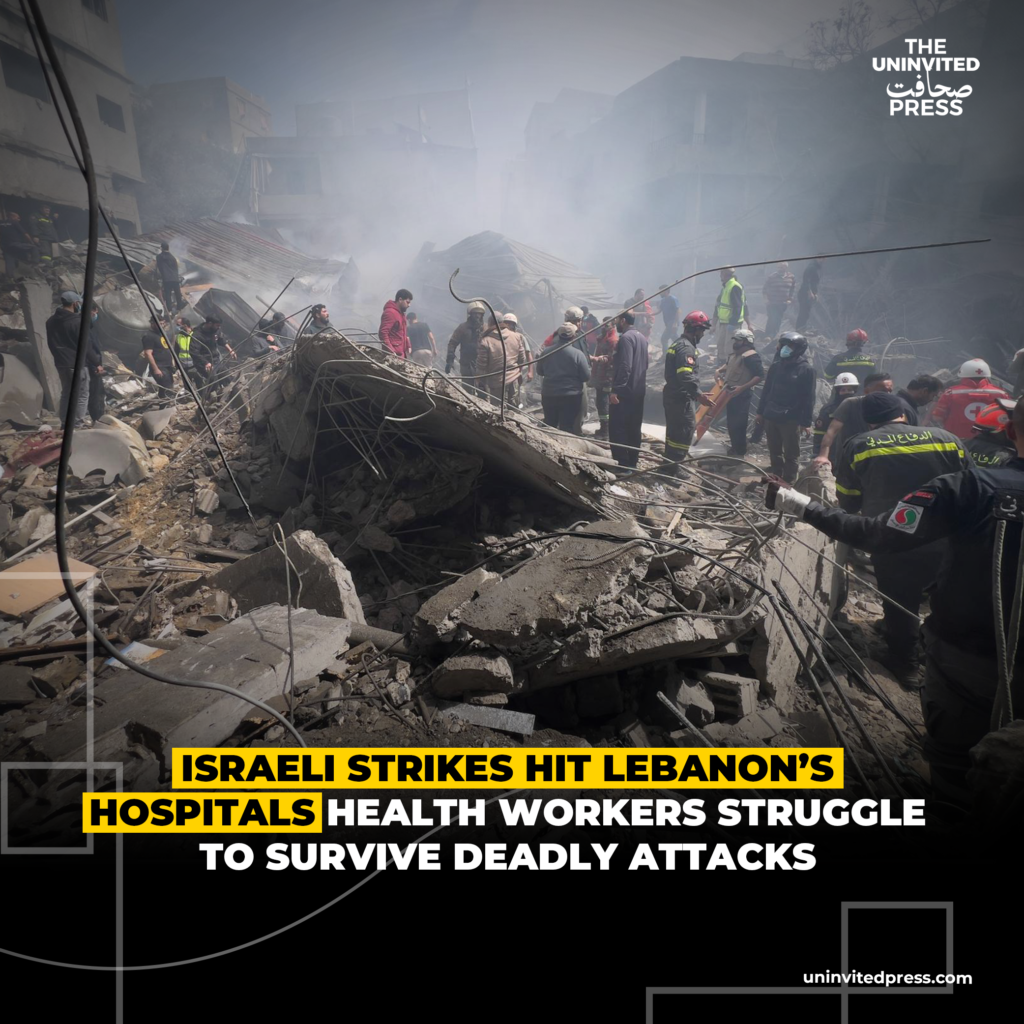
Lebanese officials accuse Israel of systematic attacks on medical facilities and personnel, echoing patterns seen in previous escalations.
Israeli airstrikes have repeatedly hit areas near hospitals in southern Lebanon, causing significant damage to medical infrastructure and injuring healthcare workers, as the ongoing conflict between Israel and Hezbollah continues to exact a heavy toll on civilian services.
In the latest incident over the weekend, strikes in the Tyre district damaged the Lebanese Italian Hospital after missiles hit nearby buildings. At least 11 people were wounded, including three civil defence paramedics, with shattered windows and collapsed ceilings reported inside the facility. Hospital management stated the institution would remain operational to provide essential care despite the destruction.
Lebanese health authorities report that Israeli strikes since early March have killed dozens of medical workers, destroyed or damaged numerous ambulances and health centres, and forced several hospitals to close or evacuate. The Ministry of Public Health has documented attacks on over 100 medical facilities and ambulances in southern Lebanon, with figures indicating at least 50 healthcare professionals killed and many more injured.
Healthcare system under significant strain:
Rescue teams and doctors described working under constant threat, with some facilities hit multiple times. Jabal Amel University Hospital in Tyre was reportedly struck for the fifth time in recent weeks. In one earlier attack in Burj Qalaouiyah, 12 medical staff were killed when a primary healthcare centre was destroyed.
The World Health Organization and rights groups, including Amnesty International, have expressed alarm over the pattern of strikes on ambulances, paramedics and hospitals. Critics describe it as a repeat of tactics observed in previous rounds of conflict, raising concerns about the protection of medical personnel under international humanitarian law. Israeli officials have at times alleged that certain facilities or vehicles were used for military purposes, claims denied by Lebanese authorities and some independent observers.
Lebanon’s already fragile healthcare system-weakened by years of economic crisis and prior wars-faces mounting pressure. Blanket evacuation orders in southern areas have further complicated access to care, displacing patients and limiting the movement of medical teams.
Impact on civilians:
The strikes form part of intensified Israeli military operations in southern Lebanon, which have also targeted residential neighbourhoods and infrastructure. Local residents and emergency responders continue to sift through rubble in search of survivors, often under the shadow of further potential attacks.
Humanitarian organisations have called for the immediate protection of healthcare facilities and personnel. The International Committee of the Red Cross and WHO have urged all parties to respect medical neutrality and avoid actions that endanger civilians and those providing life-saving services.
As the conflict enters another phase amid regional tensions, including parallel developments involving Iran, the situation in southern Lebanon remains volatile. Thousands have been displaced, and the death toll continues to rise, with civilians bearing the brunt of the violence.