

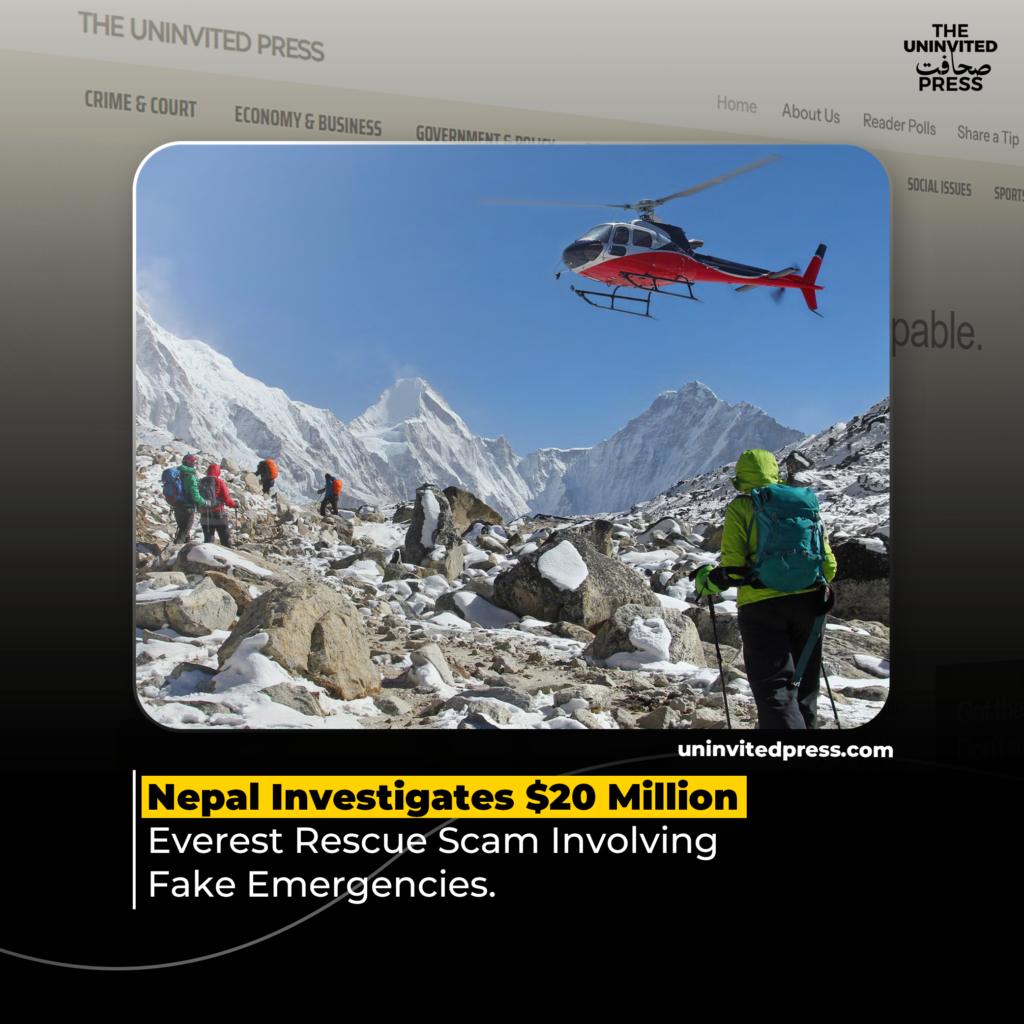
Police investigation uncovers network of trekking agencies, helicopter operators and hospitals accused of staging evacuations to defraud international insurers.
Nepali authorities have filed organised crime and fraud charges against 32 individuals in what police describe as a sophisticated multimillion-dollar insurance scam targeting trekkers and climbers in the Himalayas, including routes leading to Mount Everest.
The Central Investigation Bureau (CIB) of Nepal Police alleges that a network involving trekking guides, rescue companies, helicopter operators and private hospitals systematically staged or induced medical emergencies to trigger unnecessary and costly helicopter evacuations, siphoning nearly $20 million from international travel insurance companies between 2022 and 2025.
According to investigators, the scheme exploited the high cost of emergency helicopter rescues in remote mountain areas, where rapid evacuations can cost tens of thousands of dollars per flight-amounts typically covered by comprehensive travel insurance policies popular among Western tourists.
Poisoned trekkers and fictitious rescue flights:
Police claim some guides laced tourists’ food with substances such as baking soda to induce symptoms mimicking altitude sickness, including severe nausea, vomiting and gastric distress. In other cases, trekkers were allegedly pressured or persuaded to feign illness after completing demanding sections of treks, such as the Everest Base Camp route, to avoid walking back down.
Once symptoms appeared or were claimed, rescue operators would arrange helicopter evacuations, often carrying multiple passengers while billing insurers for individual emergency flights. Medical records were allegedly falsified or inflated in collusion with certain Kathmandu hospitals, which then submitted claims for treatment that either never occurred or was exaggerated.
The Kathmandu Post, citing police records, reported that one company, Mountain Rescue Service, conducted 171 suspicious rescues out of 1,248 charter flights, allegedly netting around $10.3 million. Nepal Charter Service was linked to 75 fake rescues claiming about $8.2 million, while Everest Experience and Assistance faced accusations involving 71 cases and over $11 million in claims.
Hospitals including Era International Hospital reportedly received millions in linked deposits from these operations.
Legal charges and arrests:
In March 2026, the district attorney’s office filed cases in Kathmandu District Court charging the 32 individuals with offences including organised crime, fraud and harming Nepal’s international reputation. Nine people have been arrested so far, with others reportedly absconding.
Those charged include executives and staff from trekking and rescue firms, helicopter companies such as Mountain Helicopters, Manang Air (now Basecamp Helicopters) and Altitude Air, as well as physicians and administrators from involved hospitals.
The investigation, which intensified after initial arrests in January 2026, built on earlier reports of irregularities dating back to 2018. Police say the scam not only defrauded insurers but also endangered lives by normalising unnecessary flights in hazardous high-altitude conditions and potentially exposing tourists to deliberately induced illness.
Impact on Nepal’s mountaineering reputation:
The scandal has emerged just as Nepal opened its spring 2026 climbing season on Mount Everest, casting a shadow over an industry that generates significant revenue from tourism. Thousands of foreign trekkers and climbers visit the Himalayas each year, drawn by the world’s highest peaks and the promise of adventure.
Authorities have introduced new rules requiring formal reporting of rescues in an effort to curb future fraud. However, critics argue that deeper systemic issues-including weak oversight of the booming trekking sector and reliance on private operators for rescues-enabled the racket to flourish.
Nepal Police described the operation as “organised and systematic,” involving multiple layers of the tourism and rescue ecosystem. A police spokesperson told local media the activities had damaged Nepal’s national prestige.
International insurers have not publicly commented in detail, but such large-scale fraud is likely to prompt tighter scrutiny of claims from Himalayan expeditions and higher premiums for travellers to Nepal.