

Local councils in Kulhudhuffushi and Addu City partner with UNODC and national authorities to build resilience, early warning systems and social cohesion amid evolving regional threats.
Cities across the Maldives are emerging as frontrunners in grassroots initiatives to counter violent extremism, with local authorities, community leaders and civil society working together to strengthen social cohesion and early intervention mechanisms.
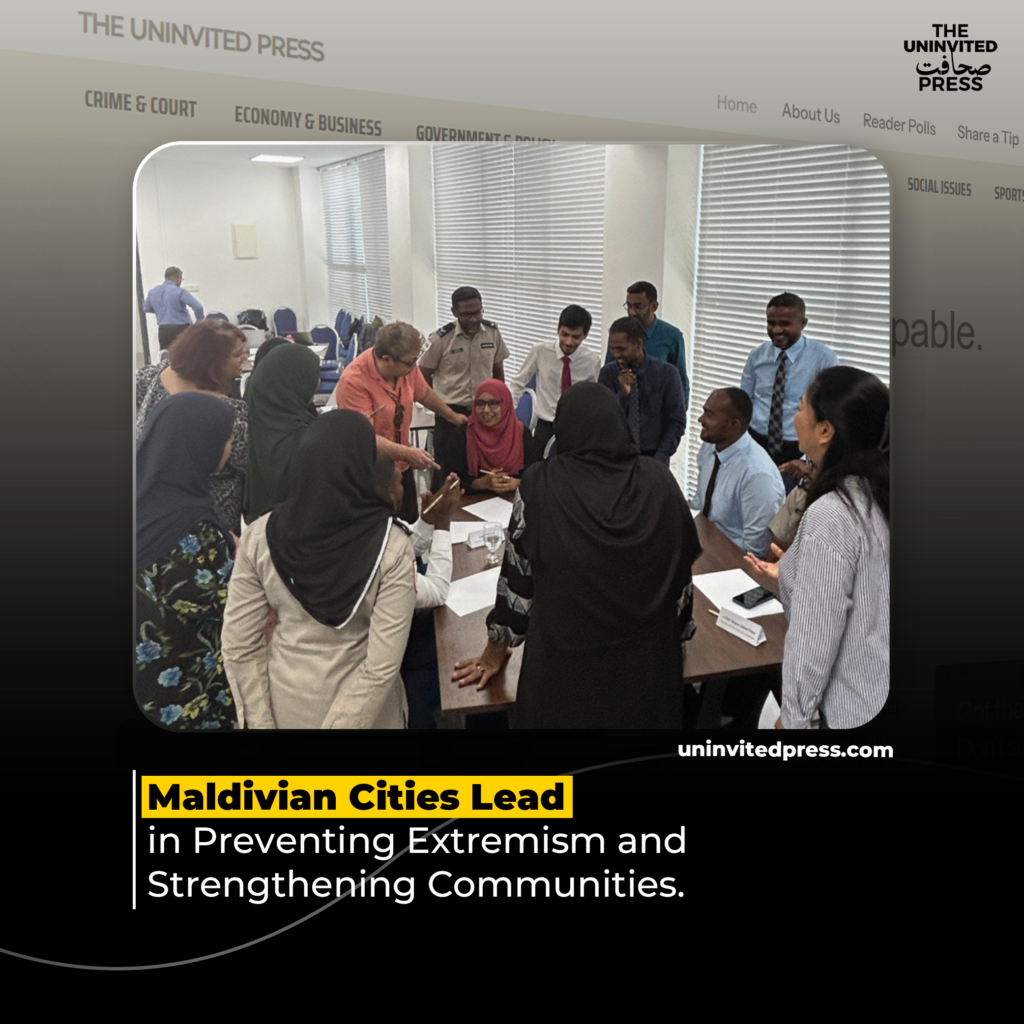
In February 2026, the United Nations Office on Drugs and Crime (UNODC), in collaboration with the Maldives National Counter Terrorism Centre (NCTC), held workshops in Kulhudhuffushi and Addu cities focused on community preparedness, early warning and resilience against violent extremism.
The sessions brought together local government officials, police, civil society representatives, educators and community members-including a significant number of women-to define roles in building locally led prevention frameworks.
Participants in Kulhudhuffushi produced a draft Terms of Reference for a proposed Community Resilience Group, outlining structures for community education, case management, social cohesion and monitoring mechanisms. The initiative builds on earlier capacity-building efforts and aims to address grievances before they escalate into radicalisation.
Maldivian Cities Promote Community-Led Extremism Prevention Efforts:
Several Maldivian cities, including Malé, Addu City and Fuvahmulah, are active members of the global Strong Cities Network, which supports municipal-level strategies to prevent hate, polarisation and extremism.
Addu City Mayor Ali Nizar has highlighted the importance of local governments complementing national efforts, particularly as the Maldives continues its decentralisation process. City leaders have participated in international forums to share experiences and develop inclusive programmes targeting youth, education and employment opportunities as protective factors against recruitment.
Kulhudhuffushi City Council Secretary-General Abdulla Adam emphasised that “prevention has to be grown from within a community,” reflecting a shift toward bottom-up approaches that empower island communities rather than relying solely on top-down security measures.
Maldives Strengthens Community-Based Approach to Counter Extremism:
These city-level efforts align with the Maldives’ National Action Plan on Preventing and Countering Violent Extremism. UNODC and other partners, including the Government of Japan, have supported training programmes that promote age- and gender-sensitive strategies, trust-building between law enforcement and communities, and reintegration initiatives.
The Maldives has faced challenges from extremist ideologies in the past, including recruitment linked to foreign conflicts and small but active cells. However, officials and partners stress that community-led prevention, combined with improved coordination between national and local authorities, offers a more sustainable path to resilience.
Analysts note that small island nations like the Maldives are particularly vulnerable to subtle shifts in radicalisation dynamics, making localised early warning systems and social programmes essential.
As workshops continue and Community Resilience Groups take shape, Maldivian cities are positioning themselves as models for community-driven prevention in South Asia and beyond.
Rights groups and international observers have welcomed the inclusive approach, which brings together diverse stakeholders to address underlying drivers such as youth disenfranchisement and social fragmentation.