

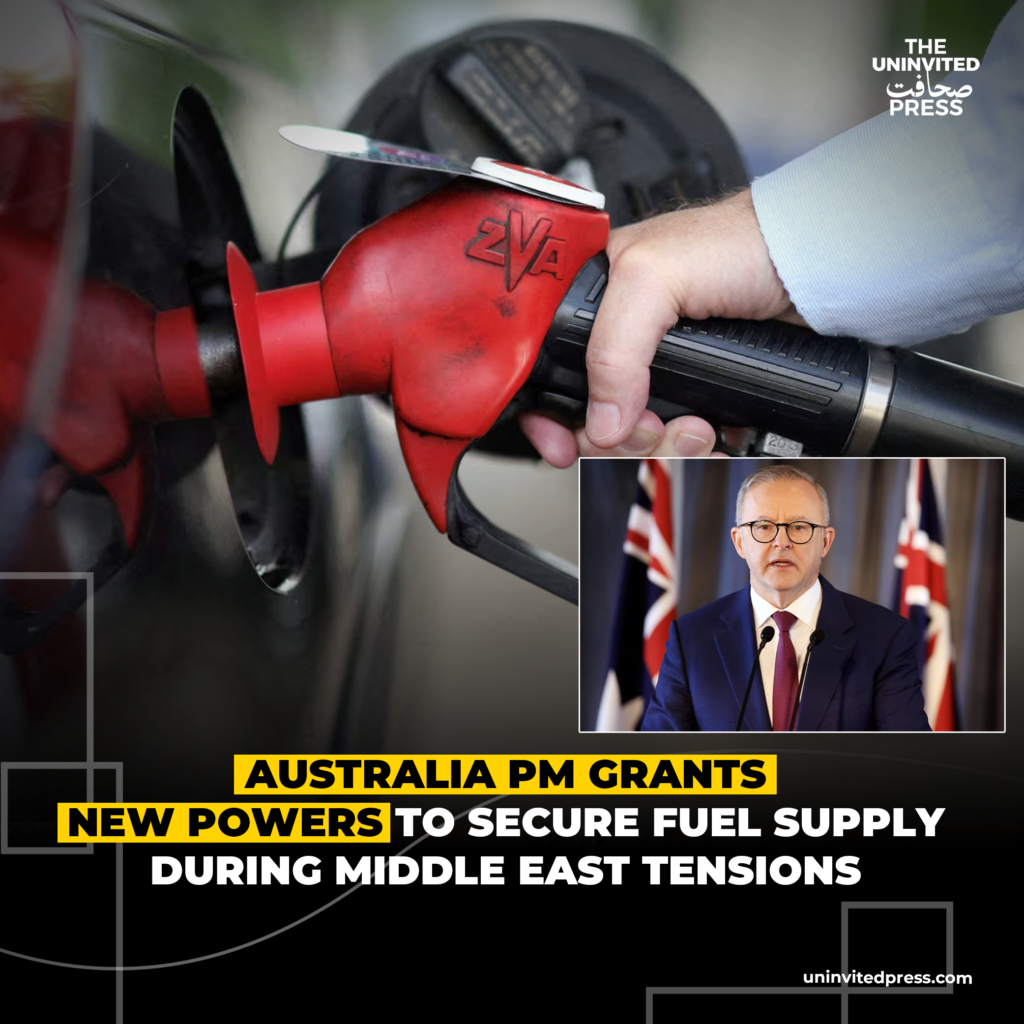
Albanese government to underwrite extra fuel imports as Iran conflict disrupts global oil flows and drives up prices at the pump.
Australian Prime Minister Anthony Albanese announced on Saturday new emergency powers allowing the government to underwrite the purchase of additional fuel shipments, aiming to bolster the country’s fuel reserves as the ongoing war between the US, Israel and Iran sends shockwaves through global energy markets.
The measures, to be introduced as amendments to export finance laws in parliament on Monday, will enable Export Finance Australia-the government’s export credit agency-to take on financial risks for private importers securing extra cargoes of petrol, diesel, crude oil and related essentials such as fertiliser.
Speaking at a press conference, Albanese said the government was acting to ensure Australia remains “over-prepared” for potential longer-term disruptions caused by the month-long conflict in the Middle East.
“Today, I announce that Australia will establish new powers to get fuel here for Australians,” he stated. “New fuel security powers will enable the government to underwrite the purchase of fuel by the private sector.”
Fuel shortages intensify as Strait of Hormuz tensions grow:
Australia imports around 90 percent of its refined fuel, much of it from Asian refineries that process Middle Eastern crude. With roughly 25 percent of global oil supply historically routed through the Strait of Hormuz now facing severe disruption due to the Iran war, international oil prices have surged, leading to record petrol and diesel prices across Australia and patchy shortages, especially in regional areas.
The government has so far resisted invoking the rarely used Liquid Fuel Emergency Act, which would grant far broader powers including potential rationing. Instead, it is opting for targeted financial support to encourage private companies to bring in extra shipments that would otherwise be too costly or risky amid market uncertainty.
Energy Minister Chris Bowen and Trade Minister Don Farrell joined the announcement, stressing that the powers would only be used where private suppliers could not secure additional supply on commercial terms alone.
The move follows a series of National Cabinet meetings focused on fuel security and supply chain resilience. Earlier this month, the government appointed a Fuel Supply Taskforce Coordinator to improve coordination between federal and state governments.
Authorities urge calm amid reports of panic buying:
Albanese urged Australians not to hoard fuel, describing panic buying as “not the Australian way.” He assured the public that near-term supplies remain secure but warned that a prolonged conflict could create greater challenges beyond April.
The announcement comes as households and businesses face mounting pressure from higher transport and logistics costs, which threaten to feed into broader inflation and disrupt freight, agriculture and emergency services that rely heavily on diesel.
Critics have pointed to Australia’s long-standing vulnerability due to the closure of its last domestic oil refineries in recent years and relatively low strategic fuel reserves compared to some other developed nations.
Broader effects across the region:
The Australian government’s intervention reflects growing concern among energy-import dependent nations as the Middle East conflict-which began in late February 2026-continues to escalate. Iranian missile strikes and disruptions in key shipping lanes have already affected global energy flows, with ripple effects felt far beyond the region.
While the Albanese administration insists the new powers are precautionary and not a sign of imminent crisis, analysts say they mark an unprecedented level of direct government involvement in fuel procurement in modern Australian history.
Parliament is expected to fast-track the legislative changes next week. The government has not ruled out further measures, including potential work-from-home directives or other demand-side strategies, if the situation deteriorates.