

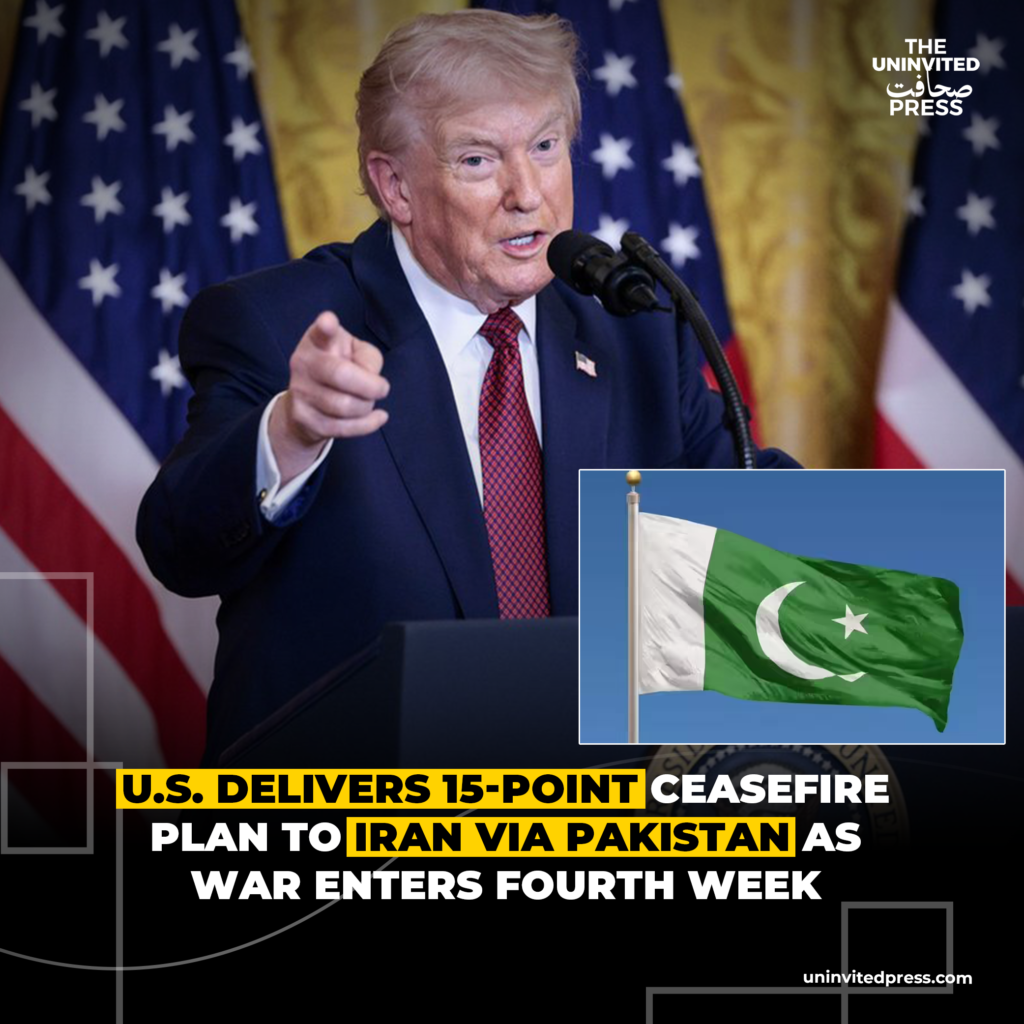
The United States has sent a 15‑point ceasefire proposal to Iran via Pakistan in a bid to end the ongoing conflict, outlining terms on nuclear limits, sanctions relief and regional security, even as Tehran publicly rejects the plan and hostilities continue.
U.S. 15‑Point Ceasefire Plan Faces Iranian Rejection:
Washington has transmitted to Tehran a comprehensive 15‑point ceasefire framework aimed at ending the ongoing war in the Middle East, officials and regional sources said on Wednesday. The proposal was relayed to Iranian authorities through Pakistani intermediaries, reflecting an intensified U.S. effort to find a diplomatic exit from the conflict as it stretches into its fourth week.
According to reports, the 15‑point plan addresses core issues such as dismantling elements of Iran’s nuclear program, limitations on ballistic missile capabilities, and an end to Iran’s support for regional proxy groups. In exchange, the United States is offering possible sanctions relief and other incentives, including guarantees for secure international shipping through the Strait of Hormuz-a critical global oil transit route.
The plan’s delivery through Pakistan underscores Islamabad’s role as a diplomatic conduit amid the crisis, with Pakistani officials confirming their role in transmitting the proposal. Talks on a potential venue for further discussions-potentially involving Pakistan or Turkey-have also been referenced by officials familiar with the process.
However, Iran has publicly dismissed the U.S. peace proposal as unrealistic and has either rejected it or set out its own terms for an end to hostilities. Tehran’s response, reported by multiple news outlets, characterizes the American plan as “maximalist” and has prompted Iranian strikes on Israel and Gulf Arab countries even as diplomatic efforts unfold.
President Donald Trump maintained that Iran was still interested in a deal despite their public rejection, asserting that negotiations could yield an agreement. Meanwhile, the U.S. military continues to bolster forces in the region, with new troop deployments reported as part of the ongoing conflict response.
Global markets reacted to the diplomatic development, with oil prices falling as traders interpreted the ceasefire plan as a potential step toward reduced geopolitical risk, though volatility remains high given Iran’s dismissal of the proposal.
Analysts say that while the proposal represents one of the most detailed diplomatic overtures yet, its long‑term success depends on whether Tehran is willing to make significant concessions, particularly on nuclear and regional issues, and whether a broader negotiating process can be established.
Conflict Escalation and Diplomatic Stalemate in Iran War:
The conflict between the United States and Iran escalated sharply in early March 2026 following Iranian missile and drone attacks on U.S. allies and assets and subsequent U.S. and allied military responses. The war has drawn in multiple countries across the Gulf region and has disrupted global energy markets.
Diplomatic efforts-including earlier indirect talks and shuttle diplomacy-have struggled to gain traction amid deep mistrust between the two sides. Pakistan has positioned itself as a mediator, hosting envoys and facilitating the transmission of peace proposals while urging restraint and dialogue among regional actors.
Despite the ceasefire proposal, both sides have so far failed to agree on terms that would immediately halt fighting, and the risk of further escalation remains high as military operations continue.