

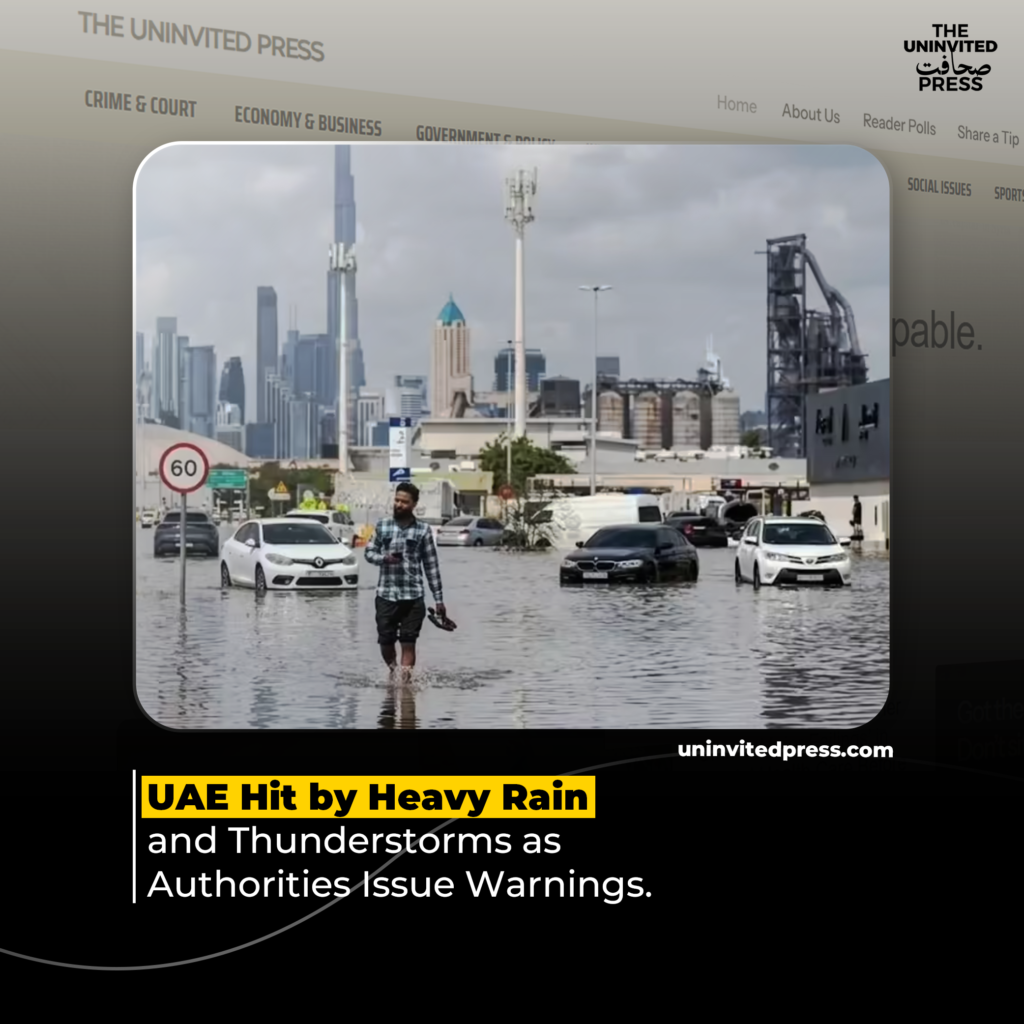
UAE faces peak heavy rain and thunderstorms March 26-27 2026 with flood warnings in Dubai, Abu Dhabi and Ajman. NCM alerts urge caution as localised flooding hits roads amid rare desert storm system.
UAE Faces Severe Flooding Amid Torrential Rain and Storms:
Torrential rain and powerful thunderstorms have swept the United Arab Emirates for the third straight day, turning streets into rivers and forcing authorities to escalate safety warnings as a potent low-pressure system intensifies.
The National Centre of Meteorology (NCM) has warned of continued unstable conditions, with the heaviest rain and strongest winds expected to peak on Thursday night into Friday morning. Motorists in Dubai and Abu Dhabi have already navigated submerged roads and reduced visibility, while emergency teams remain on standby amid the risk of flash flooding in low-lying and desert areas.
This rare burst of extreme weather in one of the world’s driest nations highlights the growing vulnerability of urban infrastructure to sudden, intense rainfall events.
Record Rainfall and Severe Storms Batter UAE Cities:
Rain first intensified on Monday night, March 23, with reports of heavy showers and thunder across Abu Dhabi and the Northern Emirates. By Tuesday, March 24, record rainfall totals emerged: Al Manama in Ajman recorded 93.3 mm, Ghayathi in Abu Dhabi saw 91 mm, and Al Wathba near the capital registered 88.2 mm-amounts approaching or exceeding the country’s typical annual rainfall in just 24 hours.
On Wednesday, March 25, intermittent but heavy downpours continued, with convective clouds and lightning reported from Dubai’s Satwa district to Sharjah and Ras Al Khaimah. Wadis overflowed in some areas, and motorists faced waterlogged roads, prompting slower traffic and calls for remote working where possible.
The NCM forecast shows the system strengthening overnight Thursday, bringing widespread heavy rain, thunder and strong winds before gradually clearing by Saturday. International forecasters have noted the potential for isolated severe thunderstorms, damaging gusts, hail and even a rare tornado risk-an uncommon phenomenon in the region.
UAE Flood Risks Rise Amid Climate Change:
The UAE’s arid desert climate means the ground absorbs very little water, turning even moderate rain into flash-flood risks in urban areas and mountain wadis. Average annual rainfall in Dubai is roughly 100 mm; this week’s events have already delivered a significant portion of that total in days.
This episode echoes the historic April 2024 floods, when more than 250 mm fell in some areas-the heaviest since records began in 1949-inundating Dubai International Airport, closing roads and disrupting thousands of flights. That event prompted major infrastructure upgrades, including Dubai’s Dh30 billion Tasreef drainage project, due for completion in 2033.
Scientists have linked an increase in such extreme rainy days to climate change, as warmer air holds more moisture, fuelling stronger convection. Dr Diana Francis of Khalifa University has noted that the region now sees up to two additional stormy days per year compared with 2000.