

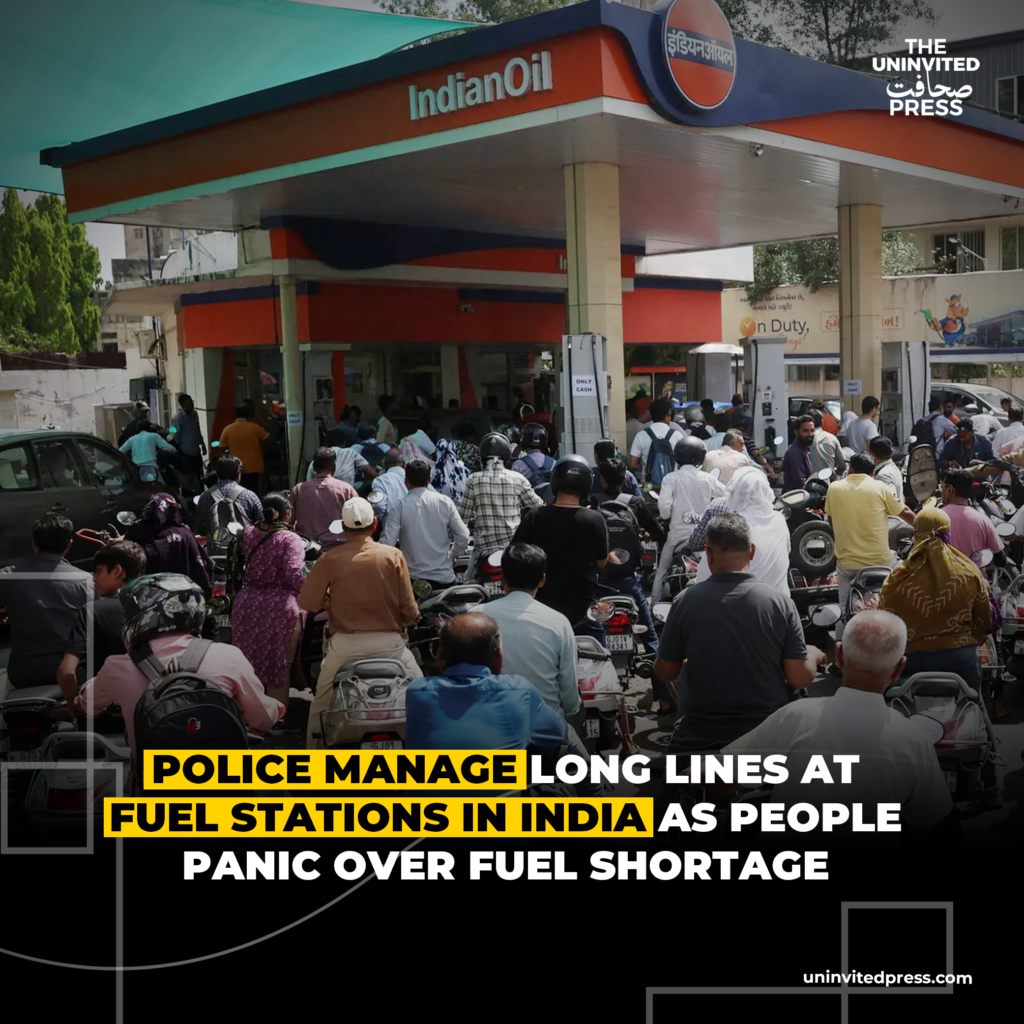
Police in Gujarat and other Indian states are managing massive queues at petrol pumps as rumours of fuel shortages spark widespread panic buying. The chaos is a direct fallout from the US-Israeli war on Iran and the effective closure of the Strait of Hormuz.
Fuel Panic Hits India Amid US-Israel-Iran Conflict:
Crowds of scooters, motorcycles and cars snaked for hundreds of metres outside an Indian Oil station in Gujarat on Tuesday as police officers struggled to keep order.
Motorists waited hours under the blazing sun, some carrying extra containers, amid fears that the ongoing US-Israeli war on Iran would soon cut off fuel supplies.
The scenes, repeated in cities from Ahmedabad to Hyderabad and parts of Tamil Nadu, illustrate how a conflict thousands of kilometres away is now directly disrupting daily life for millions of Indians-the world’s third-largest oil importer.
Police Step In as Fuel and LPG Shortages Trigger Chaos in Gujarat:
At the Indian Oil outlet captured in the widely circulated photograph, police officers directed traffic and urged calm as hundreds of two-wheeler riders waited in sweltering heat. Similar images and videos from Surat’s Surajshahar area and other Gujarat cities showed kilometre-long lines and traffic gridlock.
Authorities confirmed they had increased deployments at major pumps to maintain law and order and stop black-marketing or hoarding. In some locations, officers used loudspeakers to reassure the public that supplies were stable.
The panic spilled over from an already serious LPG (cooking gas) crisis that began in early March. Households and restaurants have faced multi-day waits for cylinders, with some businesses forced to close or switch to costlier alternatives.
Iran Conflict Disrupts India’s Oil Supply and Spurs Price Surge:
India imports roughly 85% of its crude oil, with about half of those shipments traditionally passing through the Strait of Hormuz. When Iran retaliated against US-Israeli strikes that began on February 28, 2026, shipping in the narrow waterway effectively ground to a halt.
Global oil prices surged, freight and insurance costs skyrocketed, and supply chains for both crude and refined products-including LPG-were thrown into disarray. Although India holds strategic reserves and has diversified some sourcing, the psychological impact of the war has proved more powerful than the physical shortfall.