

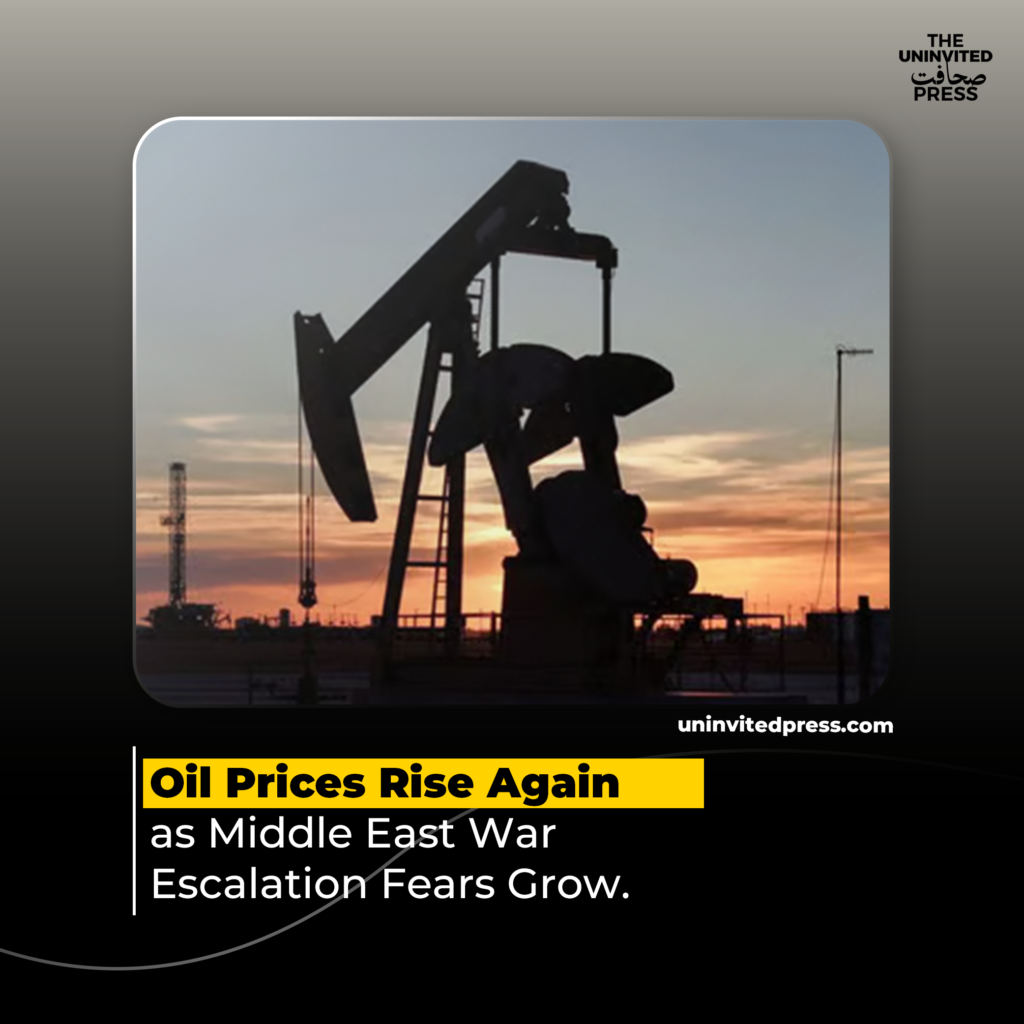
Oil prices rose sharply again on 24 March 2026 as fears of further escalation in the Iran war grew, with Brent crude climbing above $105 a barrel amid Iranian threats to close the Strait of Hormuz.
Oil Prices Jump as Iran War Escalation Fears Grip Markets:
Oil prices rose sharply on Monday as fresh fears of escalation in the three-week-old Iran war gripped energy markets. Brent crude, the global benchmark, climbed more than 3 per cent to trade above $105 a barrel, extending gains after a volatile weekend marked by Iranian vows to permanently seal the Strait of Hormuz if US strikes target power plants.
The latest jump underscores how quickly diplomatic rhetoric can translate into market turmoil, with traders pricing in the risk of prolonged disruptions to roughly one-fifth of global oil supplies.
Market Reaction and Analyst Warnings: Brent Surges on Supply Fears:
Trading began with Brent futures jumping as much as $3.50 a barrel in early sessions, settling around $105 after earlier peaks above $107. Analysts cited a combination of weekend rhetoric and persistent supply fears following Iranian attacks on Gulf refineries and the effective paralysis of tanker traffic through the strait.
Goldman Sachs raised its short-term Brent forecast, noting that traders are now attaching a growing risk premium amid uncertainty over how long disruptions will last. The bank now sees Brent averaging $110 per barrel in March and April.
The International Energy Agency has warned that restoring disrupted supplies could take months, even if fighting eases.
War Origins, Energy Targets and Soaring Oil Prices:
The 2026 Iran war erupted on 28 February with US-Israeli pre-emptive strikes that killed Supreme Leader Ali Khamenei. It quickly broadened to energy targets, with Israel bombing Iran’s South Pars gas field on 19 March and Iran retaliating against Gulf infrastructure, including Kuwait’s Mina Al-Ahmadi refinery.
The Strait of Hormuz, through which roughly 20 per cent of global oil normally flows, has seen commercial traffic drop to near zero. Previous threats of closure during the 1980s Tanker War and 2019 tensions never materialised, but this conflict has turned rhetoric into partial paralysis.
Oil prices have already risen nearly 45 per cent since the war began, pushing gasoline costs higher worldwide and adding pressure on economies already grappling with inflation.