

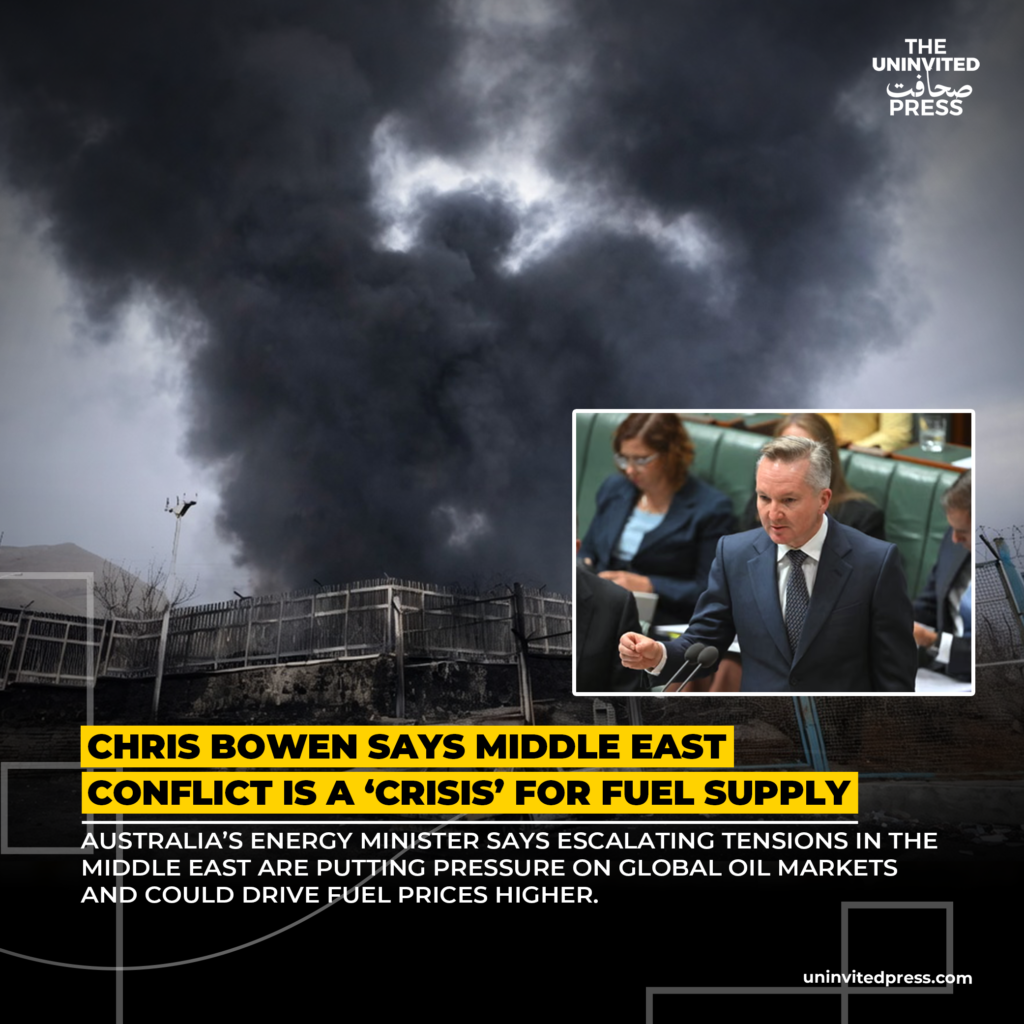
Australia’s Energy Minister Chris Bowen calls Middle East war a fuel “crisis,” as government relaxes standards to combat shortages and rising prices amid global oil turmoil.
Middle East Conflict Sparks Fuel Security Crisis in Australia:
In a tense exchange during Question Time in Parliament, Energy Minister Chris Bowen didn’t mince words: the raging conflict in the Middle East is a full-blown “crisis” for Australia’s fuel security. With oil prices surging amid attacks on key shipping routes, Bowen highlighted the real-world fallout-farmers struggling to fill tanks and regional towns facing empty bowsers. As panic buying grips the nation, the government is scrambling to shore up supplies, but experts warn the pain at the pump could linger.
This development underscores Australia’s vulnerability in a world where 20% of global oil flows through the volatile Strait of Hormuz, now under threat from Iranian strikes. With Easter road trips looming, millions of Australians could feel the squeeze as international tensions boil over into everyday costs.
Parliamentary Clash and Government Response:
The alarm bells rang loud in Canberra on March 12 when Bowen faced pointed questions in Parliament about fuel shortages plaguing rural areas. “Do I regard a war as a crisis? Yes, I do,” Bowen stated bluntly. “Do I regard the implications of that war when it comes to fuel as a crisis? I do… And do I think if a farmer can’t get fuel, is it a crisis for that farmer? Yes, I do.”
He tied the turmoil directly to the Middle East war, noting a “doubling of fuel demand” since the bombing of Iran escalated global uncertainties. To counter this, the government announced a 60-day relaxation of fuel quality standards, allowing refineries like Ampol in Brisbane to redirect high-sulphur fuel-normally exported-to local markets. This move aims to inject an extra 100 million litres per month into the system, prioritizing regional areas hit hardest by shortages.
Bowen urged calm, saying: “Please, get as much fuel as you need but not less and not more.” He ruled out slashing the fuel excise tax but confirmed Australia is weighing a response to the International Energy Agency’s (IEA) call for a massive release of global oil reserves-the largest in history-to stabilize markets.
The crisis has unfolded rapidly. Just days earlier, on March 3, Bowen reassured the public that reserves were robust, with no immediate threats despite rising oil prices. But by March 10, reports of empty petrol stations in towns like Batlow surfaced, driven by a “huge spike in demand” rather than actual import disruptions. Economists predict petrol prices could climb 40 cents per litre nationwide in coming weeks.
Roots of the Crisis: Escalation in the Middle East:
This fuel crunch stems from a dramatic escalation in the Middle East, where the United States and Israel launched “Operation Epic Fury” on February 28, 2026. The joint strikes targeted Iranian military sites, air defenses, and leadership, killing Supreme Leader Ali Khamenei and dozens of top officials in the opening hours. Iran retaliated with missile and drone attacks on Israel, Gulf states, and U.S. bases, including in Bahrain and Qatar.
The conflict traces back to longstanding tensions: Iran’s nuclear ambitions, support for groups like Hezbollah, and previous clashes, including a brief war in June 2025. By early March 2026, Iran threatened to blockade the Strait of Hormuz-a chokepoint for global oil-leading to strikes on tankers and energy infrastructure. Over 1,800 deaths have been reported so far, with the war expanding to involve Hezbollah in Lebanon.
For Australia, the stakes are high. The country imports nearly all its refined fuel, making it exposed to global shocks. Past events, like the 2022 Ukraine invasion, saw similar price spikes, but Bowen noted reforms since then-such as storing reserves domestically rather than overseas-have bolstered preparedness. Still, experts like Tony Wood from the Grattan Institute warn of long-term risks, especially for diesel-reliant sectors like mining and agriculture, if disruptions persist.