

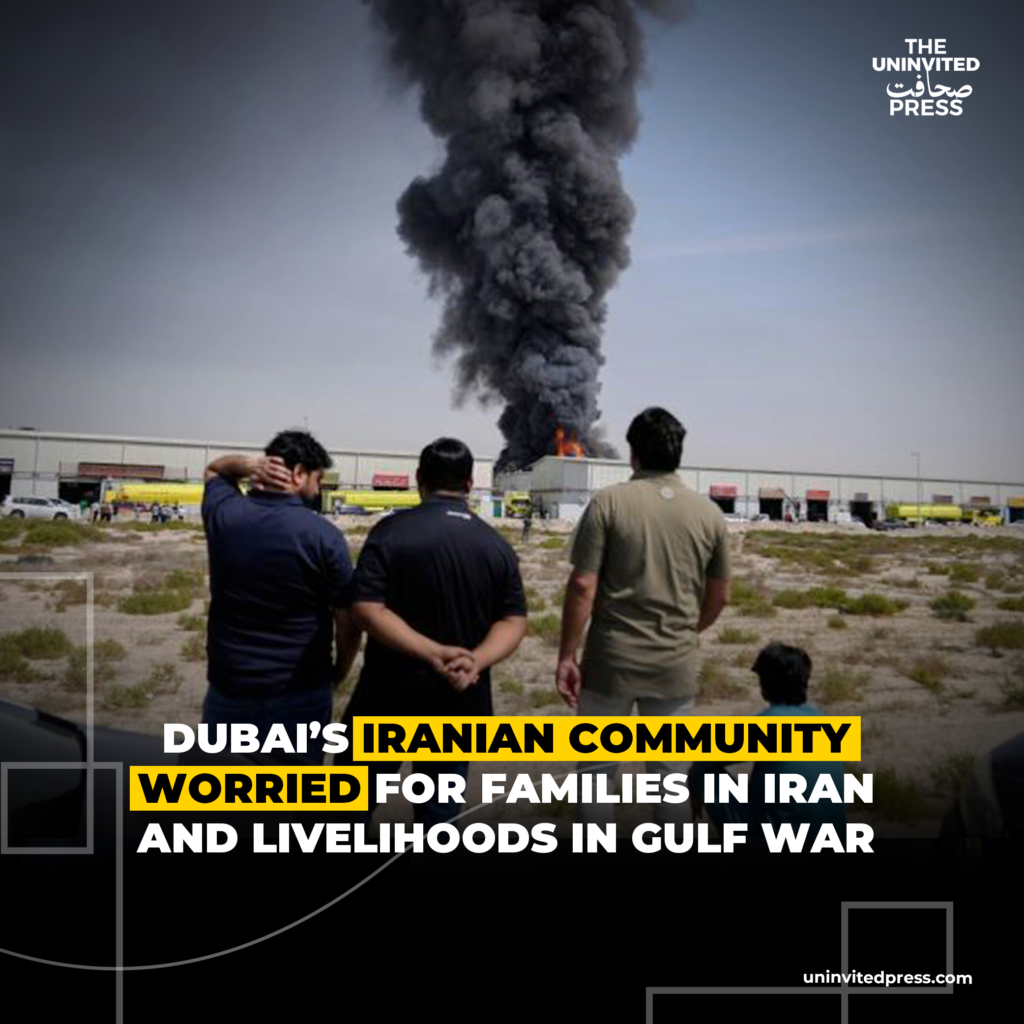
Dubai’s Iranian community faces heartbreak as the 2026 Gulf War escalates, with missile strikes threatening families in Iran and economic stability in the UAE-explore the human and global impacts.
Iranian Expatriates in Dubai Caught in the Crossfire:
In the shadow of missile strikes and drone attacks, Dubai’s vibrant Iranian community-long a bridge between Tehran and the Gulf’s economic powerhouse-is now gripped by uncertainty. As the U.S.-Israel war against Iran spills into the Persian Gulf, expatriates here are torn between concern for relatives enduring bombardments back home and the immediate threats to their businesses and safety in the UAE. The conflict, now in its second week, has disrupted daily life, with interceptions lighting up the night sky and economic fallout mounting.
War Escalation Hits Dubai: Strikes, Economic Collapse, and Expat Anxiety:
The war began on February 28, 2026, with U.S. and Israeli airstrikes killing Iran’s Supreme Leader Ayatollah Ali Khamenei, his wife, and other top officials. Iranian media called it a “decapitation strike,” triggering retaliation under Operation True Promise 4. By March 1, Iran had launched over 2,000 drones and missiles at Gulf states, hitting the UAE hardest. Dubai International Airport was struck on March 11, wounding four, while commercial ships and oil facilities across the Persian Gulf were also targeted.
For Dubai’s Iranian residents, business has collapsed and anxiety runs high as tourism and supply chains falter. Many struggle to contact family in Tehran amid blackouts, and tens of thousands of residents and tourists have fled, leaving malls and beaches empty. Schools moved online, and stranded travelers faced chaos at airports. Civilian casualties remain limited, but most victims are migrant workers, showing the human cost beyond borders.
Historical Tensions and Economic Stakes in the Gulf:
The Persian Gulf has long been a flashpoint, with tensions rooted in Iran’s nuclear ambitions, proxy conflicts, and regional rivalries. The 2020 Abraham Accords normalized UAE-Israel ties, positioning the Gulf states as U.S. allies against Iranian influence. Dubai, home to a large Iranian diaspora since the early 20th century, served as a trade conduit, with many Iranians fleeing post-1979 revolution instability.
Iran’s strategy targets Gulf infrastructure to leverage economic pressure, disrupting 20% of global oil flows through the Strait of Hormuz. This echoes past incidents like the 2019 Abqaiq attacks but on a larger scale, threatening the Gulf’s $367 billion tourism industry and expat-dependent economy. The UAE, hosting 3.5 million Indian workers alone, faces broader diaspora impacts, with remittances at risk.