

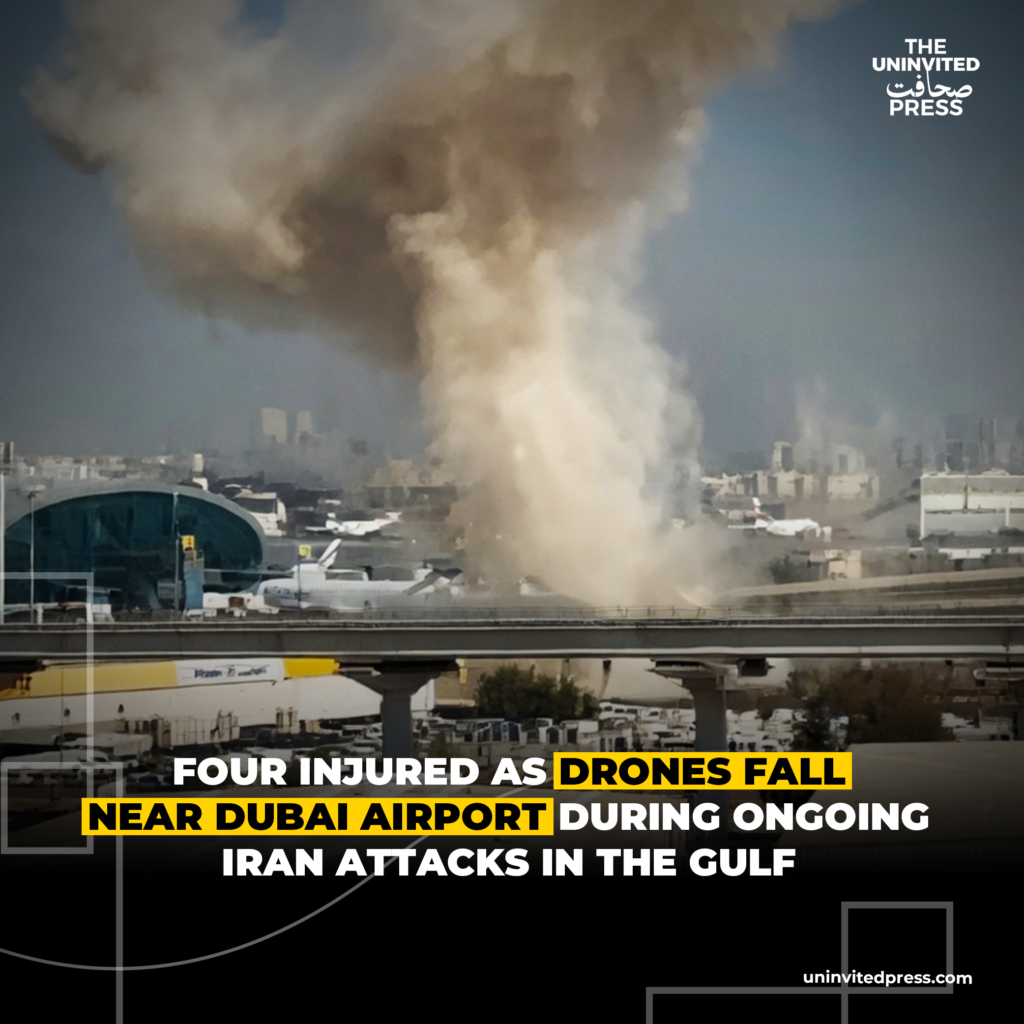
Four people were injured when Iranian drones crashed near Dubai International Airport, the world’s busiest airport, causing chaos in the skies and raising security concerns amid regional tensions.
Iranian Drones Strike Near Dubai Airport: Four Injured in Escalating Gulf War:
Smoke billowed over Dubai’s skyline as two Iranian drones plummeted near the international airport on March 11, 2026, wounding four foreign workers and underscoring Iran’s relentless campaign against Gulf infrastructure. This latest assault, part of Tehran’s retaliation for US-Israeli strikes that killed its supreme leader, threatens to cripple global travel hubs and spike energy costs worldwide. As interceptions light up the night, experts warn the conflict could drag on, displacing millions and reshaping Middle East alliances.
Drone Chaos at DXB: Injuries, Panic, and Swift Recovery:
The incident unfolded on the morning of March 11, 2026, when two drones, attributed to Iran, crashed in the area surrounding Dubai International Airport. Witnesses reported hearing explosions and seeing smoke rising near the tarmac, prompting brief evacuations of nearby terminals. Dubai Media Office confirmed four injuries: an Indian national with moderate wounds, and three others-two Ghanaians and one Bangladeshi-with minor injuries, all treated at local hospitals.
Despite the chaos, Dubai Airports stated operations resumed normally within hours, with no flights canceled due to the strike itself, though regional disruptions from the war have caused delays. This marks the second attack on DXB since the war began; an earlier drone hit on March 1 caused minor damage and brief closures. On the same day, Iran’s forces targeted an Omani port and Bahraini airspace, forcing evacuations and heightening alerts across the Gulf.
The broader offensive included strikes on commercial ships in the Strait of Hormuz, with the UK Navy reporting three vessels hit on March 11. Iran’s Islamic Revolutionary Guard Corps (IRGC) has not claimed the Dubai incident directly, but state media described ongoing operations as “defensive retaliation.” UAE defenses, bolstered by US systems, intercepted most incoming threats, limiting casualties.
Passengers at DXB described panic as sirens blared and people sought shelter, with some flights held in patterns overhead. The airport, handling over 90 million passengers annually, saw minimal disruption, but the event amplified fears among tourists and expats.
Roots of the Assault: From Decapitation Strike to Gulf Retaliation:
The attack stems from the US-Israel war on Iran, launched February 28, 2026, with airstrikes killing Supreme Leader Ayatollah Ali Khamenei and top officials in a “decapitation” operation. Iran responded under “Operation True Promise 4,” firing over 2,000 drones and missiles at Gulf states hosting US assets. Dubai, a neutral trade hub, became a target due to its economic ties with the West and role in regional logistics.
Historical precedents include Iran’s 2019 drone attack on Saudi Arabia’s Abqaiq facility, which halved oil production temporarily. The current war has disrupted 20% of global oil flows through Hormuz, pushing prices toward $200 per barrel and straining economies. UAE’s Abraham Accords with Israel in 2020 positioned it as a US ally, making it vulnerable despite pledges of non-involvement.