

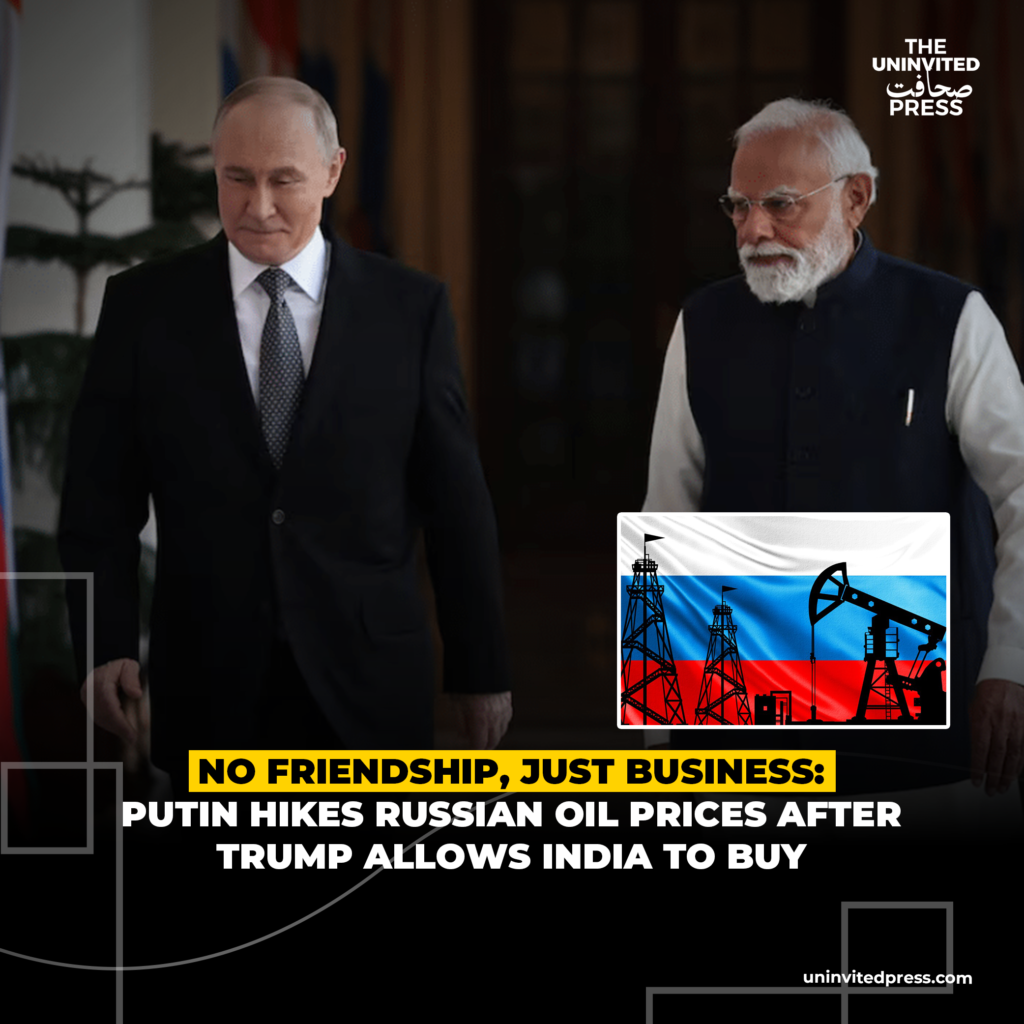
Russia hikes Urals oil prices for India to premiums over Brent after US waiver amid Iran war, ending discounts and raising costs for New Delhi’s energy needs.
Russia's Price Pivot: From Discounts to Premiums Amid Iran War Chaos:
In a calculated pivot that exposes the raw edges of global energy politics, Russia has sharply increased prices on its oil shipments to India, flipping long-held discounts into premiums mere weeks after the United States issued a 30-day waiver allowing New Delhi to resume purchases. This development, driven by supply chaos from the escalating Iran war, signals Moscow’s intent to capitalize on heightened demand while underscoring the fragility of discounted deals in wartime economics. As oil prices climb globally, India’s energy security hangs in the balance, potentially adding billions to its import bill and straining ties with key partners.
U.S. Tariffs, Trade Deals, War, and Russia's Price Reversal:
The saga began with U.S. pressure on India over its Russian oil imports. In August 2025, shortly after his inauguration, President Trump imposed a 25% tariff on Indian goods as a penalty for buying Russian crude, which he argued funded Moscow’s war in Ukraine. This escalated to 50% total tariffs, prompting India to slash Russian imports from a peak of over 2 million barrels per day (bpd) in mid-2025 to around 1 million bpd by February 2026.
On February 2, 2026, Trump announced an interim trade deal, claiming Prime Minister Narendra Modi had committed to halting Russian oil purchases in exchange for tariff reductions to 18%. India diversified to U.S., Venezuelan, and Middle Eastern sources, saving face amid negotiations but facing higher costs without Russia’s discounts.
The landscape shifted dramatically with the U.S.-Iran war erupting in early March 2026. Iran’s blockade of the Strait of Hormuz disrupted 55% of India’s oil routes, spiking global prices and leaving tankers stranded. On March 5, U.S. Treasury Secretary Scott Bessent issued a 30-day waiver, authorizing Indian refiners to buy Russian oil already at sea to “keep oil flowing” and mitigate shortages.
Indian buyers pounced, snapping up millions of barrels. But Russia, sensing opportunity, hiked prices. By March 6, Urals cargoes for India traded at premiums to Brent for the first time ever, per traders. Two tankers rerouted to India arrived mid-March, with more following. Kremlin Deputy Prime Minister Alexander Novak confirmed Russia was prepared to ramp up supplies to India and China, citing the Middle East turmoil.
The price surge stems from market dynamics, with Urals eclipsing the G7’s $60 per barrel cap and the EU’s $44.10 cap from February 1, 2026.
India's Russian Oil Boom, U.S. Backlash, and the Iran War Shock:
India’s pivot to Russian oil started after Moscow’s 2022 Ukraine invasion, when Western sanctions created a glut of discounted crude. New Delhi ramped up imports from negligible levels to 40% of its total by 2023, saving an estimated $17 billion through 2025, according to analysts like those at the Global Trade Research Initiative. This buffered India’s economy amid high global prices but drew U.S. ire, as Russian energy revenues-totaling over $200 billion annually-sustained the Kremlin’s war effort.
Trump’s tariffs aimed to enforce secondary sanctions, mirroring pressure on China and Turkey. Yet India defended its stance, arguing purchases stabilized markets and met domestic needs for 1.4 billion people. The Iran war, starting February 2026 with U.S.-Israeli strikes on Tehran, exacerbated vulnerabilities: Hormuz disruptions cut 20 million bpd globally, pushing Brent up 25% in a week.
Russia, meanwhile, redirected exports to Asia after losing European markets, with India and China absorbing 90% of its seaborne crude. The price flip marks a reversal: pre-waiver, Urals sold at $10-$20 below Brent; now, premiums reflect tight supplies and competing demand. This could erase India’s prior savings, adding $2-$3 billion monthly to its oil bill if sustained, per JM Financial estimates.