

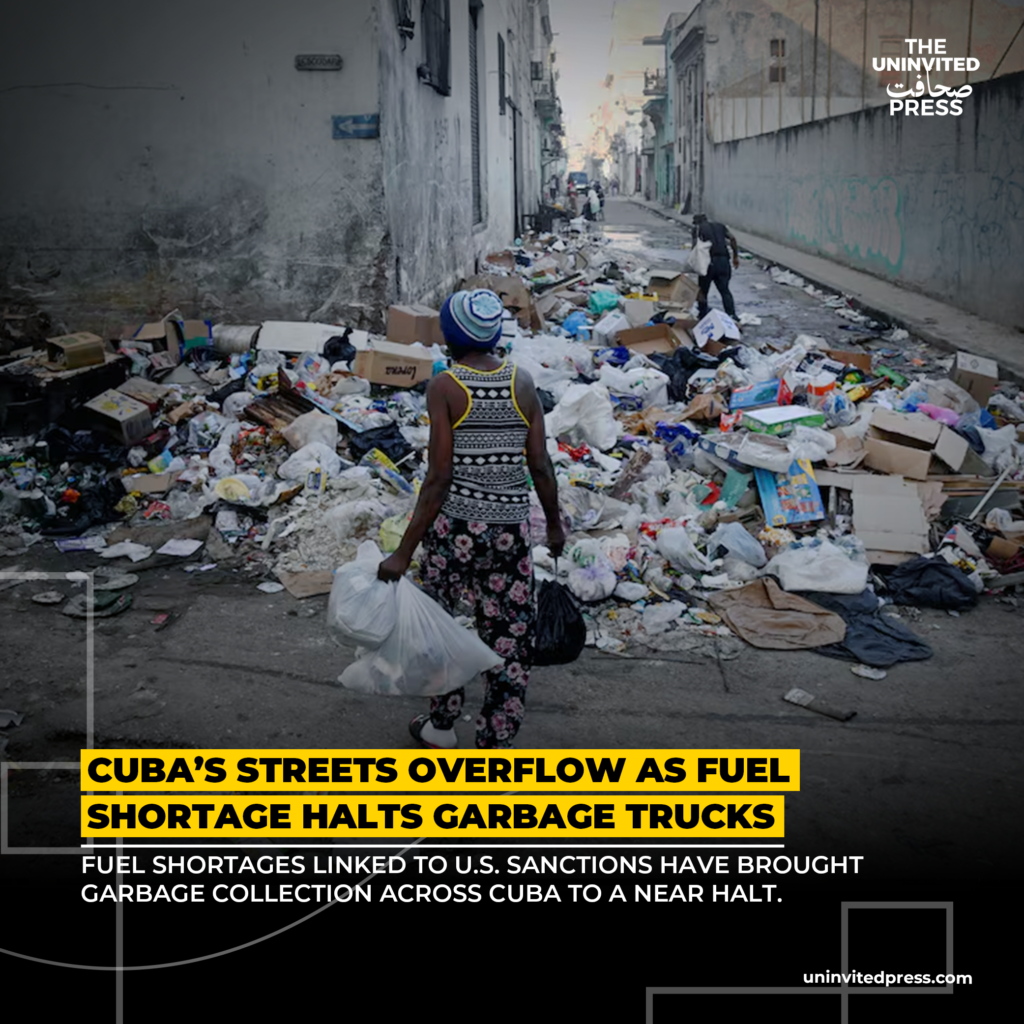
Cuba’s Havana streets overflow with garbage amid fuel shortages from U.S. sanctions, halting trash trucks and raising health risks in a deepening humanitarian crisis.
Sanctions Spark Havana Trash Crisis:
Havana’s iconic streets, once vibrant with history and culture, are now buried under mountains of rotting garbage. A severe fuel shortage, exacerbated by U.S. sanctions aimed at isolating Cuba, has idled most of the city’s trash trucks, turning everyday waste into a mounting crisis. Residents face swarms of flies, foul odors, and rising health risks as collection grinds to a near halt, highlighting the human toll of geopolitical pressures on the island nation.
Havana Streets Drown in Trash:
In the heart of Havana, cardboard boxes, plastic bottles, and decaying food scraps form impromptu landfills on street corners. Residents like Lissette Valle, a 40-year-old homemaker, describe living amid constant swarms of flies and mosquitoes, with trash accumulating just outside their homes. State media reported in early February 2026 that fuel shortages have left only 44 out of 106 garbage trucks functional in the capital, drastically slowing collection efforts. This has resulted in over 30,000 cubic meters of waste-equivalent to about 1,000 shipping containers-piling up daily on Havana’s streets.
The issue extends beyond the capital. Other cities indicate similar disruptions, with garbage attracting pests and posing sanitary threats. In some neighborhoods, residents say it’s been more than ten days since a truck last passed. The foul odors from overflowing sewage pipes compound the problem, creating environments ripe for disease outbreaks.
The fuel crisis began worsening in late 2025 when the U.S. intensified sanctions, sanctioning vessels shipping oil to Cuba and threatening tariffs on suppliers. By January 2026, Venezuela-Cuba’s primary oil source-ceased shipments under U.S. pressure, followed by Mexico halting deliveries. Cuba’s government responded with rationing in early February, prioritizing essential services, but this has not spared waste management. By mid-February, visible trash piles became a stark symbol of the broader shortages affecting food, medicine, and electricity.
Historical Roots and Escalating Impact of the U.S. Embargo on Cuba:
Cuba has endured a U.S. economic embargo since the early 1960s, following the Cuban Revolution and the rise of Fidel Castro’s communist government. This blockade, often called the “longest sanctions regime in history,” restricts trade, travel, and financial transactions, costing Cuba an estimated $144 billion over decades, according to Cuban officials. The island, home to about 11 million people, has historically relied on allies like Venezuela for subsidized oil, receiving up to 80,000 barrels per day at peak.
Recent escalations trace back to the Trump administration’s policies. In late 2025, the U.S. targeted Venezuela’s leadership, leading to a commando raid and subsequent cutoff of oil to Cuba. President Trump has described Cuba as a “failed nation” and called for negotiations, framing the sanctions as leverage for political and economic reforms. This has compounded existing challenges; Cuba was already grappling with post-COVID recovery, natural disasters, and internal inefficiencies, including outdated infrastructure and low wages for public workers.
The garbage crisis is part of a larger humanitarian strain. Blackouts lasting up to 18 hours daily have closed schools, halted surgeries in hospitals, and disrupted public transport. Experts like Jorge Piñón from the University of Texas warn that Cuba’s oil reserves could deplete in weeks without intervention. This situation underscores the embargo’s impact on civilian life, drawing international criticism for violating principles of peace and international law.