

Lebanon grants army four months for second Hezbollah disarmament phase amid rejection and Israeli strikes, heightening tensions in post-ceasefire south.
Lebanon Moves to Disarm Hezbollah Amid Rising Tensions:
Lebanon’s cabinet has greenlit a four-month window for the army to advance the second phase of disarming Hezbollah, extending state control over weapons north of the Litani River. This move, announced amid ongoing Israeli strikes, intensifies pressure on the Iran-backed group to relinquish its arsenal, but Hezbollah’s swift rejection signals potential escalation in a fragile post-ceasefire landscape. With civilian lives and regional stability at stake, the decision underscores Beirut’s push for sovereignty while risking internal strife.
Hezbollah Rejects Lebanon’s New Disarmament Push:
Lebanon’s Information Minister Paul Morcos revealed after a cabinet meeting that the army requires at least four months to execute the second phase of its arms control strategy. This phase targets the restriction of weapons in the area north of the Litani River up to the Awali River in Sidon, building on the first phase’s completion south of the Litani. The timeline is renewable, contingent on military resources, potential Israeli incursions, and fieldwork challenges.
Hezbollah responded swiftly on February 17, denouncing the decision as a “grave sin” that aligns with Israeli objectives and rejecting any disarmament north of the Litani. Deputy chief Naim Qassem warned that such moves could fuel chaos, emphasizing the group’s refusal to surrender arms amid perceived threats.
The process traces back to August 5, 2025, when the Lebanese cabinet tasked the LAF with developing a five-phase plan to consolidate all non-state weapons under government authority, primarily aimed at Hezbollah following its 2024 conflict with Israel. The first phase, focused on the border strip south of the Litani, was declared complete in January 2026, with over 9,000 LAF troops deployed and thousands of rockets reportedly removed. By mid-February, surveys and checkpoints were being reinforced for phase two.
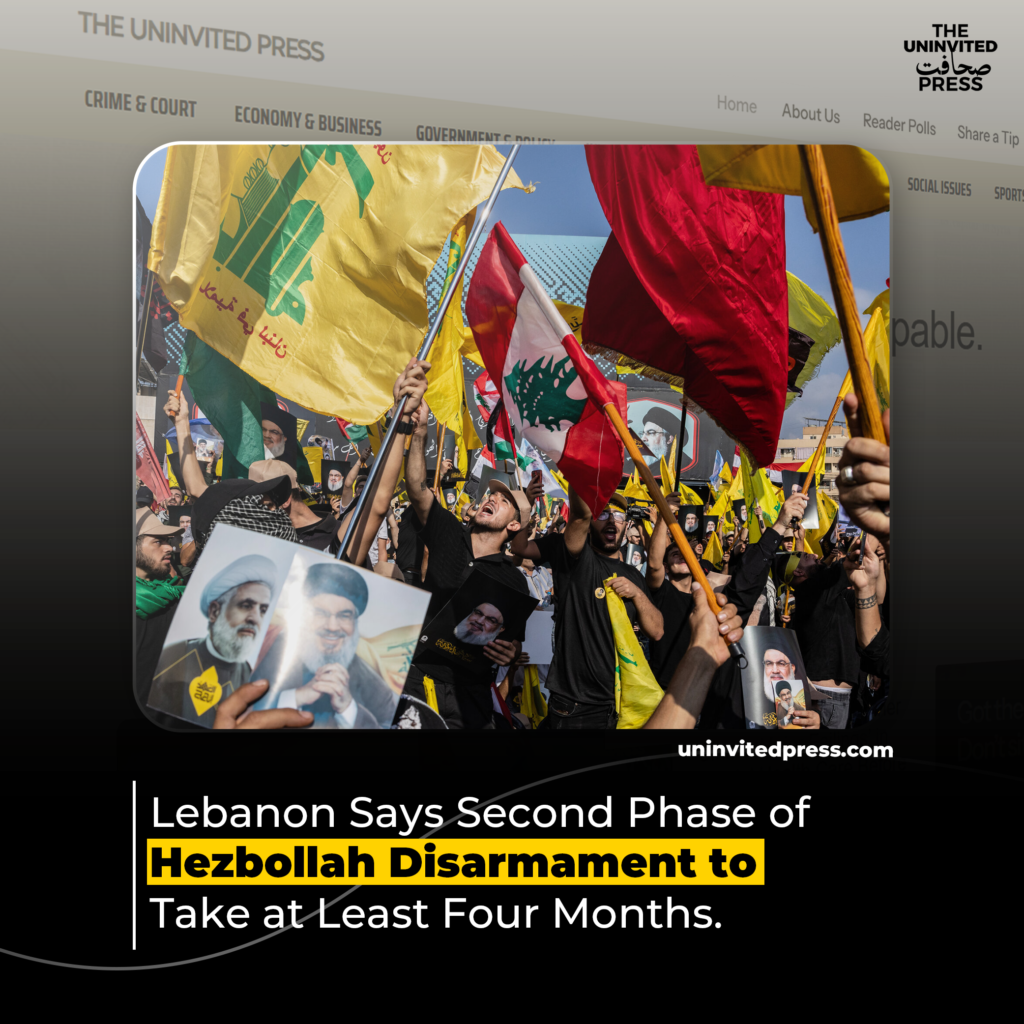
Israeli strikes persisted, with reports of attacks on Hezbollah targets, complicating the disarmament efforts. Protests in Beirut and southern areas have erupted, with demonstrators waving Hezbollah flags and portraits of leaders like Hassan Nasrallah, highlighting deep divisions.
Hezbollah's Rise, Defiance of UN Resolutions, and the Fragile Path to Disarmament:
Hezbollah, founded in 1982 during Israel’s invasion of Lebanon, evolved from a resistance militia against occupation into a powerful political and military force backed by Iran. Its arsenal, estimated at tens of thousands of rockets, has long defied UN Security Council Resolution 1701, adopted after the 2006 Israel-Hezbollah war, which called for disarmament south of the Litani and LAF deployment.
The 2024 war, sparked by cross-border escalations tied to Gaza conflicts, devastated southern Lebanon, killing thousands and displacing over a million. A November 2024 ceasefire, brokered by the U.S., mandated Hezbollah’s withdrawal and disarmament, but compliance has been uneven. Lebanon’s economic crisis since 2019, compounded by political paralysis, has weakened state institutions, making disarmament a symbol of reclaiming sovereignty.
U.S. envoy Tom Barrack’s roadmap, endorsed by President Joseph Aoun and Prime Minister Nawaf Salam, sets a year-end 2025 target for full disarmament, with phased actions and prisoner exchanges. This initiative reflects broader regional shifts, including weakened Hamas and Iranian influence, but risks reigniting sectarian tensions in Lebanon’s fragile confessional system.