

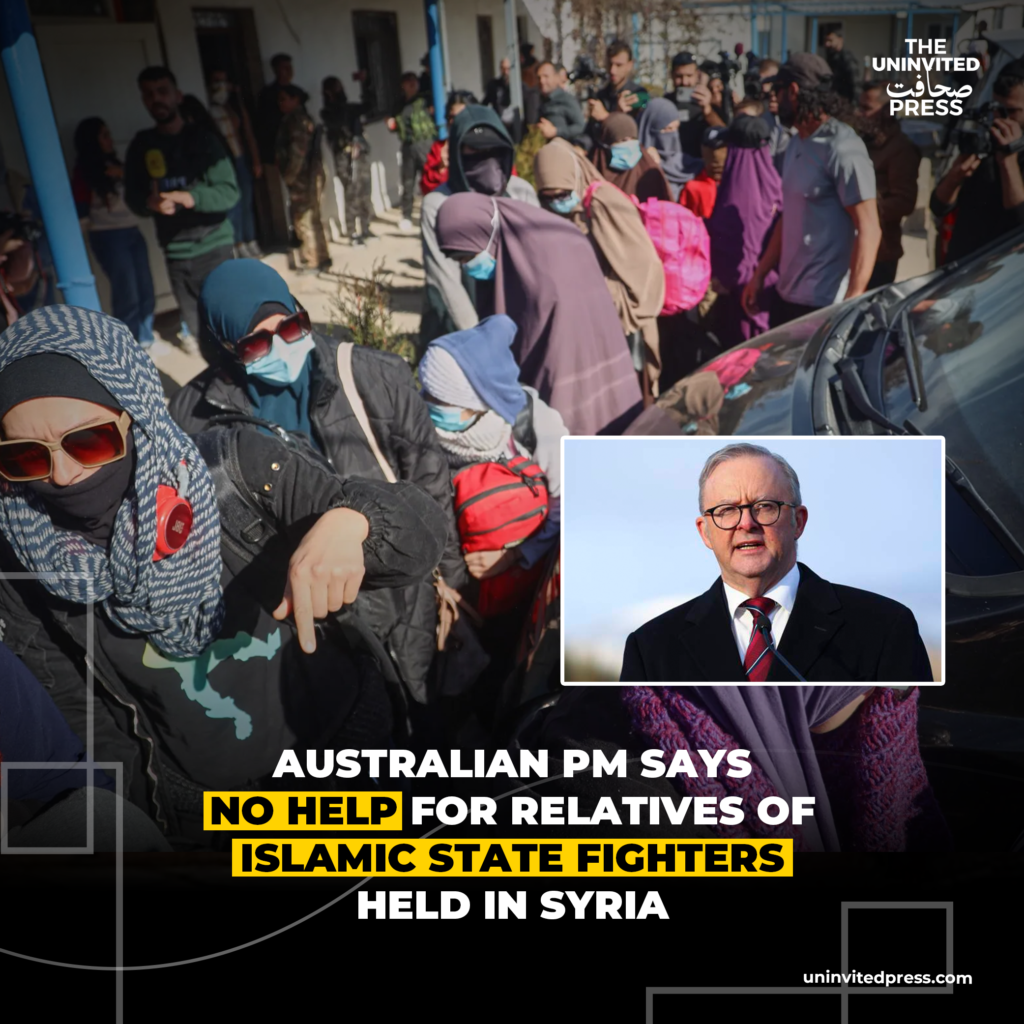
Australian PM Anthony Albanese refuses repatriation for 34 ISIS-linked women and children from Syrian camps, citing security while rights groups warn of humanitarian risks.
Albanese Blocks Aid for ISIS Families:
Australian Prime Minister Anthony Albanese has firmly declared his government will offer no assistance or repatriation to 34 women and children with ties to Islamic State fighters, who were briefly released from a Syrian detention camp only to be forced back. Announced amid reports of deteriorating conditions in the camps, this stance underscores the tension between national security and humanitarian duties, leaving vulnerable children in limbo while potentially exposing Australia to unmanaged risks if families return unchecked. As global allies grapple with similar dilemmas, the decision reignites debate over Australia’s responsibility to its citizens abroad.
Australian ISIS Families Barred from Leaving Syria:
34 Australian women and children were released from the Roj detention camp in northeastern Syria and handed over to relatives who had traveled from Australia to collect them. The group, comprising 11 women and 23 children from 11 families, boarded minibuses headed toward Damascus, intending to board flights back to Australia. However, they were denied permission to enter Syrian government-controlled territory and forced to return to the camp the same day. Camp officials confirmed the handover was to two male relatives, and efforts to resolve the transit issue with Syrian authorities were ongoing.
Home Affairs Minister Tony Burke echoed this, warning that any returnees who had broken laws would face prosecution. The group holds Australian citizenship, but details on their passports remain unconfirmed in public statements.
This event follows years of detention since the 2019 fall of IS’s last stronghold in Syria, where thousands of foreign nationals and their families were captured and held in camps like Roj and al-Hol. The Roj camp, smaller than al-Hol, houses families of suspected IS members under Kurdish administration. The failed departure highlights the logistical and political barriers facing these families.
Syria Detention Camps and Australia’s Repatriation Record:
The Islamic State’s defeat in 2019 left over 60,000 people, including many foreigners, detained in northeastern Syrian camps controlled by the Syrian Democratic Forces (SDF), a Kurdish-led alliance. Roj camp specifically holds women and children linked to IS, with conditions described as dire, including limited access to healthcare, education, and basic necessities. In January 2026, Kurdish forces withdrew from the larger al-Hol camp, which previously housed over 24,000, including 6,000 foreign women and children, raising fears of further instability.
Australia’s involvement stems from citizens who traveled to Syria and Iraq during IS’s peak between 2014 and 2017. Laws enacted then made it illegal to enter IS-declared caliphate areas without legitimate reason, carrying up to 10 years in prison. Since 2019, Australia has repatriated only two groups with government aid: eight orphaned children in 2019 under the previous conservative government, and four women and 13 children in 2022 under Albanese’s Labor administration. These were deemed the most vulnerable, with security assessments ensuring managed risks.