

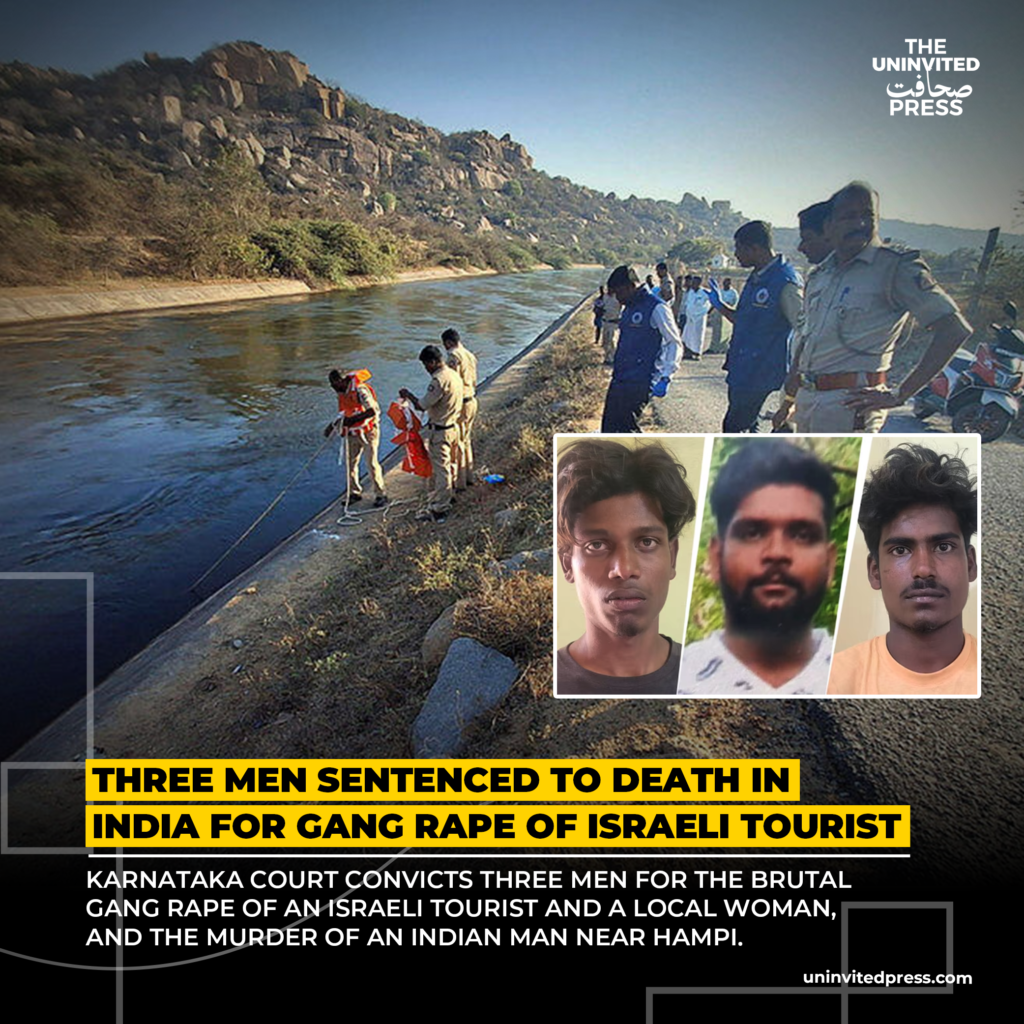
Karnataka court sentences three men to death for 2025 gang rape of Israeli tourist and local woman, plus murder near Hampi, in rarest of rare case.
Death Penalty in Hampi ruins Case Signals Tough Stand on Tourist Safety:
A sessions court in Karnataka has imposed the death penalty on three men convicted of gang-raping an Israeli tourist and a local homestay owner, while murdering one of their companions in a violent assault near the historic Hampi ruins. Delivered on February 16, 2026, the sentence underscores India’s tough stance on crimes against tourists, amid global scrutiny of women’s safety in the country. With the victims’ ordeal drawing international outrage, the verdict offers a measure of justice but highlights ongoing challenges in preventing such atrocities, potentially impacting tourism in one of India’s most visited heritage spots.
Night of Terror Near Sanapur Lake Leads to Rare Death Sentence Verdict:
The horror unfolded on the night of March 6, 2025, when a group of five-comprising an Israeli female tourist, a homestay owner from Karnataka, and three male tourists from Odisha, Maharashtra, and the United States-gathered for stargazing near Sanapur Lake. The three assailants approached, demanding money and valuables, before escalating to violence. They raped the two women, pushed the three men into the Tungabhadra Left Bank Canal, and fled. Bibhas Kumar Nayak, 26, from Odisha, drowned and was found dead the next day. The other two men survived.
Police arrested the suspects within days, charging them under multiple sections of the Indian Penal Code (later transitioned to Bharatiya Nyaya Sanhita). The trial at the First Additional District and Sessions Court in Gangavathi, Koppal district, began swiftly, with conviction on February 6-7, 2026. On February 16, Judge Sadananda Nagappa Nayak sentenced them to death for murder, citing the crime’s extreme brutality as qualifying for the “rarest of rare” doctrine. They also received life sentences for gang rape and additional penalties for other charges.
Public Prosecutor Nagalakshmi argued the case, presenting evidence including survivor testimonies and forensic reports. The court reviewed the convicts’ psychological evaluations, jail conduct, and social backgrounds before sentencing. The Israeli victim returned home shortly after, while the homestay owner continued local recovery.
Hampi Verdict Sparks Safety and Death Penalty Debate:
Hampi, a UNESCO World Heritage Site in Karnataka, attracts over a million tourists annually with its ancient Vijayanagara ruins and boulder-strewn landscapes. However, the area has faced security concerns, with isolated incidents of theft and assault reported in remote spots like Sanapur Lake. This case echoes broader issues of violence against women and tourists in India, where rape cases rose 20% between 2021 and 2022, per National Crime Records Bureau data.
The “rarest of rare” criterion, established by the Supreme Court in the 1980 Bachan Singh case, limits death penalties to exceptional crimes. India has executed only four people since 2004, all in the 2012 Nirbhaya gang rape-murder case in 2020. Death sentences are often commuted to life on appeal, with over 500 on death row as of 2025.
This incident prompted enhanced patrols and safety advisories in Hampi, but critics argue systemic issues like poor lighting and limited police presence persist. Internationally, it raised alarms for Israeli travelers, who number over 40,000 annually in India, often visiting spiritual sites. The verdict’s significance lies in its potential deterrent effect, though experts question execution likelihood amid abolition debates.