

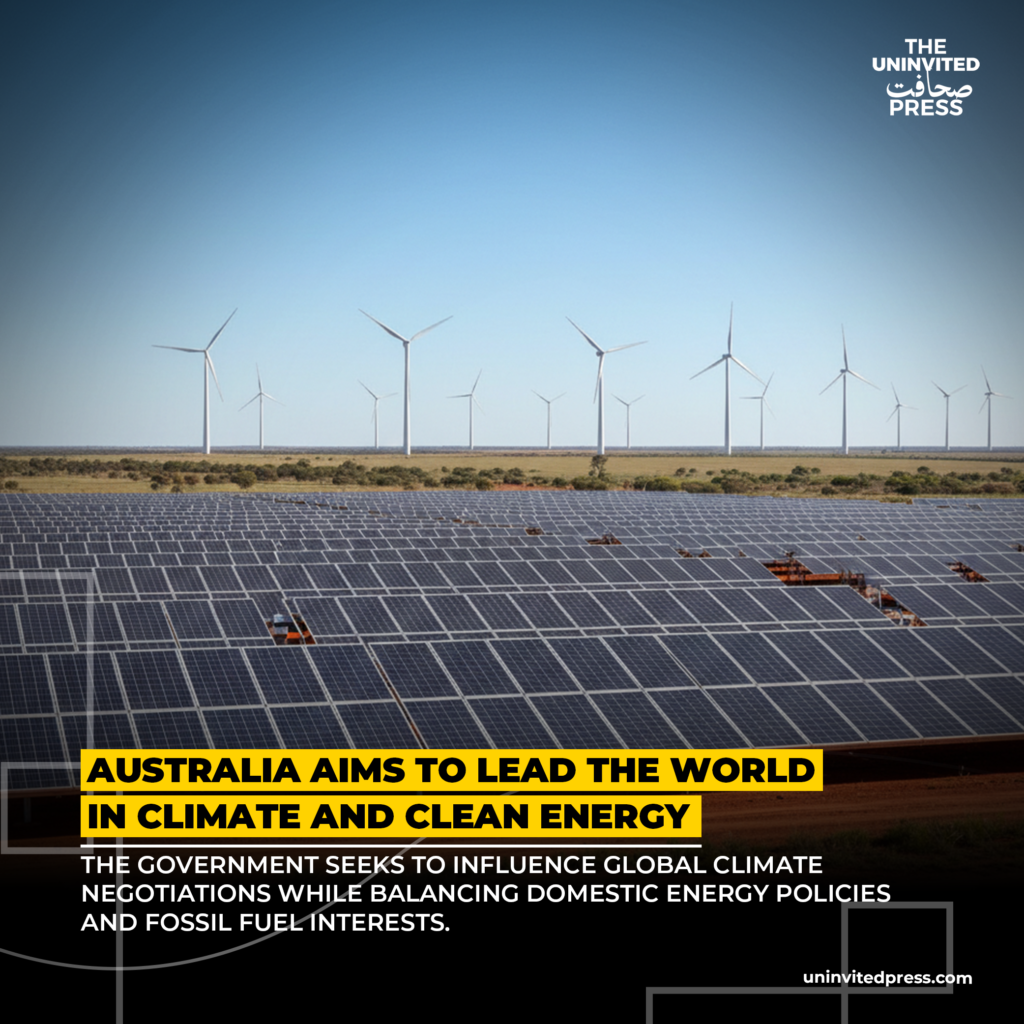
Australia leads COP31 climate negotiations in 2026, pushing global fossil fuel transition and clean energy finance while advancing domestic renewables amid fossil fuel balancing act.
Australia at COP31: Climate Leadership vs. Fossil Fuels:
Australia has secured a pivotal role in shaping the world’s climate future, stepping up as the lead negotiator for the 2026 United Nations Climate Change Conference (COP31) in Antalya, Türkiye. This position allows Canberra to influence critical global decisions on phasing out fossil fuels and mobilizing trillions in climate finance, even as it grapples with domestic tensions between ambitious renewable targets and its status as a major coal and gas exporter. With the Pacific co-hosting pre-COP events, this marks a chance for Australia to rebuild its international credibility after years of criticism, while delivering economic benefits through clean energy investments projected to top billions.
Australia Secures Key Negotiating Role at COP31, Elevating Pacific Influence:
Australia’s push to lead global climate action reached a major milestone in late 2025 when it secured the role of President of Negotiations for COP31, the United Nations Climate Change Conference set for November 2026 in Antalya, Türkiye. This unprecedented arrangement-where Türkiye hosts the summit and serves as overall COP President, while Australia’s Climate Change and Energy Minister Chris Bowen holds exclusive authority over the negotiations-emerged after Australia withdrew its bid to host the event in Adelaide. The deal, finalized at COP30 in Belém, Brazil, on November 23, 2025, gives Australia and the Pacific region significant influence over the agenda, priorities, and outcomes of the talks.
The partnership includes a pre-COP meeting in a Pacific Island nation, focusing on climate finance, resilience, and the existential threats facing vulnerable low-lying countries. This setup stemmed from years of lobbying by Australia and Pacific partners to elevate regional voices in global climate deliberations, especially amid criticism of multilateralism and rising geopolitical tensions.
Australia’s COP31 Role Under Scrutiny Amid Climate and Energy Challenges:
Australia’s active role in COP31 reflects growing international expectations for developed nations to take decisive climate action. Global pressure has intensified following repeated warnings from the Intergovernmental Panel on Climate Change (IPCC) about the accelerating impacts of climate change, including extreme weather events and rising sea levels. By showcasing its renewable energy projects and policy commitments, Australia aims to influence negotiations on emissions reduction targets, climate finance, and sustainable development initiatives.
Despite these efforts, Australia’s climate leadership ambitions face scrutiny. Environmental groups and climate activists argue that continued fossil fuel exports undermine the credibility of its commitments. Balancing economic growth, energy security, and climate responsibility remains a central challenge as Australia seeks to navigate domestic and international expectations simultaneously.