

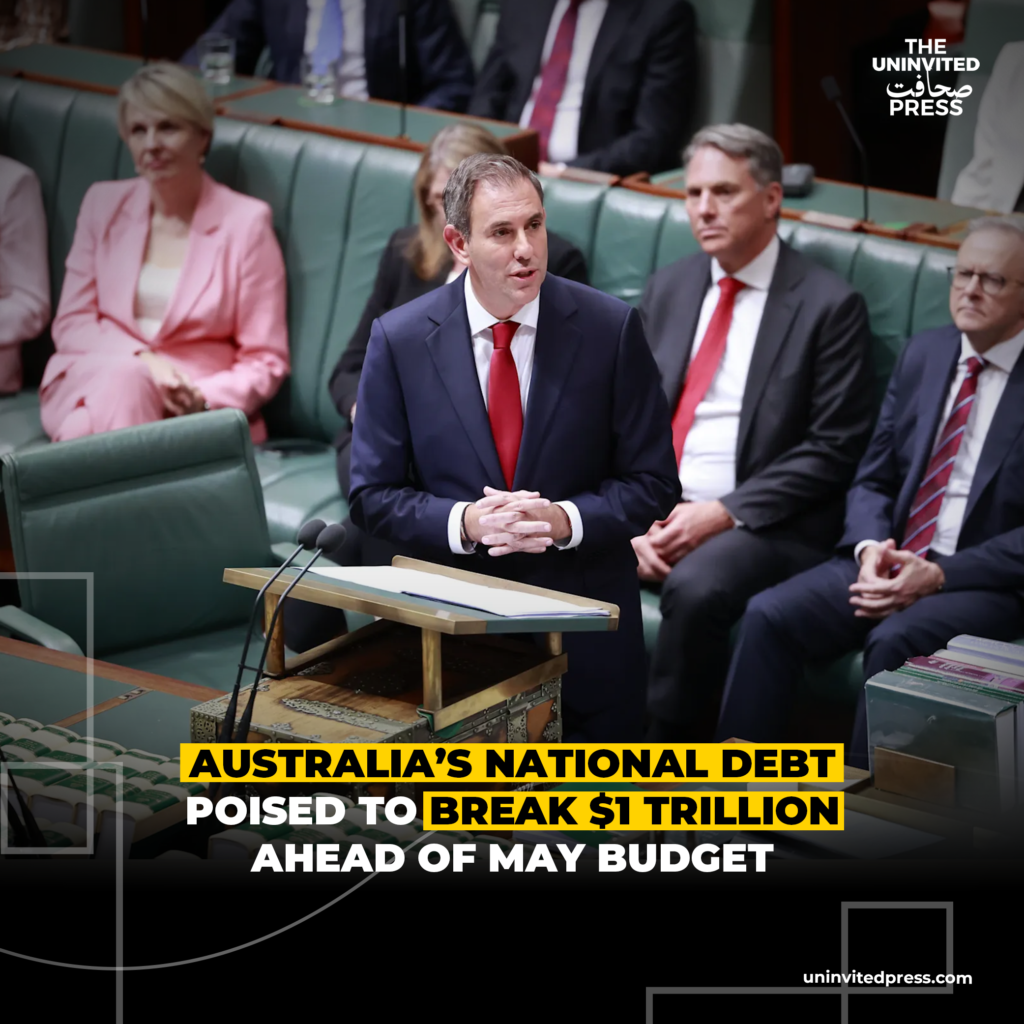
Australia’s federal debt is poised to surpass A$1 trillion ahead of the May 2026 budget, prompting intense debate over government spending, fiscal sustainability, and economic priorities as policymakers prepare to unveil new fiscal measures.
Australia Nears A$1 Trillion Debt Ahead of May Budget:
Australia’s federal government debt is on the brink of surpassing A$1 trillion (approximately US$650 billion)-a major fiscal milestone to be reached weeks before the federal budget is handed down in May. The unexpected acceleration in borrowing has put pressure on policymakers and sparked debate about the nation’s long-term economic priorities.
Australia Hits A$1T Debt Early, Budget Pressure Mounts:
According to recent reports, gross Commonwealth government debt has now exceeded $1 trillion, landing ahead of forecasts previously published by Treasury and expected to shape the narrative around the upcoming May 2026 budget. This growth reflects higher government spending and larger deficits than initially projected.
Treasury data shows that roughly half of the recent upward revision in debt stems from policy decisions and spending commitments, while the remainder results from sustained expenditure pressures in key areas such as health, disability support, and other public services. As a share of the economy, debt is expected to continue climbing-even as interest costs on government bonds rise.
Economists note that despite the headline figure, Australia’s public debt remains lower than many other advanced economies when measured relative to GDP. Nonetheless, the timing of this fiscal milestone-just ahead of the federal budget release-has provoked scrutiny from both sides of politics, with opponents warning of reduced fiscal flexibility and increased costs to taxpayers over the long term.
Rising Debt Fuels Political Clash Ahead of Australia’s May Budget:
Australia’s government debt trajectory has been shaped by a decade of budget deficits, driven in part by stimulus measures during the global pandemic, ongoing investment in social services, and structural pressures from an ageing population. In 2024-25, gross debt was already tracking close to record highs, and forecasts from previous budgets had signalled a rise past $1 trillion in coming years.
Political debate has intensified around how best to manage the growing debt burden. The ruling Labor Party has defended its fiscal strategy, highlighting efforts to cap debt growth and claiming that sustained investments in healthcare, aged care, and national infrastructure are essential for future prosperity. Opposition parties, by contrast, argue that unchecked spending undermines economic growth and places an undue burden on younger generations, advocating for tighter spending controls and tax reforms.
International bodies like the International Monetary Fund (IMF) have also urged Australia to consider comprehensive tax reforms and broader fiscal adjustments to ensure the sustainability of public finances in the medium term, especially as global economic conditions evolve.
With the May budget looming, the debt milestone is likely to feature prominently in public discourse, influencing decisions on taxation, spending priorities, and economic policy more broadly.