

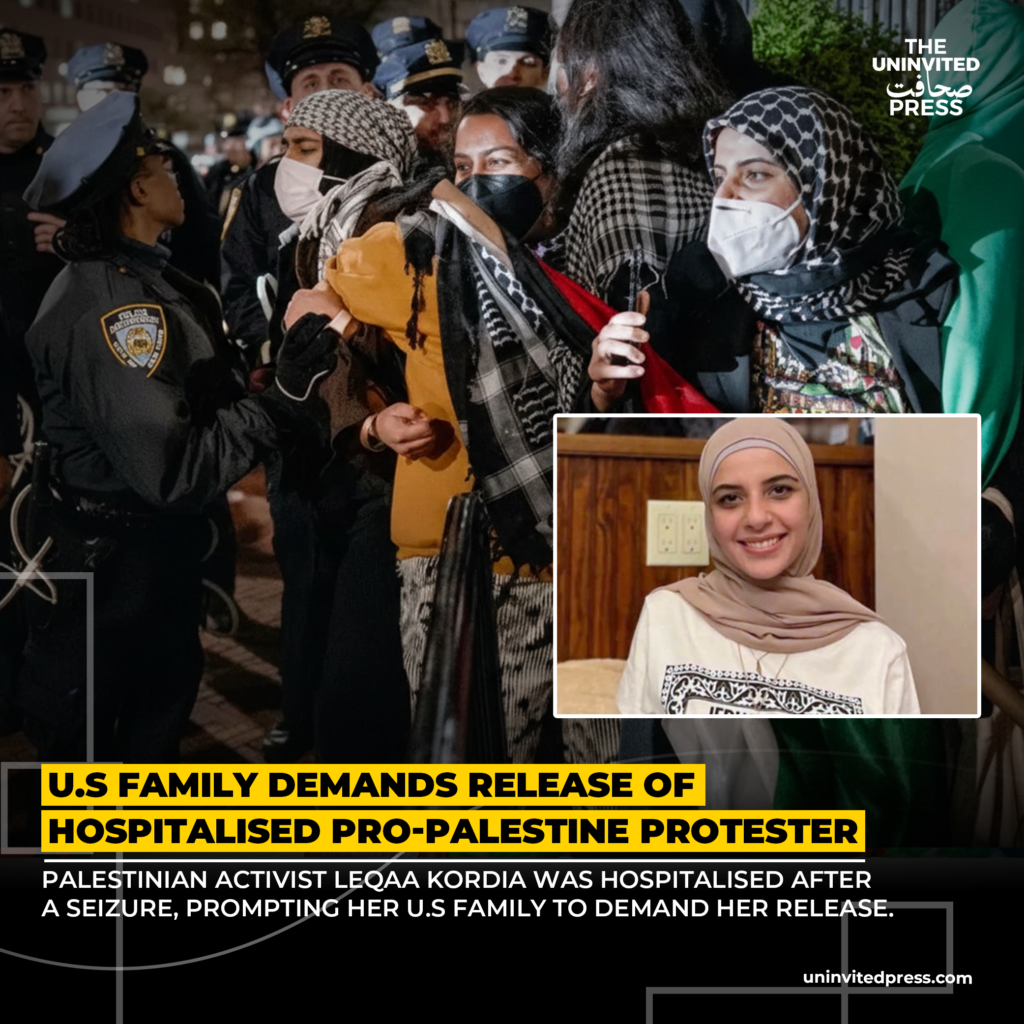
After suffering a seizure in a Texas ICE facility, the 33-year-old pro-Palestine protester was discharged and returned to custody amid accusations of medical neglect and political persecution.
ICE Detention of Hospitalized Activist Triggers Backlash:
A routine immigration check-in turned into a nightmare for Leqaa Kordia when ICE agents detained her nearly a year ago, allegedly in retaliation for her activism. Now, after a medical emergency left her hospitalized without updates to her family for days, advocates are amplifying calls for her freedom. The incident exposes ongoing concerns over detainee treatment in U.S. immigration facilities, where poor conditions have led to multiple deaths. With Kordia’s health in jeopardy and her case emblematic of broader crackdowns on dissent, pressure mounts on federal authorities to act.
Immigration Check-In Ends in Crisis:
Leqaa Kordia’s ordeal began on March 13, 2025, when she attended what she believed was a standard immigration meeting in Newark, New Jersey. Instead, ICE agents detained her, placed her in an unmarked van, and transferred her to the Prairieland Detention Center in Alvarado, Texas-a facility over 1,500 miles from her family. Kordia, who entered the U.S. legally in 2016 on a tourist visa and later switched to a student visa, had her green card petition approved in 2021 but overstayed after dropping out of school due to a misunderstanding of her status.
Her detention followed participation in a pro-Palestine demonstration near Columbia University in April 2024, where she was briefly arrested during a police sweep, though charges were dropped. This came amid widespread campus protests against U.S. support for Israel’s actions in Gaza, which Kordia had personal stakes in-nearly 175 of her extended family members have been killed in the conflict. Advocates argue her activism prompted the targeting, especially as her arrest mirrored that of Mahmoud Khalil, another Columbia protester detained days earlier.
Over the months, Kordia’s health declined sharply. Family visits revealed her looking frail, pale, and exhausted, struggling with dizziness and fainting spells attributed to poor nutrition, inadequate sleep, and substandard conditions. She reported feeling like she was “slowly dying” in detention. On February 6, 2026, around 8:45 p.m., she suffered a seizure after falling and hitting her head in a facility bathroom. ICE medical staff transferred her to Texas Health Huguley Hospital in Burleson for evaluation.
For over 72 hours, her family and lawyers were left in the dark about her location and condition. Attorneys called multiple hospitals and demanded updates from DHS, but received none until a journalist provided her whereabouts. Habeas counsel was denied access, even by phone, citing “safety concerns.” On February 9, 2026, Kordia was discharged and returned to Prairieland. Her legal team noted she remained “very sick,” with no details on her diagnosis or treatment.
ICE Under Fire for Detaining Activists:
Kordia’s story unfolds against a backdrop of heightened U.S. scrutiny on pro-Palestine activism following the October 7, 2023, Hamas attack and Israel’s subsequent military response in Gaza, which has killed tens of thousands. Campus protests, like those at Columbia, drew police crackdowns and arrests, with Kordia among those swept up-though her charges were dismissed. Her detention is part of a pattern where ICE has been accused of targeting activists, including through programs exchanging tactics with the Israeli military.
ICE facilities like Prairieland have faced criticism for overcrowding, medical neglect, and rights violations. A 2025 Senate investigation documented dozens of neglect cases, and at least 30 deaths have occurred in ICE custody since President Trump’s second term began. Kordia, with no criminal history, poses no flight risk or public safety threat, per court findings.