

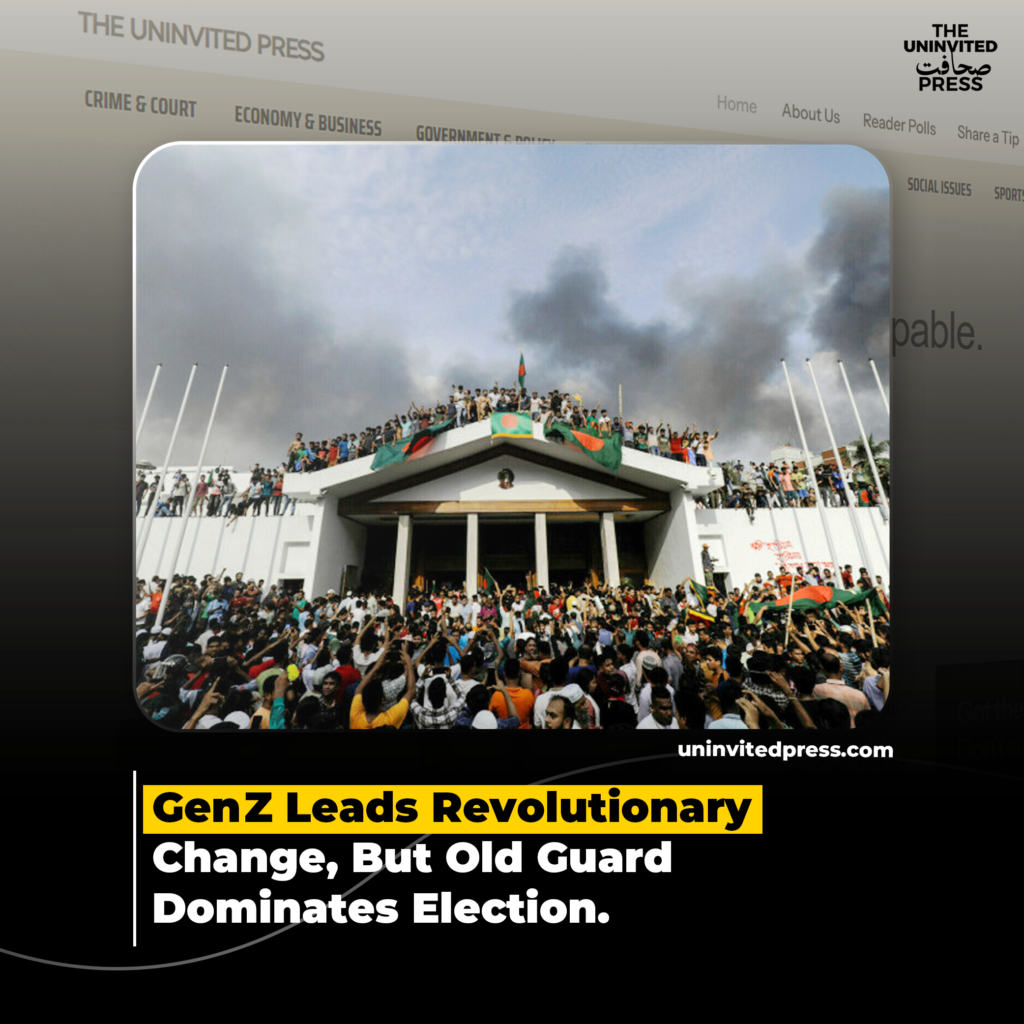
Bangladesh’s Feb 12, 2026 election tests Gen Z revolution post-Hasina ouster; BNP and Jamaat lead polls amid youth divisions, economic crisis in Dhaka.
Bangladesh Showdown: Gen Z vs Old Guard on Feb 12:
In a defining moment for Bangladesh, the nation heads to the polls on February 12, 2026, marking its first competitive election since the Gen Z-led uprising that forced Prime Minister Sheikh Hasina into exile in 2024. The protests, fueled by economic grievances and demands for reform, toppled a 15-year autocracy but now face dilution as established parties dominate the race. With 127 million voters-including a massive youth bloc-this vote could either cement revolutionary gains or revert to entrenched dynasties, amid fears of instability in a country grappling with inflation, violence, and a fragile economy.
Revolt, Reform, and the Vote: Bangladesh’s Journey to a Pivotal Election:
The election buildup has been tense, with campaigning kicking off on January 22, 2026, under the interim government of Nobel laureate Muhammad Yunus. Nomination submissions closed December 29, 2025, drawing 1,981 candidates from 51 parties. Violence erupted early, including clashes that killed at least 12 and injured hundreds, targeting religious minorities and political rallies.
On February 9, final rallies saw BNP’s Tarique Rahman addressing crowds in Dhaka, promising reforms. Jamaat-e-Islami held parallel events, emphasizing anti-corruption. The NCP, born from the uprising, has fielded 30 candidates but faced internal splits over its Jamaat alliance formed in late December 2025.
The timeline traces back to July 2024, when student protests over civil service quotas-reserving 30% for freedom fighters’ descendants-ignited nationwide fury. By August 5, Hasina fled to India as protesters stormed her residence. Yunus assumed control August 8, dissolving parliament and banning Awami League participation. Reforms followed, including electoral changes, leading to this vote.
Polling stations open at 8 a.m. local time on February 12, closing at 4 p.m., with counting starting immediately. Results are expected by February 13 morning.
Bangladesh’s Youth vs Dynasties: A Battle Amid Crisis:
Bangladesh’s politics have long been a duopoly between Hasina’s Awami League and the BNP, founded by military leaders post-1971 independence from Pakistan. Hasina, daughter of founding father Sheikh Mujibur Rahman, ruled from 2009, delivering economic growth-GDP hit $461 billion-but at the cost of repression, rigged elections, and corruption allegations. The 2018 and 2024 votes were marred by boycotts and violence, with Awami securing landslides amid claims of fraud.
The 2024 uprising, dubbed the world’s first Gen Z revolution, started over quotas but exposed deeper frustrations; youth unemployment at 12%, inflation over 9%, and a weakening taka. Protests spread to all provinces, drawing diverse crowds-students, workers, women-united against autocracy. Security forces’ response killed around 1,400, per human rights groups, though government figures are lower.
Bangladesh, with 175 million people, is a garment export powerhouse but faces IMF bailouts amid reserves dipping below $20 billion. The vote tests if youth energy can break dynastic cycles-BNP’s Rahman is Zia’s son-or if Islamists like Jamaat, banned under Hasina for 1971 war crimes allegations, gain ground. Regional stakes are high; India backs stability amid refugee flows, while China eyes infrastructure ties.
The diaspora-over 13 million abroad-adds weight, with many first-time voters disillusioned by past rigging.