

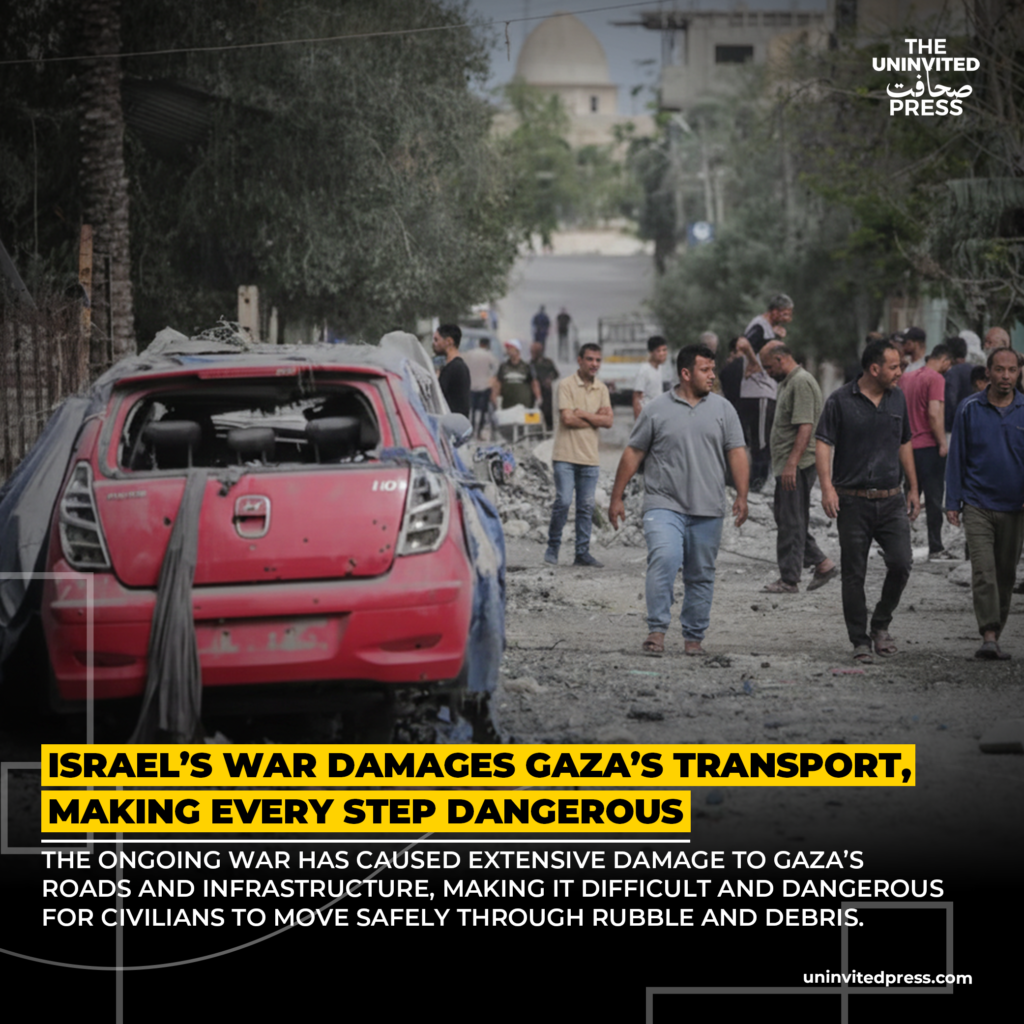
Israel’s ongoing war has destroyed 81% of Gaza’s roads, creating deadly rubble fields that endanger civilians and block aid, with $2.5bn in transport losses as of 2026.
Gaza Roads Become Deadly for Civilians:
Gaza’s once-navigable roads have been reduced to treacherous paths of rubble and craters after over two years of conflict, making even walking a life-threatening ordeal for millions. Civilians, already reeling from displacement and shortages, now face amplified dangers from unexploded ordnance, collapsing structures, and blocked access to essentials. This infrastructure collapse not only hinders humanitarian aid but deepens a crisis that could take decades to resolve, spotlighting the human cost of prolonged warfare.
Devastation on the Ground: Rubble, Casualties, and a Lifeline Under Siege:
The war’s toll on Gaza’s transportation became starkly evident in early 2026 reports. A joint World Bank, EU, and UN assessment from January revealed that Israeli military actions had inflicted $2.5 billion in damage to transport systems, destroying 81% of roads and isolating vast areas. By February, UN OCHA’s situation updates highlighted ongoing airstrikes and shelling, with 28 Palestinians killed between January 22-28 alone, adding to a post-ceasefire toll of 492 deaths and 1,356 injuries.
In northern Gaza, streets are clogged with debris from collapsed buildings, forcing residents to navigate on foot amid unexploded ordnance. A New York Times analysis showed Israel demolished over 2,500 structures post-ceasefire, exacerbating the rubble crisis estimated at 68 million tons-enough to fill Central Park 27 times. Civilians report walking hours to reach aid points, risking collapse from exposure or injury.
The Rafah crossing, Gaza’s lifeline to Egypt, reopened partially on February 1, 2026, after a year-long closure, allowing limited medical evacuations and returns. However, it closed briefly February 5-6 due to operational disputes, stranding patients. Returnees like those from Egypt describe Khan Younis as a “ghost city,” with no safe paths amid the destruction.
On February 6, strikes in Gaza City killed 23, the deadliest day since the truce. UNRWA noted children dying from hypothermia-11 cases by late January-due to inadequate shelter and blocked winter supplies.
Gaza’s Humanitarian Crisis Deepens Amid War and Blockade:
Gaza’s infrastructure woes trace back to the blockade imposed by Israel and Egypt since 2007, following Hamas’s takeover. The current war erupted October 7, 2023, with Hamas attacks killing 1,200 Israelis and taking hostages. Israel’s response aimed to dismantle Hamas but led to over 72,000 Palestinian deaths and destruction of 90% of infrastructure.
A ceasefire in October 2025, brokered under Trump’s “Board of Peace,” promised aid and reconstruction, but violations persist. Israel’s military corridors, like Netzarim and Morag, bisect Gaza, restricting movement and aid. Over 1.9 million displaced, with 90% of homes uninhabitable.
This damage amplifies risks; Blocked roads delay ambulances, fuel shortages halt vehicles, and rubble harbors diseases. UN experts warn of “managed deprivation,” turning Gaza into a containment zone. The significance? It prolongs suffering, hinders recovery, and fuels regional instability, affecting oil markets and counter-terrorism.