

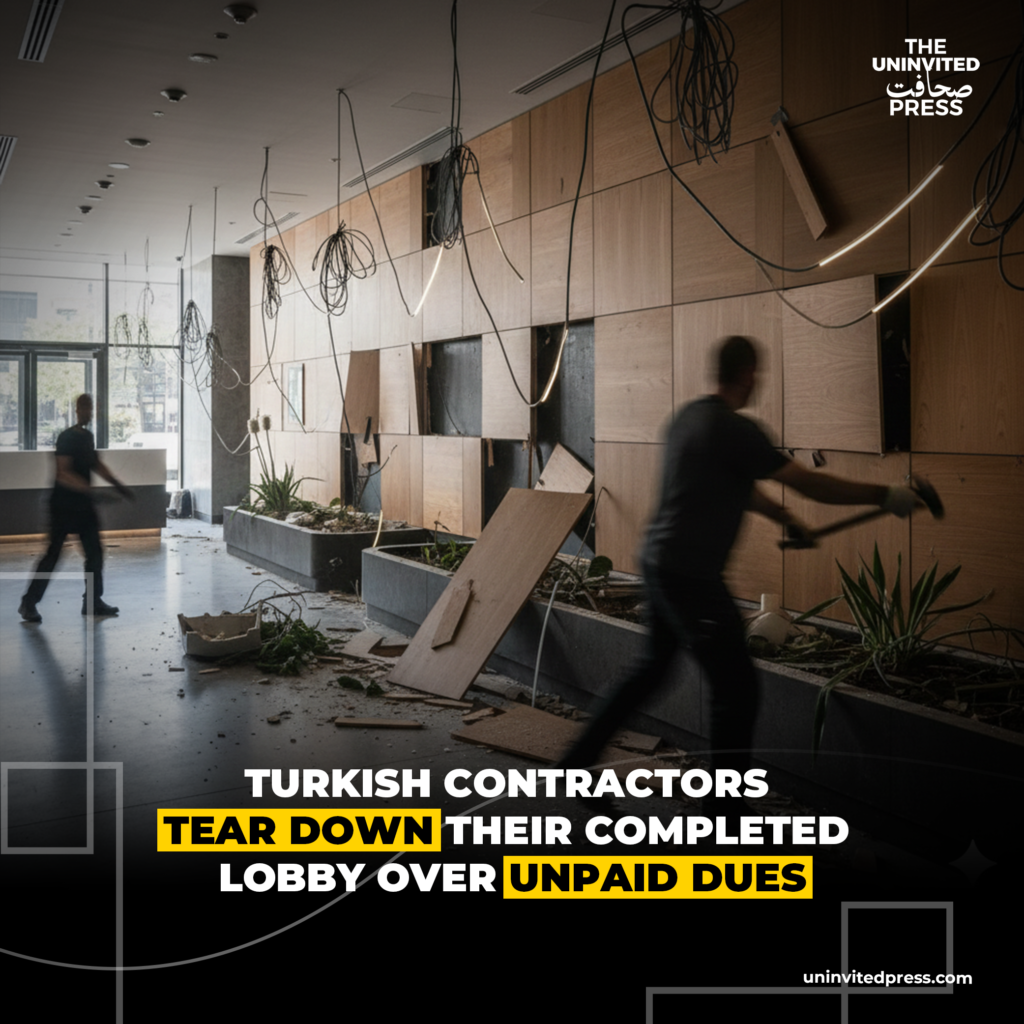
Payment delays plague Turkey’s construction sector, sparking protests, work halts, and rare destructive acts as contractors demand dues amid high inflation and economic strain.
Turkey’s Construction Crisis: Payment Delays Shake Industry and Livelihoods:
Payment disputes in Turkey’s construction industry continue to escalate, with contractors and subcontractors increasingly halting work, protesting, or resorting to drastic measures when bills remain unpaid for months. These conflicts reflect deeper challenges in a sector vital to the economy but plagued by cash flow problems, inflation, and uneven enforcement of contracts.
Such incidents underscore the human and economic toll; workers face livelihood threats, projects stall, and trust erodes between developers, main contractors, and smaller firms. In a high-inflation environment, delayed payments compound financial strain for thousands in the industry.
From Delays to Destruction: Turkey’s Construction Crisis Escalates:
Construction payment delays in Turkey are not isolated. Subcontractors frequently report waiting months for dues, leading to protests or suspensions. In June 2024, 130 workers in Malatya province protested after two months without pay from their employer. Similar actions occurred at major sites like Galataport in Istanbul (2021), where workers halted construction over wages.
A recurring theme involves Turkish firms abroad. In August 2025, Cengiz Insaat halted work on a Bosnia highway section, citing over 130 million BAM (about €66 million) in overdue payments from the investor after four months of appeals. The stoppage affected over 1,000 workers and 50 subcontractors. In Saudi Arabia (Mecca, 2025), around 150 Turkish workers struck for 60 days over 11 months of unpaid wages and poor conditions on a $26 billion project by Saudi Arabian Baytur.
Domestically, rare but dramatic responses surface. Social media footage from Şanlıurfa (Urfa) in early 2026 allegedly shows a decoration firm destroying completed lobby work after three months without payment-though details remain unverified beyond viral shares. No official confirmation from authorities or involved parties has emerged, and the act, if true, risks legal consequences for property damage.
These cases build on post-2023 earthquake scrutiny, where authorities detained over 130 contractors for alleged shoddy practices contributing to collapses. While not directly payment-related, the crackdown highlighted regulatory gaps that allow disputes to fester.
Turkey’s Construction Collapse: Inflation, Quakes, and Payment Chaos:
Turkey’s construction boom, once fueled by cheap credit and government incentives, has slowed amid economic headwinds. Inflation rates remained high (often 50-70% in recent years), lira volatility, and rising material costs squeeze margins. The 2023 earthquakes exposed vulnerabilities, leading to stricter oversight but also project delays and financial pressures.
The industry employs millions and drives GDP, yet subcontractors-often smaller firms-bear the brunt of payment chains. Developers or main contractors delay to manage cash flow, leaving workers unpaid. Unions like KESK and DİSK have protested low wages and false inflation figures used for adjustments, with civil servants marching in Ankara (January 2026) over inadequate raises.
Overseas, Turkish firms expand but face parallel issues: undocumented labor accusations (Barcelona Camp Nou, 2025) and strikes (Mecca). In India (Kanpur metro, May 2025), Gulermak allegedly fled owing ₹80 crore (about $9.5 million) to 53 subcontractors after 10 months, linked by some to geopolitical tensions.