

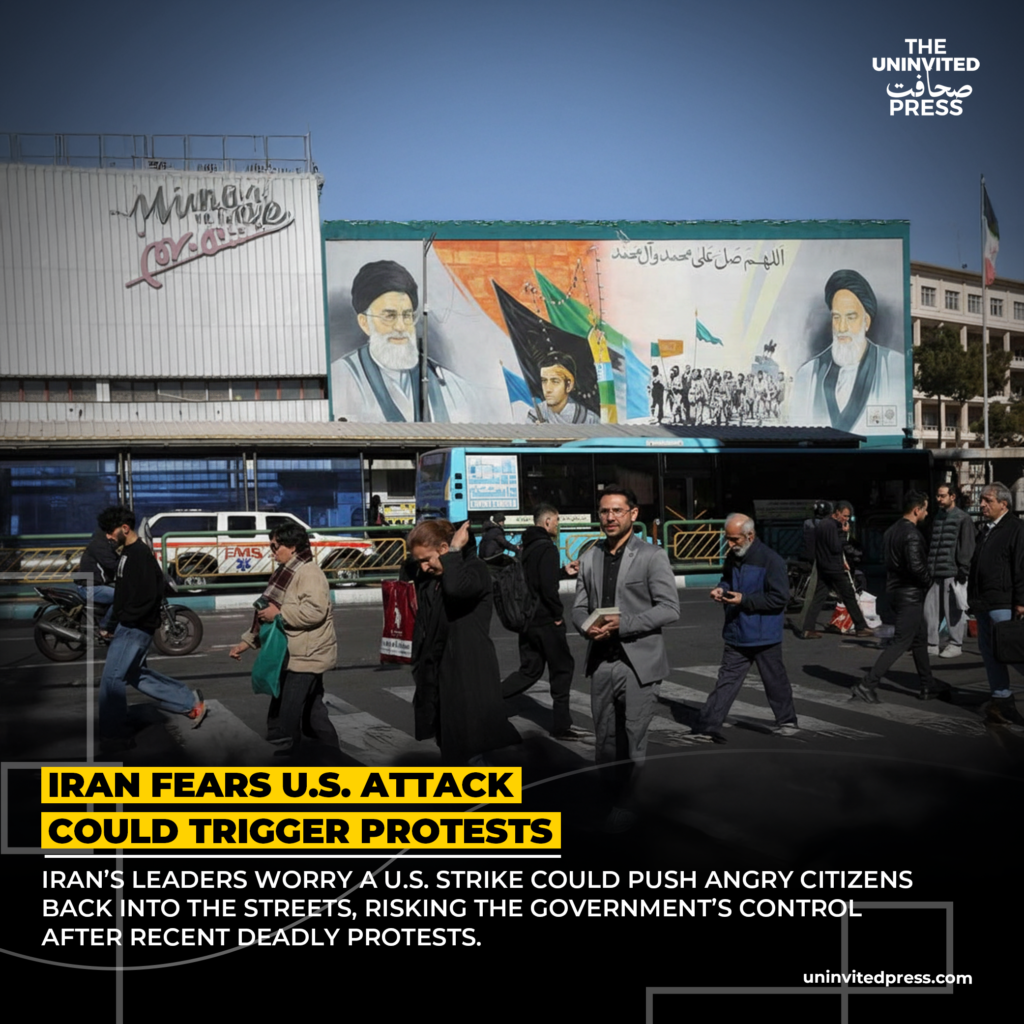
Insider warnings to Khamenei reveal boiling public anger after January’s bloodbath, with a U.S. attack seen as the spark that could shatter clerical rule.
Inside Iran’s Fear: How U.S. Threats Could Ignite a Nation on the Edge?
Iran’s leadership is privately terrified that a U.S. military strike could shatter their fragile hold on power, igniting a new explosion of protests from a public still seething over last month’s brutal crackdown. According to six current and former officials, high-level briefings to Supreme Leader Ayatollah Ali Khamenei stressed that fear no longer deters Iranians, who are primed to confront security forces again. This internal alarm, emerging amid U.S. threats following a deadly attack on American troops, highlights the regime’s deepest vulnerability: a population pushed to the brink by economic collapse and repression, where external aggression might prove the tipping point for regime change.
Iran on a Knife’s Edge: Crackdowns, Protests, and the Threat of U.S. Strikes:
The revelations surfaced on February 2, 2026, through anonymous sources speaking to Reuters, painting a picture of a regime on edge. In recent high-level discussions, officials advised Khamenei that the January crackdown-the bloodiest since the 1979 Islamic Revolution-has left Iranians unafraid and ready to rise. They emphasized that a limited U.S. attack could rally demonstrators, causing “irreparable damage” to the system.
This follows a deadly January 28 drone strike in Jordan that killed three U.S. soldiers, blamed on Iranian-backed militias. Trump vowed retaliation, deploying an aircraft carrier group to the region and weighing options like targeted strikes on Iranian leaders. Iran has responded with defiance, warning of a “regional war” if attacked, while hinting at nuclear talks.
The January protests began December 28, 2025, as strikes in Tehran’s Grand Bazaar over the rial’s collapse. They quickly spread to over 200 cities across all 31 provinces, evolving into calls for regime overthrow. Initial government responses were conciliatory, but by January 8, a nationwide internet blackout and lethal force ensued. Khamenei ordered the crackdown, with security forces firing on crowds.
Death toll estimates range from 2,615 (HRANA) to over 6,126 (activists), with thousands wounded and arrest. Protests quelled by mid-January, but the blackout-lasting 20 days and costing $37 million daily-hid the full scale.
By February, insiders warned Khamenei of the risks: A U.S. hit could spark a “bloodbath” as emboldened protesters clash with harsher security responses.
Economic Collapse, Unrest, and the Tipping Point of a Regime:
Iran’s economy has been in freefall, with the rial losing 90% of its value since 2018 U.S. sanctions under Trump. Inflation hit 40-72%, food prices soared 60%, and shortages of water and energy compounded misery. The June 2025 12-day war with Israel destroyed key air defenses, exacerbating isolation.
Protests echo 2022’s Mahsa Amini uprising, but January’s were broader, uniting classes and regions in demands for systemic change. The regime’s response-lethal force, blackouts-mirrors past crackdowns but at unprecedented scale.
U.S.-Iran tensions stem from the collapsed 2015 nuclear deal, proxy wars via militias in Iraq, Syria, Yemen, and attacks on U.S. forces. Trump’s “maximum pressure” campaign, including recent tariffs, aims to force concessions. Yet, insiders note past strikes (like June bombings) didn’t spark unrest, unlike the feared scenario now.
With grievances unaddressed-corruption, repression, inequality-the regime risks implosion if external shocks align with internal fury. Analysts warn it could reshape the Middle East, affecting global oil, migration, and security.