

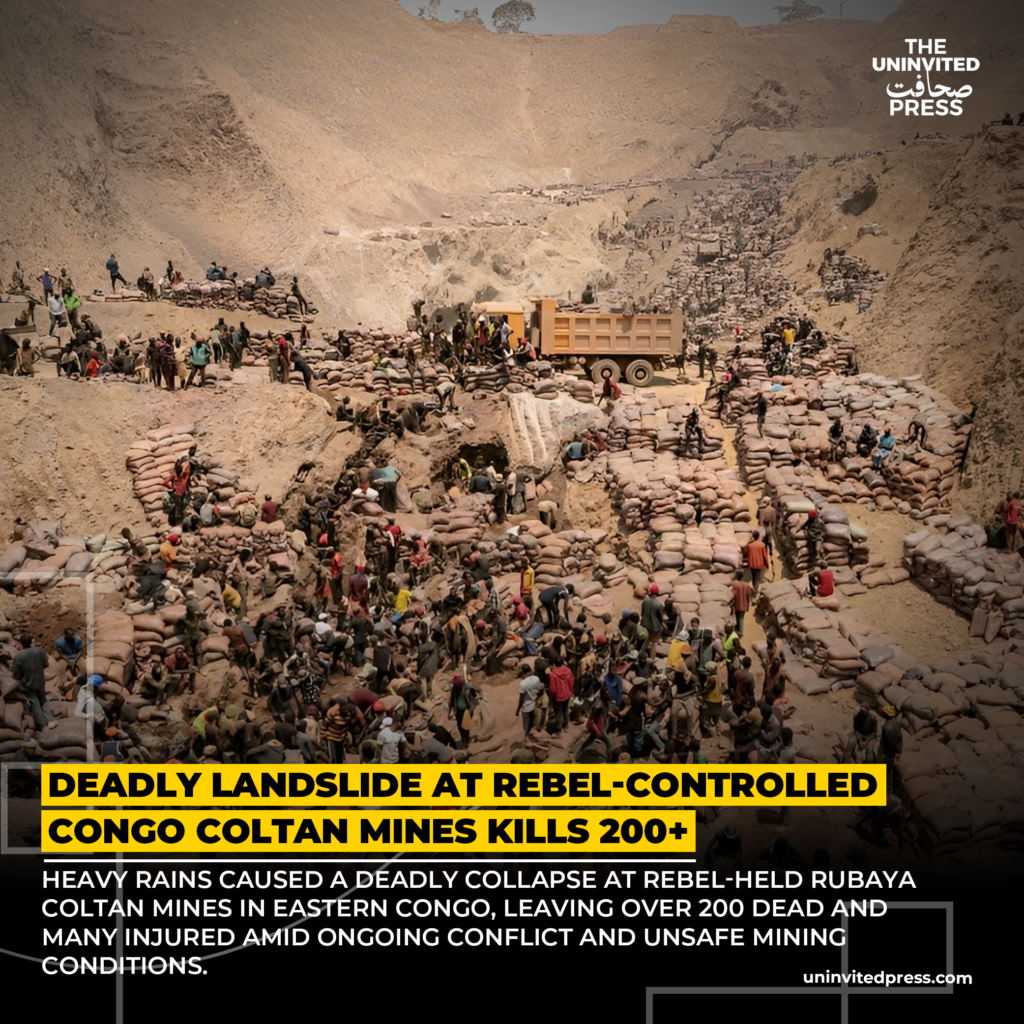
Heavy rains trigger deadly collapse in Rubaya, over 200 dead in Rubaya coltan mine landslide in eastern DR Congo; M23 rebels halt operations amid accusations of unsafe exploitation in conflict zone.
Mud and Minerals: Over 200 Buried Alive in Rubaya’s Deadly Collapse:
A devastating landslide struck the Rubaya coltan mines in eastern Democratic Republic of Congo on January 28, 2026, burying over 200 people alive and injuring dozens more. Controlled by the Rwanda-backed M23 rebels, the site-a global hub for minerals powering smartphones and electronics-collapsed under heavy rains, highlighting the deadly intersection of unsafe artisanal practices, rebel exploitation, and a humanitarian crisis that has displaced millions. As rescue teams dig through mud for survivors, the tragedy underscores how conflict minerals fuel violence while endangering vulnerable workers, demanding urgent international scrutiny on supply chains and regional stability.
Hillside Horror Unfolds: 200+ Buried as Rubaya Mines Collapse in Two Waves:
The collapse unfolded amid torrential rains on January 28, 2026, when a hillside gave way at the Rubaya mining complex, engulfing multiple hand-dug tunnels. Witnesses described chaos as miners scrambled to escape, with many buried alive in the pits. A second landslide may have struck the next morning, compounding the disaster. By January 30, rebel authorities reported over 200 dead, with an adviser later confirming at least 227 bodies recovered. Local reports suggest the toll could climb to 400, though this remains unverified.
Rescue efforts began immediately but faced severe challenges: unstable ground, deep mud, and limited equipment delayed body retrievals. At least 20 survivors with serious injuries were rushed to three health facilities in Rubaya, with plans to evacuate the most critical to Goma via ambulance.M23-appointed governor Eraston Bahati Musanga visited the site on January 30, ordering a temporary suspension of artisanal operations and the relocation of nearby residents to safer areas.
As of February 2, 2026, searches continued, with officials warning that trapped victims might still be alive in underground shafts. The DRC government, while expressing solidarity, pointed fingers at M23 for enabling unsafe mining.
The Resource Curse in Action: $24 Trillion in Wealth, Millions in Misery:
Rubaya’s mines have long been a flashpoint in eastern DRC’s turmoil. Seized by M23 in April 2024 during a lightning offensive, the site produces 15-30 percent of global tantalum, derived from coltan-a mineral vital for capacitors in smartphones, laptops, and aerospace tech. DRC supplies about 40 percent of world coltan, but extraction here is artisanal: thousands dig by hand in unregulated pits, earning dollars a day without safety gear.
M23, a Tutsi-led group backed by Rwanda (allegations denied by Kigali), resurfaced in 2021 after a 2013 defeat, aiming to protect Congolese Tutsis and challenge Kinshasa’s rule. Since taking Rubaya, M23 has taxed coltan trade, generating $300,000-$800,000 monthly to fund operations. This fits a pattern: conflict minerals like coltan have fueled wars since the 1990s, with smuggling to Rwanda inflating its exports despite limited domestic reserves.
The disaster’s significance extends beyond loss of life. It exposes the “resource curse”: DRC’s $24 trillion mineral wealth drives poverty (half the population affected since conflicts escalated) and displacement (over 7 million nationwide). Global demand for tech and green energy amplifies exploitation, with China dominating 60 percent of DRC cobalt but coltan flowing through opaque chains. Past reforms, like 2010 US Dodd-Frank Act, aimed to curb conflict minerals but often shifted burdens to locals without ending violence.