

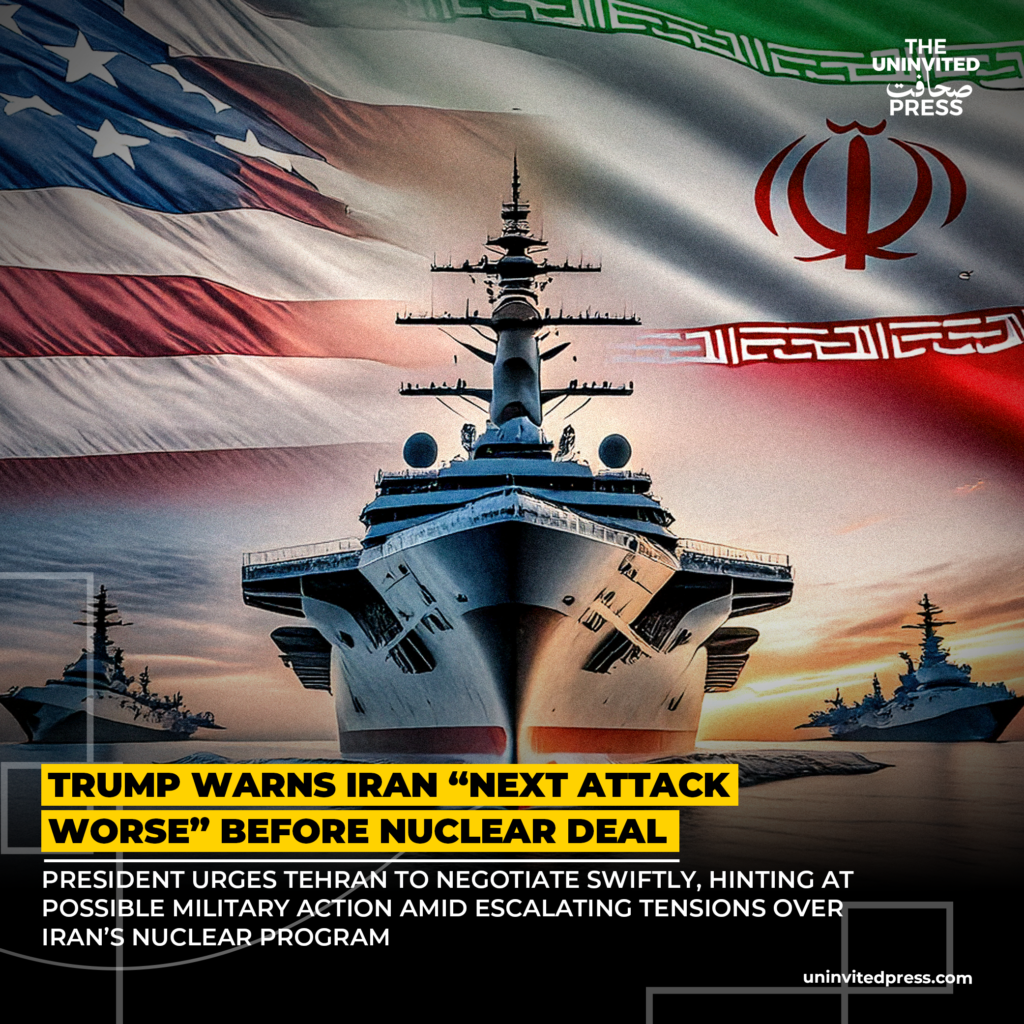
U.S. President Donald Trump presses Tehran to negotiate swiftly on a nuclear agreement, warning that the next military action would be significantly more severe-amid rising tensions and Iran’s rejection of talks under threat.
Trump Ultimatum Pushes Iran to the Brink of Diplomatic Showdown:
WASHINGTON-U.S. President Donald Trump sharply warned Iran to negotiate a new nuclear deal or risk a “far worse” military response than during previous confrontations, saying time is running out and pushing Tehran to the brink of intensified diplomatic brinkmanship. Iran, rejected talks conducted under military threat, deepening one of the gravest foreign policy disputes of Trump’s presidency and stoking fears of escalation.
The High-Stakes Standoff Between Trump and Tehran:
On January 28-29, 2026, President Donald Trump issued a stark ultimatum to Iran, urging it to return to negotiations on a nuclear deal that would preclude any pursuit of nuclear weapons-or face U.S. military action that he described as “far worse” than past confrontations. Trump referred to previous military operations, including a U.S. and allied strike on Iranian nuclear infrastructure, and warned Tehran not to let diplomatic momentum slip.
Trump’s message, carried in public statements and social media posts, coincided with the movement of a U.S. naval strike group-described by U.S. officials as a “massive armada” led by the aircraft carrier USS Abraham Lincoln-toward the Middle East as a deterrent and show of force. Trump framed the deployment as part of his push for negotiation, but emphasized the military option remains possible if diplomacy fails.
Tehran swiftly countered. Iranian officials, including Foreign Minister Abbas Araghchi, dismissed the prospect of negotiations under the shadow of U.S. threats, stating that “there can be no negotiations in an atmosphere of threats” and rejecting excessive demands as counterproductive. Araghchi reiterated that Iran is open to a fair deal ensuring only peaceful nuclear technology, yet would respond forcefully to any military strike.
Senior Iranian advisers warned that any attack would be met with severe retaliation, potentially escalating into all-out conflict targeting not just U.S. forces but allied nations as well, heightening regional anxieties.
Analysts note Trump’s rhetoric represents a blend of diplomatic ultimatum and military pressure-an approach intended to counter Iran’s nuclear advancements and push Tehran back to talks while signalling firm resolve to U.S. allies. However, Tehran’s firm rejection of coercive negotiations signals a deepening stalemate.
Iran’s Nuclear Program and the Path to Renewed Crisis:
The dispute over Iran’s nuclear program has lingered for decades. After the U.S. withdrawal from the 2015 Joint Comprehensive Plan of Action (JCPOA) under Trump’s previous presidency, Tehran accelerated enrichment activities and scaled back cooperation with the International Atomic Energy Agency (IAEA). Efforts for renewed talks have been intermittent, with periodic rounds of diplomacy mediated by regional and international partners.
Trump’s current administration has combined pressure tactics-including sanctions and military positioning-with renewed calls for a deal that would effectively eliminate Iran’s potential to develop nuclear weapons. Tehran maintains its nuclear pursuits are peaceful, while also bristling at what it sees as U.S. coercion and infringement on sovereign rights.
The backdrop to this latest escalation includes ongoing domestic strife in Iran, economic challenges, and widespread protests met with violent crackdowns-all contributing to a volatile environment where foreign policy flashpoints can quickly escalate.