

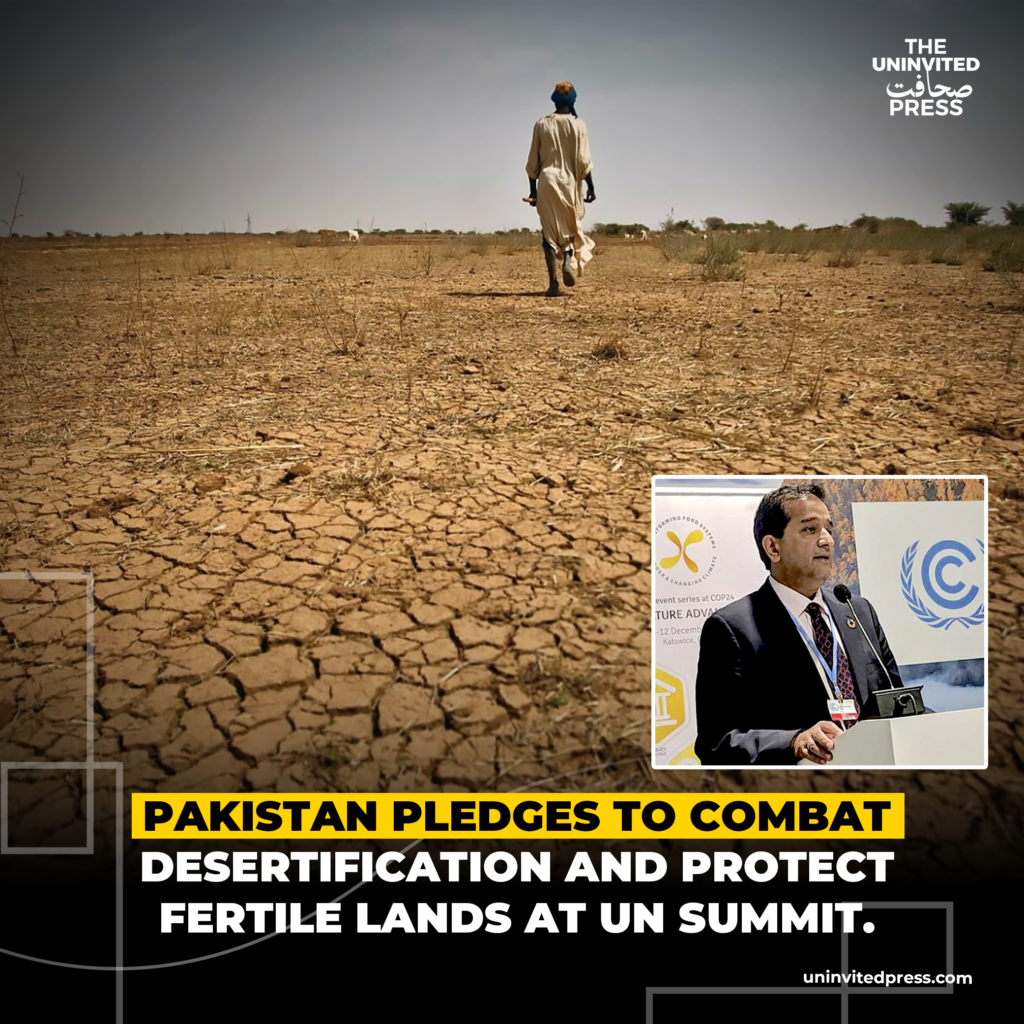
Pakistan pledges to fight desertification at UN amid Indus Treaty row with India, highlighting water security threats and climate risks in South Asia. Islamabad condemns “water terrorism” as New Delhi upholds Indus Treaty suspension, escalating South Asia’s resource tensions.
Water, Climate, and Conflict Collide at the UN as Pakistan Warns of Desertification Crisis:
In a heated United Nations Security Council debate on January 26, 2026, Pakistan pledged to combat the desertification of its ancient fertile plains, framing India’s suspension of the Indus Waters Treaty as an act of “water terrorism” that endangers millions of lives and regional stability. The commitment, voiced amid accusations of terrorism and territorial disputes, highlights the growing intersection of climate vulnerability, water scarcity, and geopolitical rivalry in South Asia. With over 68 percent of Pakistan’s land arid or semi-arid, this row risks accelerating land degradation, displacing communities, and deepening poverty in a nation already ranked among the world’s most climate-stressed.
Escalation at the UN: Water, Terrorism, and Desertification in the India-Pakistan Clash:
The confrontation erupted during a high-level open debate on “Reaffirming International Rule of Law: Pathways to Reinvigorating Peace, Justice, and Multilateralism.” Pakistan’s Ambassador Ahmad opened by condemning India’s “unprovoked military aggression” in May 2025, referencing Pakistan’s self-defense under UN Charter Article 51. He then pivoted to the treaty, calling its suspension a “blatant breach” that weaponizes water resources.
Representative Ali escalated the rhetoric, stating India seeks to “bring about the desertification of Pakistan’s ancient fertile plains” through the suspension. He pledged Pakistan would counter this “latest provocation-this water terrorism-with the same resolve, clarity, and success” as in the 2025 conflict.
India’s Ambassador Harish fired back, asserting the treaty remains in abeyance until Pakistan “credibly and irrevocably ends its support for cross-border and all other forms of terrorism.” He described Operation Sindoor-India’s May 2025 retaliation to the April Pahalgam attack that killed 26 civilians-as “measured, non-escalatory, and responsible.”
The exchange built on months of strain. The Pahalgam attack in April 2025 prompted India’s treaty review, leading to suspension amid claims of Pakistani involvement. By January 28, 2026, both sides had issued public statements reinforcing their positions, with no immediate de-escalation.
Climate and Conflict: The Indus Waters Challenge:
The Indus Waters Treaty, signed in 1960 and brokered by the World Bank, allocates the Indus River system’s waters between India and Pakistan, granting Pakistan control over the western rivers (Indus, Jhelum, Chenab) while allowing India limited use. It has survived three wars but faces unprecedented strain from climate change and politics.
Pakistan grapples with severe desertification, affecting nearly 80 percent of its arid or semi-arid land. Over 6.3 million hectares suffer from salinity, and 1 million from waterlogging, driven by deforestation (27,000 hectares lost annually), overgrazing, poor irrigation, and climate shifts. The Indus Delta has shrunk by 92 percent, turning floodplains barren and displacing 1.2 million people to urban areas like Karachi.
Causes include erratic monsoons, prolonged droughts (as in 2022 floods causing $30 billion in damage), and upstream diversions. Impacts are dire: reduced crop yields (wheat down 14.7 percent, rice 20.5 percent), biodiversity loss (mangroves declined 50 percent over a century), and heightened poverty for 37.2 percent of the population. Balochistan, Sindh, and Punjab face acute risks, with 73 percent of agriculture relying on depleting groundwater.
This pledge’s significance lies in linking environmental security to geopolitics. In a region where water fuels conflict, desertification could displace millions, exacerbate food insecurity (affecting 24 percent of GDP from agriculture), and strain relations further. Pakistan’s prior efforts, like the Ten Billion Tree Tsunami and Green Pakistan Programme (planting over 2.2 billion trees), align with UNCCD commitments since 1997.