

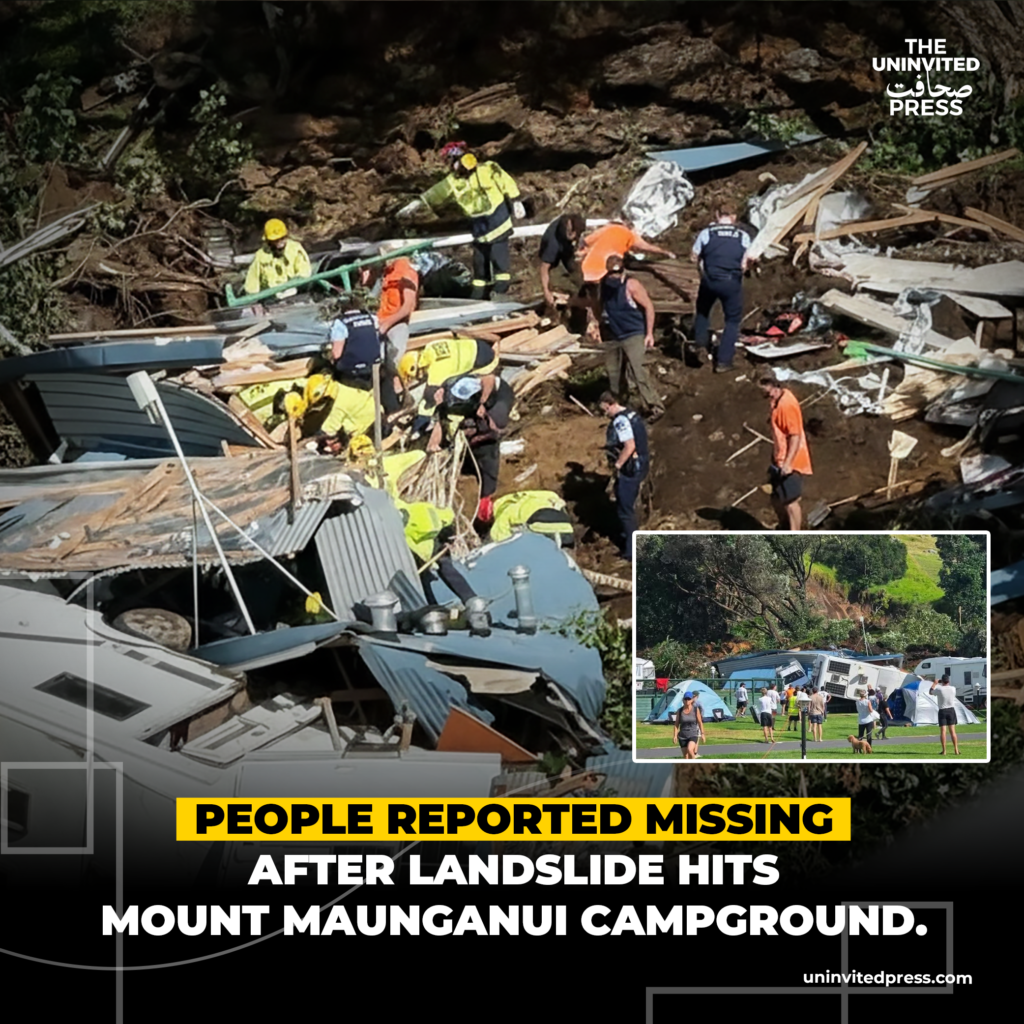
Deadly landslide hits Mount Maunganui campground in New Zealand: Children missing amid heavy rains. Rescuers search debris-details on casualties, response, and weather impacts.
Chaos from the Hillside: Massive Landslide Leaves Children Missing at Mount Maunganui Campground:
A massive landslide, fueled by record-breaking rainfall, has buried parts of a popular campground at the base of Mount Maunganui in New Zealand’s Bay of Plenty, leaving several people-including children-missing and feared trapped under tons of debris. The disaster struck on January 22, 2026, turning a serene seaside holiday park into a scene of chaos, with crushed caravans, flattened tents, and a desperate overnight search for survivors. As emergency crews deploy sniffer dogs and helicopters amid warnings of further instability, this event highlights the growing threat of extreme weather in a region prone to such hazards, potentially claiming lives and disrupting communities already battered by flooding.
With no signs of life detected hours after the slide and the death toll from related incidents climbing to at least two, the tragedy underscores the human cost of climate-amplified storms. Families anxiously await news, while authorities urge evacuations in low-lying areas, emphasizing the urgent need for enhanced disaster preparedness in vulnerable coastal zones.
Freight Train from the Hillside: Record Rainfall Triggers Deadly Landslide at Mount Maunganui Campground:
The calamity unfolded amid a deluge that battered New Zealand’s North Island. Tauranga, near Mount Maunganui, endured its wettest day on record, with 300mm of rain falling in 24 hours-equivalent to nearly three months’ average. At approximately 9:30 a.m. on January 22, 2026, a section of the hillside gave way, sending a torrent of mud, rocks, and vegetation crashing into the Mount Maunganui Beachside Holiday Park.
Witnesses described a thunderous roar “like a freight train” as the slip engulfed campervans, tents, and a toilet block. One caravan was hurled into nearby hot pools, while others were flattened. Campers fled in panic, but several were trapped. Initial reports indicated voices heard from the debris for about 15 minutes before silence fell.
Emergency services arrived swiftly, evacuating the site and launching a search with over 50 personnel, including urban search and rescue teams, sniffer dogs, and drones. By midday, police confirmed several unaccounted for, with numbers in the “single figures”-later estimates from sources suggesting six to nine, including children. Fire and Emergency New Zealand commander William Pike reported no signs of life by early afternoon, but operations continued overnight.
A separate landslide in nearby Welcome Bay struck a home around 5 a.m., killing two people and seriously injuring one. Two others remain missing there. In Papamoa, south of Mount Maunganui, another slip injured one and left two unaccounted for. Widespread flooding prompted evacuations across the eastern North Island, with roads closed and power outages affecting thousands.
As night fell, rescuers battled unstable ground and poor visibility, using thermal imaging and listening devices. Emergency Management Minister Mark Mitchell emphasized the commitment to exhaustive searches, noting the site’s popularity during summer holidays amplified the tragedy.
Tourist Paradise at Risk: Mount Maunganui’s Landslide Vulnerability in a Changing Climate:
Mount Maunganui, an extinct volcanic cone rising 232 meters above sea level, is a beloved tourist destination in the Bay of Plenty, drawing over a million visitors annually for its beaches, hot pools, and hiking trails. The Beachside Holiday Park, nestled at its base, accommodates hundreds during peak season, making it vulnerable to geological risks.
New Zealand’s North Island is no stranger to landslides, exacerbated by its steep terrain, volcanic soil, and frequent heavy rains. Climate change has intensified such events; a 2023 report by the National Institute of Water and Atmospheric Research (NIWA) noted a 10-20% increase in extreme rainfall intensity over the past decade. The 2023 Cyclone Gabrielle, which killed 11 and caused $13 billion in damage, highlighted similar vulnerabilities, with landslides accounting for much of the destruction.
This incident follows a pattern: In 2019, a slip in nearby Te Urewera killed one, while 2022’s heavy rains triggered over 1,000 landslides nationwide. The 2026 event, tied to a tropical low-pressure system, underscores inadequate early warning systems for localized risks, despite Met Service’s “red” alerts for the region. Economically, tourism in Bay of Plenty generates $1.5 billion yearly; disruptions could cost millions, while human toll-displaced families, trauma-ripples through communities.
It amplifies calls for resilient infrastructure, like slope stabilization and better zoning, in a nation where 75% of land is at moderate-to-high landslide risk. Globally, it mirrors rising disaster frequency, as seen in recent events in Papua New Guinea (2024) and Brazil (2025).