

Decade of Karachi market fires: From 2016 Gul Plaza to deadly 2026 blaze-61 dead, billions lost. Systemic failures demand urgent safety reforms in Pakistan’s economic hub.
Deadliest Blaze in Years: Gul Plaza Fire Claims 61 Lives and Reveals Karachi's Broken Safety Net:
In the heart of Karachi, Pakistan’s bustling economic hub, a pattern of catastrophic market fires over the past decade has claimed dozens of lives, destroyed billions in property, and exposed glaring deficiencies in urban safety infrastructure. The latest horror unfolded on January 17-18, 2026, when a massive blaze ravaged Gul Plaza, killing at least 61 people and leaving 85 missing amid collapsed structures and toxic smoke. This incident, the deadliest in over a decade, underscores a crisis fueled by electrical faults, flammable materials, and inadequate regulations-demanding urgent reforms to prevent further loss in a city already strained by rapid urbanization and neglect.
As rescue operations drag into their fifth day, families cling to hope while traders grapple with irreplaceable economic ruin. With Karachi contributing over 20% to Pakistan’s GDP, these fires not only shatter lives but threaten the stability of one of South Asia’s most vital commercial centers.
Timeline of Karachi's Deadly Market Fires (2016–2026):
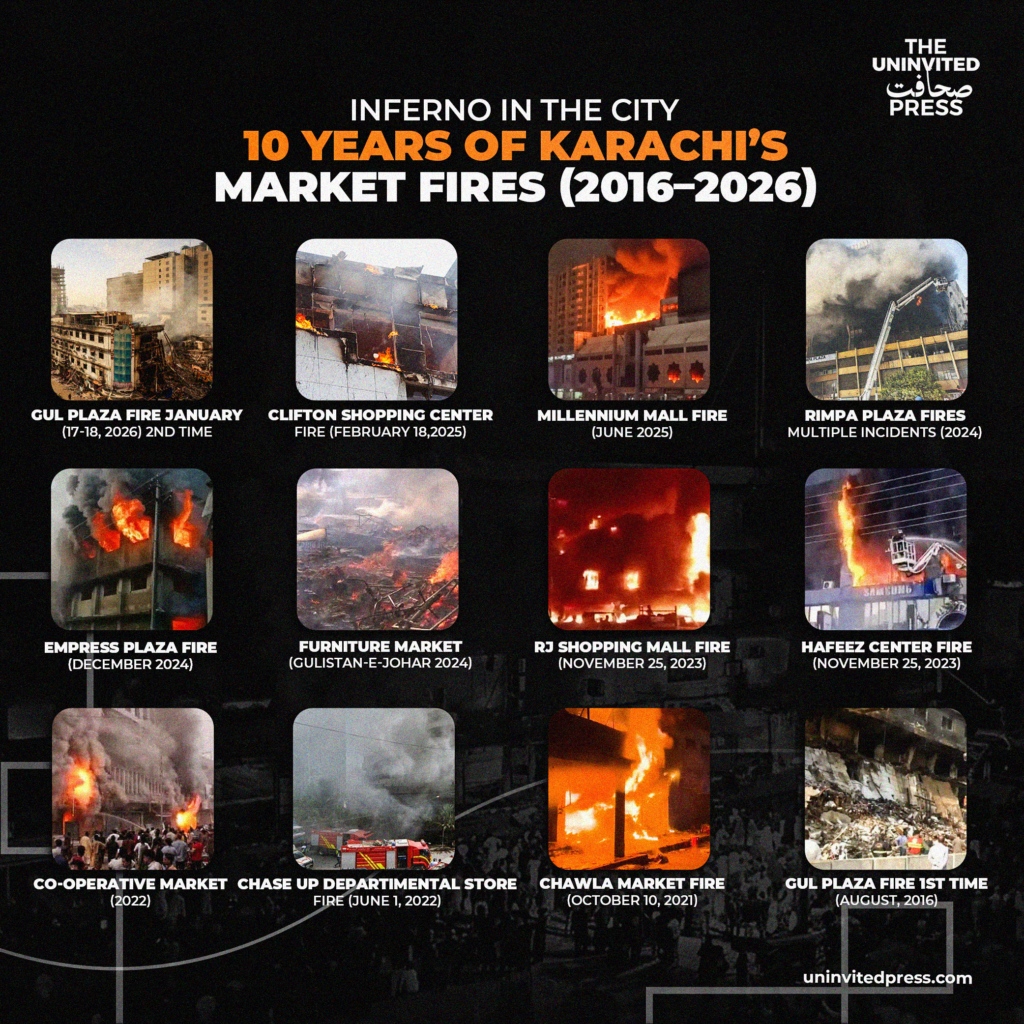
The saga began in August 2016 with a fire at Gul Plaza on M.A. Jinnah Road, where a short circuit gutted over 25 shops on upper floors, causing millions in losses but no fatalities. Fast-forward to October 10, 2021, when Chawla Market in Nazimabad saw stalls and pushcarts engulfed, again without casualties but highlighting vulnerabilities in open-air setups.
In 2022, fires struck twice: On June 1, a short circuit ignited Chase Up Departmental Store in Saddar Cooperative Market, destroying goods but sparing lives. Later that year, another blaze hit the same market complex, underscoring recurring risks in aging structures. November 25, 2023, brought tragedy to RJ Shopping Mall on Rashid Minhas Road-an electrical fire killed 11 and injured 35, trapping people in a building lacking emergency exits.
2024 saw an escalation: Multiple incidents at Rimpa Plaza in December razed two floors due to ventilation failures. That same month, Empress Plaza (also known as Nauman Plaza) burned, damaging clothing and electronics stores. In Gulistan-e-Johar, a furniture market fire on December 31 gutted over 30 shops, starting from nearby bushes and spreading rapidly.
The pace intensified in 2025. February 18 saw Clifton Shopping Center near Teen Talwar lose 30 warehouses to a short circuit. In June, Millennium Mall on Rashid Minhas Road suffered a massive blaze, destroying hundreds of shops but again no deaths-attributed to an electrical fault.
Culminating in 2026, Gul Plaza’s second fire erupted around 10:15 p.m. on January 17, likely from a circuit breaker on the ground floor. Flames spread through flammable inventory, collapsing sections and trapping dozens. It took over 48 hours to extinguish, with rescuers recovering bodies amid debris; 30 were found in one shop alone. As of January 22, operations continue, with DNA testing for identification.
Powerhouse at Peril: Karachi's Trade-Driven Wealth vs. Its Deadly Fire Vulnerabilities:
Karachi, home to over 20 million, is Pakistan’s commercial powerhouse, generating 20-25% of national GDP through trade, manufacturing, and ports. Yet, its markets-often in outdated buildings from the mid-20th century-face chronic hazards. Experts cite electrical overloads from illegal wiring, storage of combustibles like resins and fabrics, and non-enforcement of the Sindh Building Control Ordinance, which mandates fire exits, alarms, and sprinklers.
Historically, fires like the 2012 Baldia factory blaze (over 260 dead) exposed similar issues, ruled as arson in 2020. Recent audits show 70% of buildings lack safety systems, worsened by rapid urbanization and corruption in approvals. Economic pressures push traders to overcrowd spaces, blocking ventilation. The 2026 Gul Plaza fire, during wedding season with extended hours, amplified risks-shops stayed open until 2 a.m., trapping night-shift workers.
Fires disrupt supply chains, cause job losses (e.g., 8,000 from Gul Plaza), and erode trust in governance. In a city with only 25 fire stations for 20 million, response times lag, as seen in traffic delays during the blaze.