

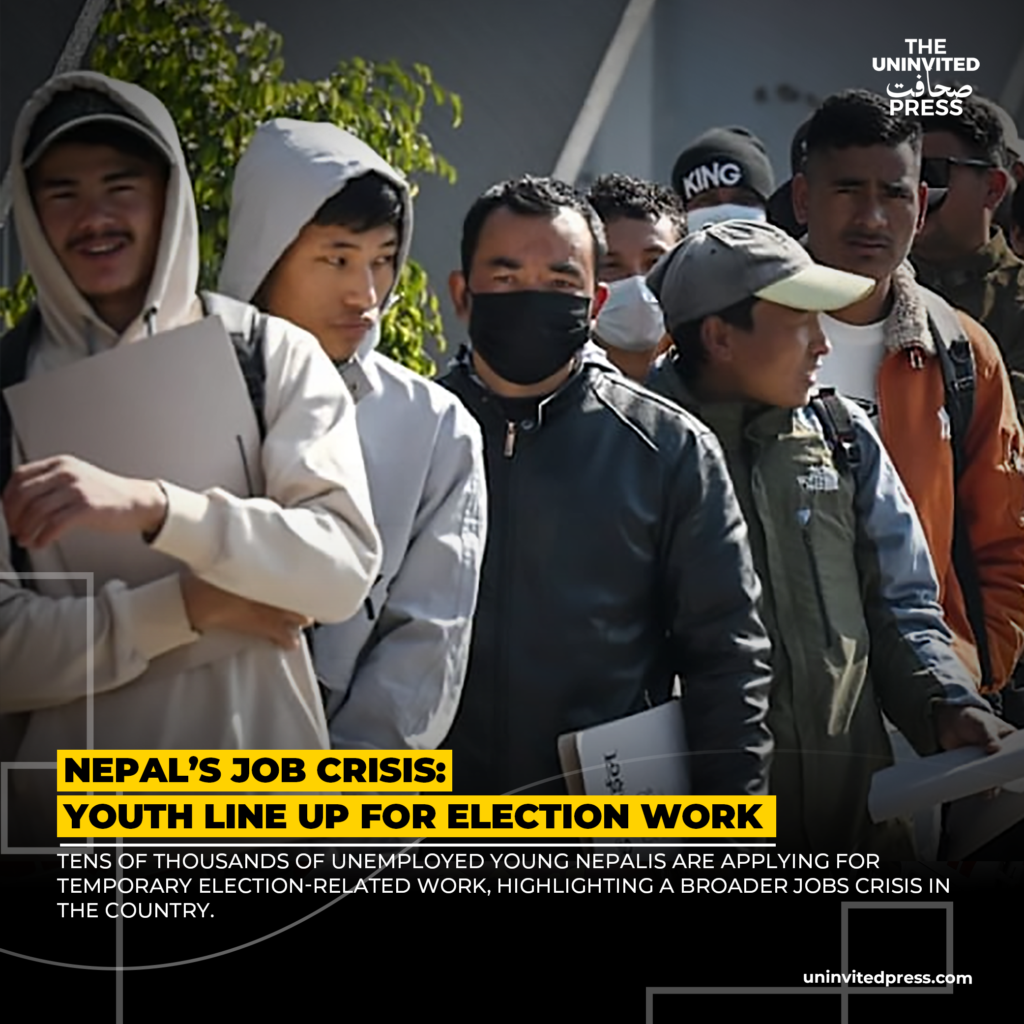
Over 27,000 young Nepalis rushed to apply for temporary police positions in just the first two days after recruitment opened on January 9, 2026, turning district offices across the country into scenes of long queues and quiet desperation.
Job Hunger Drives Nepali Youth to Election Work Amid Economic Strain:
Over 27,000 young Nepalis flooded application centers in just two days for temporary police positions ahead of the March 2026 elections, the first national polls since deadly protests toppled the government last year. This surge reveals a stark reality, with youth unemployment at around 20 percent, even short-term gigs paying $280 for 40 days are a lifeline in a nation where economic stagnation has driven mass migration and social unrest. As Nepal prepares for a pivotal vote, the scramble underscores demands for jobs, transparency, and reform that fueled the 2025 upheaval.
“Only God Knows If I’m Selected”: Youth Optimism Amid Unemployment Desperation:
Applications for the temporary police roles kicked off on January 9, 2026, drawing massive crowds to district police offices across Nepal. By the end of January 10, more than 27,000 had applied, according to Nepal Police spokesman Abinarayan Kafle. Queues persisted even on public holidays, with applicants braving long waits to submit forms. In rural areas, many youths rushed to obtain citizenship certificates first, viewing the jobs as a way to fund studies or support families.
Personal stories highlight the desperation. Sarika Karki, a 20-year-old from Kathmandu, told reporters she hoped to “earn some pocket money” while contributing to the polls. “I am also Gen-Z, but I do not have a job,” she said. Nischal Poudel, 30, a former hotel cook now unemployed, expressed optimism from a queue: “Only God knows if I will be selected, but now that I’ve applied, I am sure something good will happen.” These roles involve managing voter lines, transporting ballot boxes, and other duties, lasting about 40 days.
The rush continued into the following week, with Kafle noting “great excitement” among applicants, many participating in their first election as temporary officers. As of January 20, 2026, no final tally of total applications was available, but officials expect numbers to climb as the deadline approaches.
From Social Media Ban to Government Collapse: The 2025 Gen Z Uprising That Shook Nepal:
This job scramble comes against the backdrop of Nepal’s 2025 Gen Z protests, which erupted on September 4 after the government banned 26 social media platforms for non-compliance with registration rules. The ban, intended to enforce taxes on digital services, ignited fury over corruption, nepotism, and economic inequality-issues amplified by viral trends exposing elite lifestyles. Protests escalated on September 8, with police using tear gas, water cannons, and live ammunition, leading to riots and arson targeting parliament, government buildings, and political offices.
By September 9, Prime Minister K.P. Sharma Oli resigned amid chaos, including prison breaks and widespread looting. The army stepped in to restore order. On September 12, former Chief Justice Sushila Karki was appointed interim prime minister-Nepal’s first female executive head-dissolving parliament and scheduling elections for March 5, 2026. The unrest claimed 76 lives, including protesters and police, and caused economic losses of about $586 million, with nearly 15,000 jobs lost.
Nepal’s economy has long struggled with stagnation. Youth unemployment stands at around 20 percent, with 82 percent of the workforce in informal sectors. Remittances account for 33 percent of GDP, as over 839,000 Nepalis left for foreign work in FY 2024/25. Per capita gross national income was $1,404 in 2025. The protests, driven by a median population age of 25 and high social media penetration, exposed these fractures, echoing similar uprisings in Bangladesh and Sri Lanka. This youth-driven shift could redefine Nepal’s politics, but without job creation, instability may persist.