

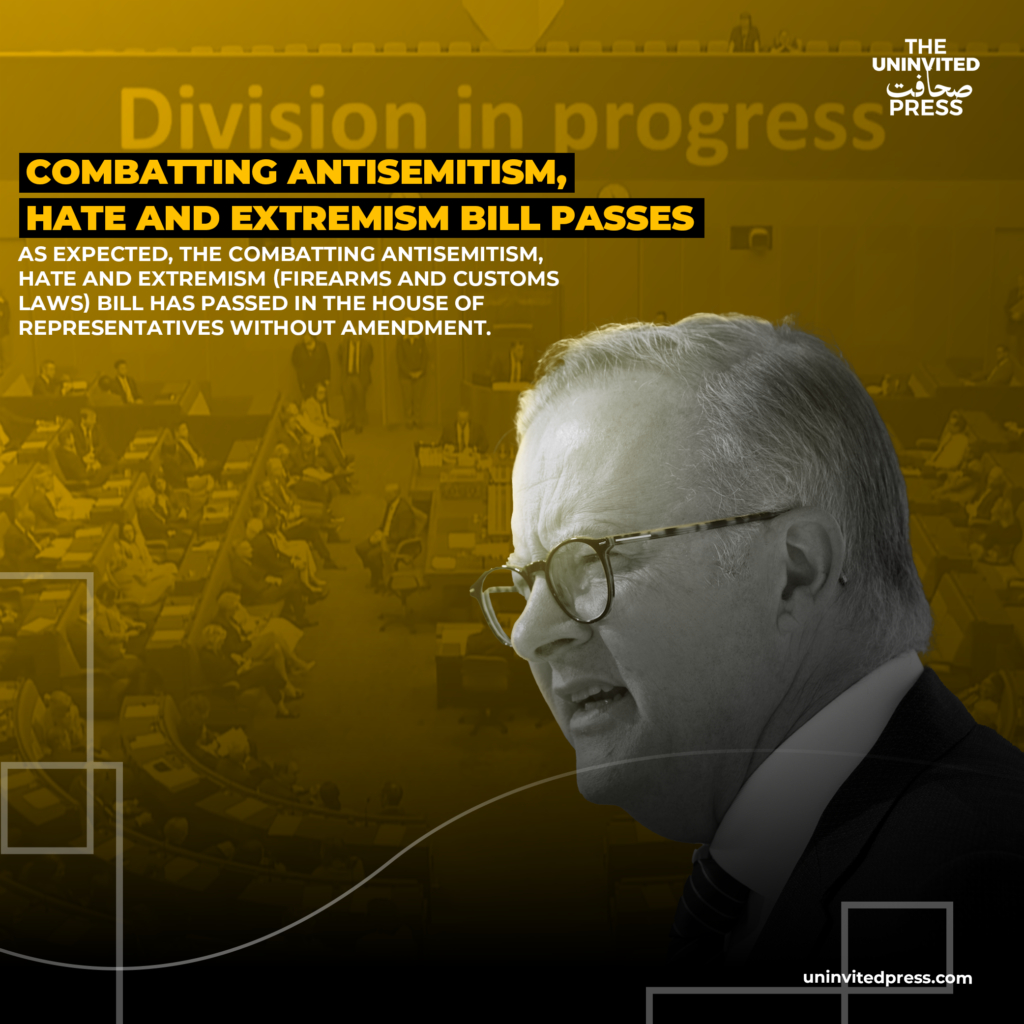
Australia’s House passes the Combatting Antisemitism, Hate and Extremism (Firearms and Customs Laws) Bill 2026, introducing gun buybacks and import bans post-Bondi terror-explore impacts, debates, and next steps in Canberra’s security push.
Emergency Gun Laws Passed in Wake of Bondi Terror Attack:
In a swift parliamentary move, Australia’s House of Representatives passed the Combatting Antisemitism, Hate and Extremism (Firearms and Customs Laws) Bill 2026 without amendment on January 20, 2026, just weeks after the devastating Bondi Beach terror attack that claimed 15 lives. This legislation, born from national grief and urgency, aims to strip extremists of lethal tools by mandating a gun buyback and tightening imports-potentially reshaping firearm ownership nationwide. As the bill heads to the Senate, it underscores Australia’s resolve against hate-fueled violence, but critics warn of overreach in a country still healing from its deadliest terrorist incident.
Rapid Passage and Key Provisions of the Emergency Firearms Bill:
The bill’s passage came on the same day as its introduction, reflecting the government’s accelerated timeline. Parliament was recalled early by Prime Minister Anthony Albanese following the Bondi Beach massacre, where father-son duo Sajid and Naveed Akram allegedly opened fire on a Hanukkah celebration, killing 15-including a 10-year-old girl-and injuring 40. Police confirmed the attack as IS-inspired terrorism, with the perpetrators linked to extremist materials; Sajid was killed on-site, Naveed arrested after being wounded.
The legislation underwent second reading debate by midday, with consideration in detail and third reading agreed to by afternoon. Divisions occurred on amendments proposed by crossbenchers like Bob Katter, but all failed. The vote: 96 in favor, 45 against, with Nationals and some independents dissenting.
This firearms-focused bill was split from a broader omnibus draft released January 13, which included criminal and migration reforms now in a separate measure. The split addressed concerns over bundling, allowing targeted passage. Key elements include a voluntary buyback running January 1, 2026, to December 31, 2027 (extendable), compensating owners for surrendered guns at government-set rates. Import restrictions target repeating straight-pull firearms, handguns, and accessories like suppressors, requiring case-by-case permissions.
Customs amendments prohibit importing violent extremist materials and hate symbols, with ministerial powers to enforce. New criminal offences carry up to five years for using carriage services to share firearm or explosive manufacturing details, with defences for licensed users.
Background checks now integrate ASIO security assessments and ACIC criminal intelligence, including spent convictions, to flag risks. The Australian Federal Police will oversee gun destruction.
Human impact resonates deeply. Survivors like Ya’akov Tetleroyd, who lost his father Boris in the attack, described chaos: “I heard a gunshot, and then I felt a strong impact in my arm.” The attack targeted Jewish Australians, prompting global condemnation and domestic soul-searching.
Passage confirmed via official parliamentary records and government statements. Bondi casualty figures (15 dead, 40 injured) cross-checked with police and media reports. Buyback details align with fact sheets and exposure draft. Exact compensation rates, as they await ministerial instruments; Senate amendments remain speculative.
Rising antisemitism and recent attacks:
This bill echoes Australia’s post-Port Arthur legacy, where the 1996 massacre led to the National Firearms Agreement banning semi-automatics and instituting buybacks that removed over 640,000 guns. Antisemitism has surged since October 7, 2023, with a 738% rise in incidents reported by the Executive Council of Australian Jewry in 2024-2025.
The Bondi attack, Australia’s deadliest terror event, involved automatic weapons and explosives, highlighting gaps in controls. Perpetrators had traveled to Manila, raising import concerns. Broader context includes global IS resurgence and domestic extremism, with UN experts condemning the assault as an attack on all Australians.
It risks centralizing firearm policy, traditionally state-led, potentially straining federal-state relations. Economically, buyback costs could exceed $500 million, per estimates. Politically, it tests unity in a divided parliament, with the companion bill dropping controversial vilification offences amid free speech backlash.