

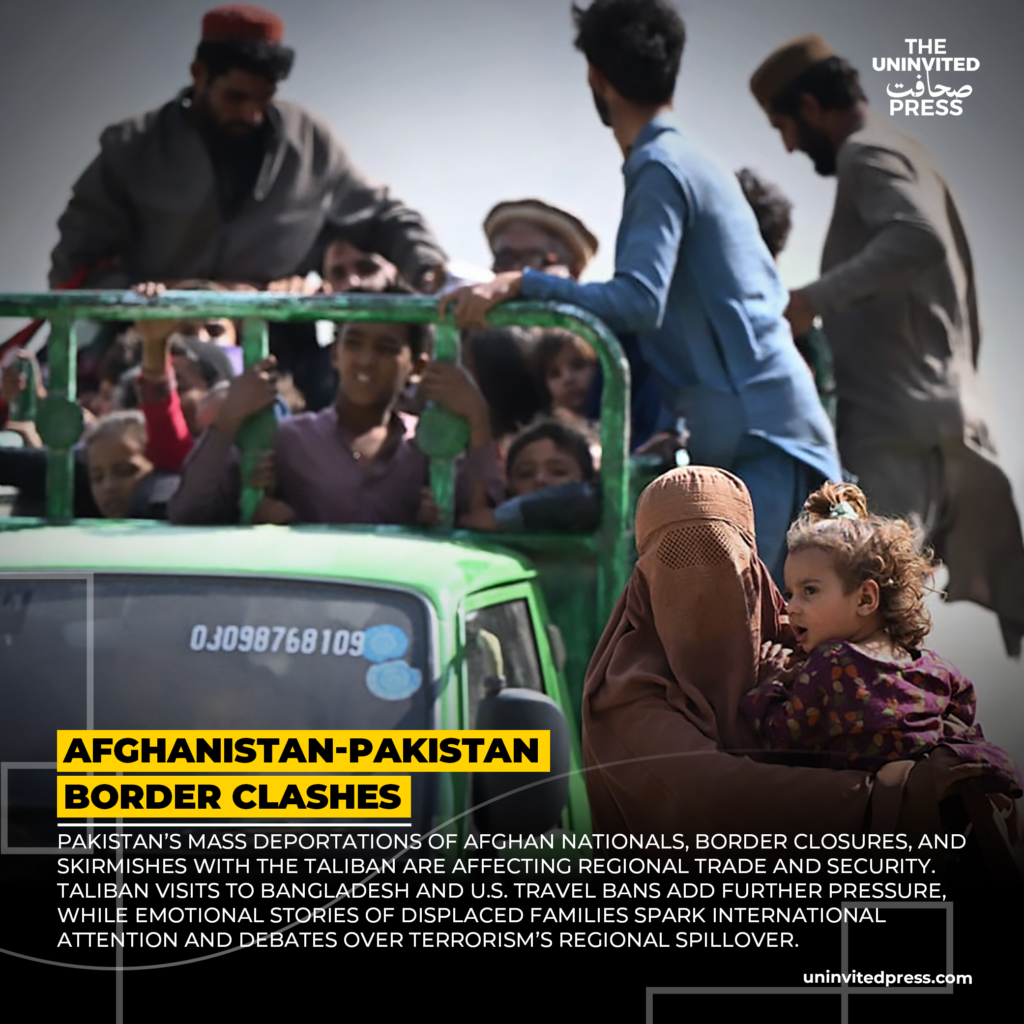
Pakistan’s mass deportation of over a million Afghans in 2025 has sparked deadly border clashes with the Taliban, closing trade routes and worsening a humanitarian crisis-explore the facts, impacts, and risks of escalation in 2026.
Border Bloodshed Ignited: Pakistan’s Refugee Crackdown Sparks Open Conflict with Kabul:
In a volatile standoff that has gripped South Asia, Pakistan’s aggressive push to deport millions of Afghan nationals has fueled deadly clashes along the disputed border with Afghanistan. As of early 2026, over a million Afghans have been expelled amid accusations of Taliban support for militants, leaving families shattered and trade routes paralyzed. This conflict, rooted in security fears, risks broader spillover, drawing international calls for de-escalation.
October Eruption to January Sparks: Timeline of Deadly Clashes and Mass Deportations:
The Afghanistan-Pakistan border, long a flashpoint of unrest, erupted into open conflict in October 2025 when Pakistani jets struck targets in eastern Afghanistan, including Kabul, Khost, Jalalabad, and Paktika provinces. Islamabad claimed the strikes targeted TTP hideouts, a militant group it accuses the Taliban of harboring. The Taliban retaliated with ground assaults on Pakistani posts, leading to intense fighting that claimed dozens of lives on both sides.
According to verified reports, the clashes on October 11-12 resulted in significant casualties. Taliban spokesperson Zabihullah Mujahid claimed Afghan forces killed 58 Pakistani soldiers and injured 30, while Pakistani sources reported capturing 25 Taliban posts and inflicting heavy losses, including over 200 Taliban fighters killed. Independent verification from the United Nations Assistance Mission in Afghanistan (UNAMA) confirmed civilian casualties, including nine deaths from Pakistani cross-border fire in May 2025, though exact figures for the October clashes remain disputed.
The violence prompted Pakistan to ramp up its deportation campaign, expelling nearly 1 million Afghans by the end of 2025, with thousands more forced out daily into 2026. On December 8, 2025, over 3,100 Afghans were deported in a single day, per Taliban officials. Border crossings like Torkham and Chaman have been repeatedly shut, choking trade and stranding civilians. Videos from the region show families fleeing shelling, with ambulances racing through chaos and tanks mobilizing near the frontier.
In a recent flare-up on January 19, 2026, Taliban forces allegedly opened unprovoked fire on Pakistani positions in Balochistan’s Qilla Saifullah sector. Pakistani forces responded, forcing Taliban fighters to retreat with reported casualties. Drones have been spotted over Kabul, signaling potential for further strikes.
Human stories underscore the crisis’s toll. Zahra, an Afghan refugee in Pakistan, described her family’s ordeal to Deutsche Welle: covered in a burqa, clutching her daughter amid evictions. Samiullah, a 55-year-old deportee, told U.S. News & World Report of reaching a “point where we are content with death” due to Afghanistan’s hunger crisis, exacerbated by winter and aid cuts. About 60% of deportees are women and children, facing torture, enforced disappearances, and dire humanitarian needs upon return, as documented by UNAMA.
Cross-checks with UN reports, Amnesty International, and Human Rights Watch confirm over 2.6 million unlawful deportations from Pakistan and Iran in 2025, with Pakistan’s campaign intensifying post-October clashes. Casualty claims vary-Taliban’s figures unverified beyond their statements, while Pakistani reports align with media like Dawn but lack independent confirmation in real-time. Trade losses, estimated at $177 million for Pakistani exporters, are corroborated by Afghanistan International and economic analyses. Unclear elements include exact TTP-Taliban ties, with allegations denied but evidence of militant activity noted by the U.S. Council on Foreign Relations.
From Safe Haven to Security Threat: How Afghan Refugees Became Pakistan’s Breaking Point:
This crisis traces back to the 1893 Durand Line, a colonial-era border Afghanistan has never fully recognized, fueling decades of disputes. Pakistan hosted millions of Afghan refugees during the Soviet invasion and U.S.-led war, but relations soured after the Taliban’s 2021 takeover.
TTP attacks in Pakistan surged 73% in 2025, killing over 600 security personnel, per the Pakistan Institute for Conflict and Security Studies. Islamabad views the TTP as an extension of the Afghan Taliban, with shared ideologies and alleged safe havens. The Taliban, seeking international legitimacy, has diversified ties-investing $35 million in Iran’s Chabahar Port to bypass Pakistan, per media reports.
Broader factors include Pakistan’s economic woes and security paranoia, amplified by Baloch insurgencies. Afghanistan’s humanitarian collapse-22 million in need, per Amnesty-worsens with deportations. Regional players like Qatar mediated a October 2025 ceasefire, but tensions persist, with U.S. bounties lifted on Taliban figures in March 2025 signaling diplomatic shifts.
This is not just a problem between two countries. It could also destabilize Central Asia and may allow militants to spread into countries like Tajikistan and Iran. Economically, Pakistan’s trade bans have slashed bilateral commerce by 53%, hurting both nations amid global inflation.