

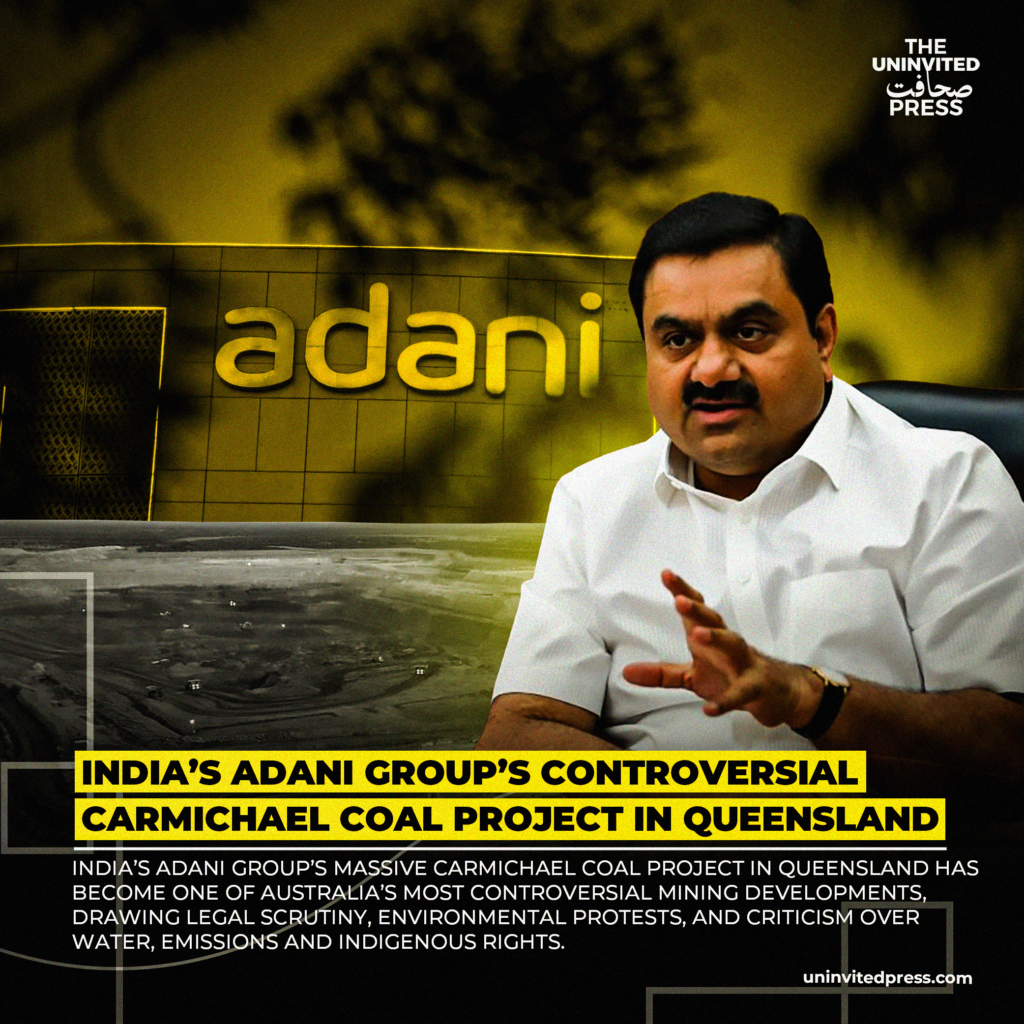
Adani’s Carmichael coal mine expansion in Queensland promises jobs but faces backlash over safety, environment, and royalties. Critics highlight ongoing risks to water, climate, and workers.
Carmichael Mine Expansion: 600 New Jobs and $500M Boost Amid Fresh Safety, Royalty and Environmental Storm:
Queensland’s Carmichael coal mine, operated by Adani Group’s Bravus Mining and Resources, is set for a major expansion that could add 600 jobs and A$500 million in investment. Announced in August 2025, the deal with the state government includes royalty deferments but comes amid fresh allegations of below-market coal sales, worker safety lapses, and environmental breaches. This development underscores the tension between economic gains and long-term sustainability in Australia’s resource heartland.
Bravus Pushes Carmichael Coal Expansion as Queensland Faces Fresh Safety, Money & Environment Battles:
The Carmichael coal mine’s journey has been anything but smooth since Adani first proposed it in 2010 as one of the world’s largest coal developments. Initially eyed for 60 million tonnes annually, the project faced years of legal hurdles, environmental reviews, and public protests before scaling down and securing final approvals in 2019. Construction kicked off that June, creating over 2,600 jobs during the build phase and awarding more than $1.5 billion in contracts, mostly to Queensland businesses.
By 2021, the mine began producing thermal coal, with the first shipment marking a milestone for Adani amid global scrutiny. The project includes a 200km rail line to the Abbot Point port, facilitating exports primarily to India for power generation. As of 2024, it employed around 1,200 people and contributed significantly to regional economies, though critics argue the benefits fall short of original promises.
The latest chapter unfolded in August 2025 when Queensland’s new government, led by Premier Crisafulli, negotiated a royalty deferment deal with Bravus to enable the expansion. This involves an initial A$50 million for infrastructure, paving the way for a full A$500 million upgrade over four years. Proponents hail it as a boon for jobs and investment, but it has drawn fire for extending concessions to a project already under the microscope.
In October 2025, the Australia Institute alleged Bravus sold coal at below-market prices-averaging $102 per tonne in 2022-23-potentially costing Queensland hundreds of millions in royalties. Bravus denied the claims, insisting sales were at arm’s length and compliant with regulations. This followed whistleblower reports in January 2025 of severe safety issues, including dust clouds causing near-misses, inadequate training, and pressure to ignore protocols, with workers warning of an “inevitable” fatality.
Environmental monitoring has also flagged concerns. In 2023, the Queensland Department of Environment issued an Environmental Protection Order over groundwater modeling discrepancies, though it was lifted in September 2025 after Bravus committed to further reviews. Drops in bore water levels have been detected hundreds of times since mining started, with some scientists alleging coal-related hydrocarbons in the Doongmabulla Springs. Bravus maintains compliance and no damage to the springs.
Indigenous opposition persists, with parts of the Wangan and Jagalingou people arguing the mine threatens sacred sites and water sources. A judicial review is underway in Queensland’s Supreme Court, claiming human rights violations. In November 2025, activist Ben Pennings scored a legal victory when the court barred him from seeking Adani’s confidential data, while Adani dropped its multi-year pursuit against him.
Queensland Green-Lights Adani Coal Mine Growth Amid Ongoing Safety Alarms and Environmental Red Flags:
Australia’s coal industry remains a pillar of its economy, with Queensland exporting vast quantities to Asia for energy needs. The Carmichael project taps into the untapped Galilee Basin, projected to yield billions in revenue but at a cost; an estimated 4.7 billion tonnes of lifetime carbon emissions, exacerbating climate change and threatening ecosystems like the Great Barrier Reef.
The mine’s approval process spanned nearly a decade, surviving nine court challenges and federal environmental assessments under the Environment Protection and Biodiversity Conservation Act. It drew massive protests, including the #StopAdani campaign, which highlighted risks to groundwater, endangered species like the black-throated finch, and indigenous cultural heritage. Adani rebranded its Australian arm to Bravus in 2020 amid reputational damage.
Broader context includes Australia’s dual push for renewables and fossil fuels, amid global calls to phase out coal under the Paris Agreement. The project symbolizes the clash: short-term jobs versus long-term climate and cultural preservation. No corporate tax has been paid yet due to reported losses, though royalties have flowed.