

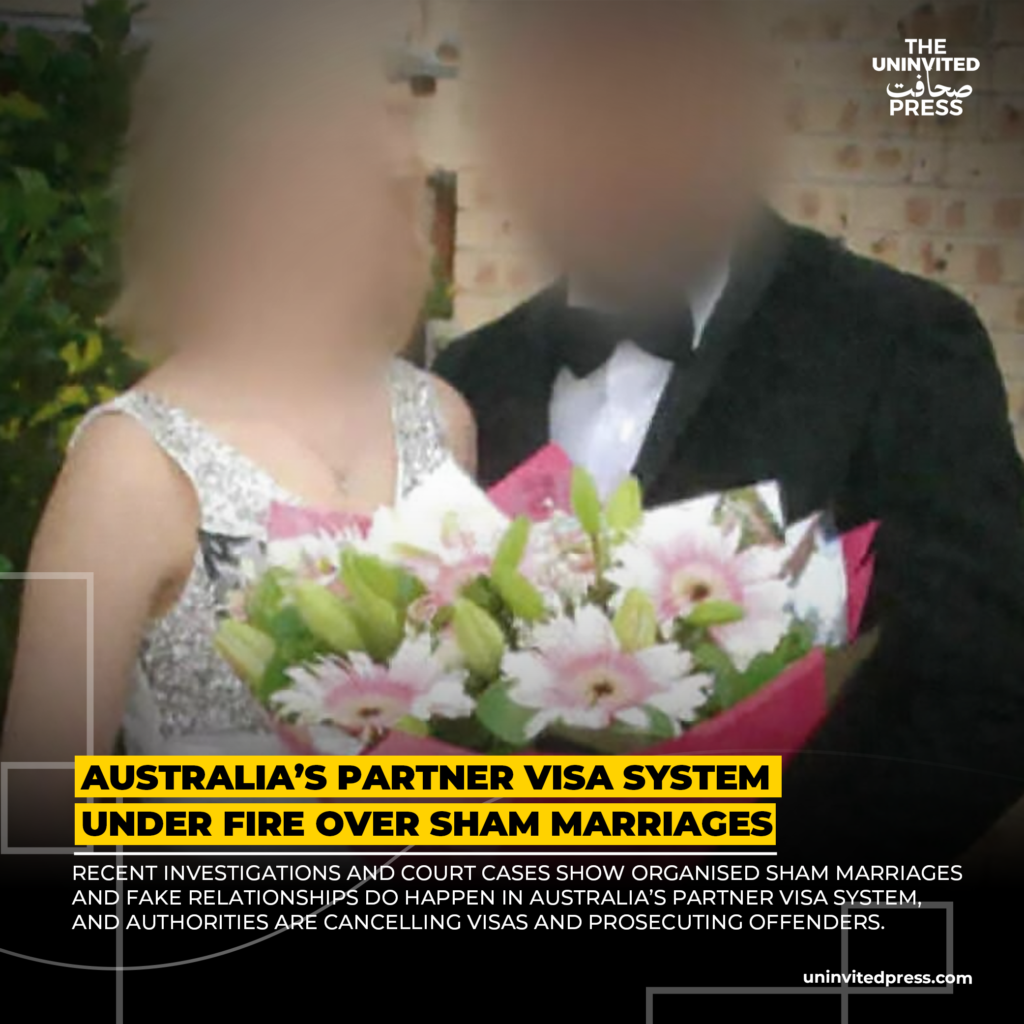
Organised fraud rings exposed as authorities crack down with visa refusals and criminal charges amid rising concerns. Australia’s partner visa program faces scrutiny over sham marriages, with recent probes revealing exploitation and fraud; officials cancel visas and prosecute offenders to safeguard integrity.
Australia's Partner Visa Dream Turns Nightmare: Sham Marriages and Fraud Rings Exposed:
Australia’s partner visa system, designed to reunite genuine couples, is increasingly tainted by organized sham marriages that exploit vulnerable people for immigration gains. Recent investigations by the Australian Border Force and Federal Police have uncovered fraud rings coercing individuals into fake unions, leading to hundreds of visa refusals and criminal prosecutions. This surge in detected cases highlights systemic vulnerabilities, eroding public trust in migration processes and prompting calls for tougher reforms in a nation where family migration forms a core of its intake.
Inside the Crackdown: How Authorities Are Unravelling Organised Visa Scams:
The issue gained fresh attention in November 2025 when economic analysts at MacroBusiness highlighted persistent loopholes in Australia’s partner visa program, claiming weak sponsorship rules enable sham marriages despite past reforms. This followed a 32% surge in visa-related scams in Southeast Asia during 2024-25, as reported by officials during International Fraud Awareness Week.
A landmark case dates to 2018, when ABF uncovered a group coercing vulnerable young women-often from low socio-economic backgrounds with histories of substance abuse and family violence-into fraudulent marriages with non-citizens seeking permanent residency. Victims were lured with promises of large payments, while non-citizens paid facilitators hefty fees. The operation resulted in 164 partner visa applications being refused. All involved were charged under the Migration Act and Criminal Code, facing up to 10 years imprisonment or $210,000 fines.
More recently, in July 2024, AFP charged a 32-year-old man and 37-year-old woman in Western Australia with providing false information on visa applications for seven foreign workers. Allegations included debt bondage, passport control, and underpayment, subverting immigration laws. The pair faced nine counts of false documents, one of debt bondage, and one of controlling foreign travel documents. They appeared in Perth Magistrates Court on July 12, 2024, with the case ongoing.
In another 2018-linked instance, a 32-year-old Indian citizen was identified as a key facilitator in an organized scam targeting South Indians, persuading them into fake marriages with non-nationals. Four Australian nationals faced charges, and the Australian High Commission in New Delhi issued warnings to PR visa applicants about such scams.
Social media discussions in 2025, including posts from March and September, allege rising fake marriage fraud in Vietnamese and other ethnic communities, with anecdotes of individuals gaming the system for PR. These claims, while unverified in specifics, align with government alerts on contrived marriages undermining visa integrity.
From Family Reunion to Fraud Target: The Battle to Protect Australia's Migration Integrity:
Australia’s partner visa program, managed by the Department of Home Affairs, allows spouses or de facto partners of citizens or permanent residents to migrate. It comprises subclasses like 309/100 (offshore) and 820/801 (onshore), with applicants needing to prove genuine relationships via evidence like joint finances and social ties. In 2023-24, partners accounted for over 90% of the family migration stream, with tens of thousands granted annually.
Fraud has plagued the system for years. A 2014 parliamentary inquiry noted risks in prospective marriage visas, leading to enhanced integrity measures like interviews and document check .Despite this, operations like the 2018 ABF probe revealed syndicates exploiting vulnerabilities, often targeting disadvantaged women or workers. The COVID-19 era saw processing delays, exacerbating backlogs and creating opportunities for scams.
Significance lies in the human cost: victims face coercion, debt, and trauma, while fraud erodes migration fairness. It also strains resources, with bridging visas hitting a record 2.55 million in Q3 2025, partly attributed to prolonged checks on suspect applications. Amid Australia’s multicultural fabric, such issues fuel debates on balancing family reunions with security.