

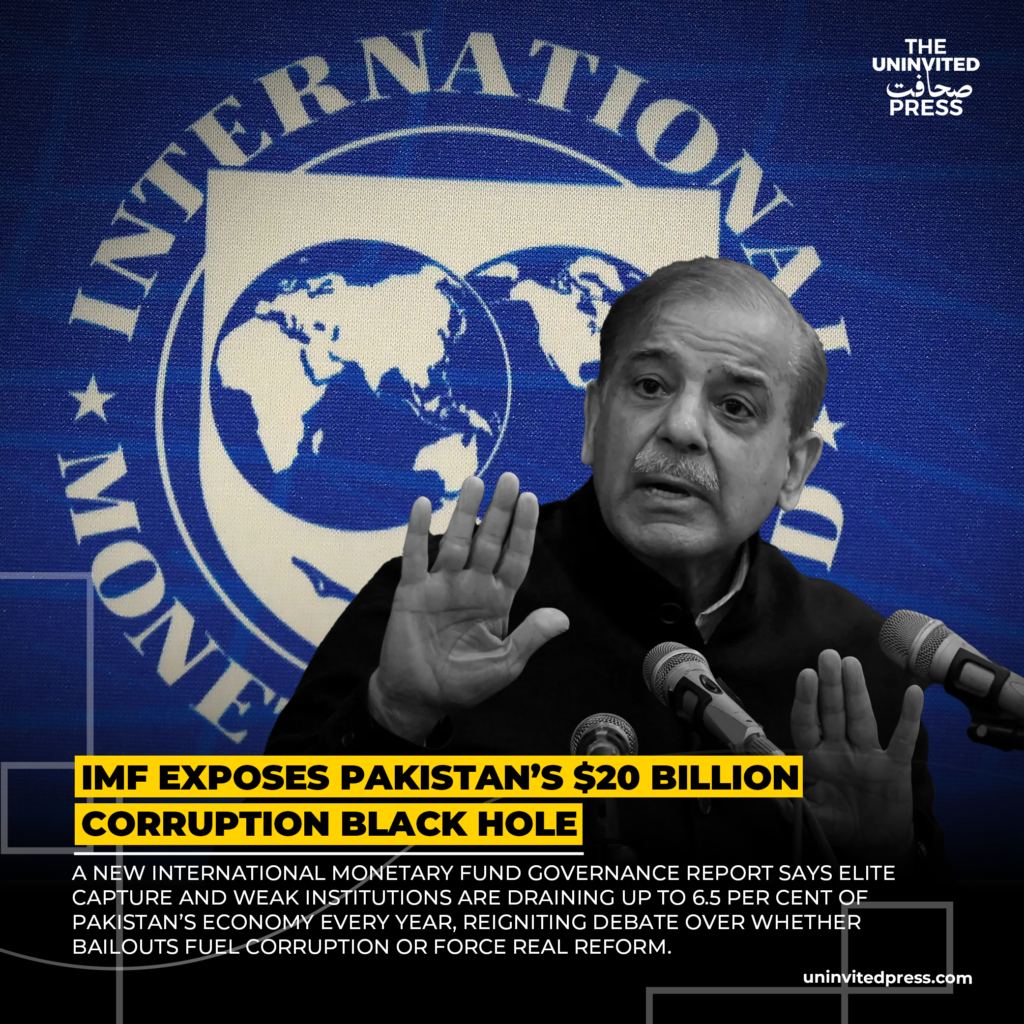
A scathing November 2025 IMF diagnostic exposes how “persistent and corrosive” corruption and elite capture cost up to 6.5% of GDP annually, sparking fierce debate over whether repeated bailouts enable reform or perpetuate the crisis.
IMF Verdict: Elite Capture and Corruption Are Bleeding Pakistan Dry-Up to $20 Billion Vanished Annually:
The International Monetary Fund has delivered one of its harshest verdicts yet on Pakistan’s economy, warning that entrenched corruption and “elite capture”-where powerful political and business interests manipulate policy for private gain-are draining billions yearly and crippling growth. The Governance and Corruption Diagnostic Assessment (GCDA), finalized in November 2025, estimates these systemic failures cost the nation 5-6.5% of GDP each year-roughly $16-20 billion based on recent economic size-while highlighting dysfunctional institutions that fail to enforce accountability. As Pakistan navigates its 25th IMF program, this bombshell report reignites questions about whether external lifelines force genuine change or merely sustain a broken system amid mounting public hardship.
Inside the IMF’s Damning 186-Page Indictment: Sugar Cartels, SOE Looting, and a System Built for the Few:
The 186-page GCDA, conducted at Pakistan’s request, paints a damning picture of a system riddled with corruption vulnerabilities. It describes corruption as “persistent and corrosive,” diverting public funds, distorting markets, eroding trust, and constraining investment. Elite capture emerges as the most damaging form, with privileged entities influencing key sectors like sugar (cartelized with subsidies/exemptions), real estate, agriculture, and energy.
The report cites National Accountability Bureau (NAB) recoveries of Rs 5.3 trillion ($17-19 billion) from January 2023 to December 2024 as evidence of scale-yet stresses this captures only a fraction of total losses. It notes stagnant control-of-corruption scores from 2015-2024, placing Pakistan near global bottoms.
Publication aligned with IMF conditions for approving tranches under the $7 billion Extended Fund Facility (EFF). In December 2025, the IMF completed reviews, disbursing $1 billion while adding 11 new conditions-bringing total to 64-targeting asset declarations, high-risk department plans, and sugar sector liberalization by mid-2026.
Decades of Dependency: How Pakistan Became the IMF’s Most Frequent Customer-And Never Fixed the Root Cause:
Pakistan has sought IMF support 25 times since 1958, often for short-term stabilization amid balance-of-payments crises. The current 37-month EFF, approved in 2024 under Prime Minister Shehbaz Sharif, followed a 2023 near-default avoided via extensions and friendly rollovers from China, Saudi Arabia, UAE.
Post-2022 floods and political turmoil exacerbated woes, with external debt exceeding $130 billion and tax-to-GDP ratio languishing below 10%. Elite capture traces to colonial legacies of land control, evolving into modern privileges via tax exemptions, subsidies, and regulatory favoritism-costing billions annually while crowding out private investment.
State-owned enterprises (SOEs) hold assets 48% of GDP but suffer political interference and opaque procurement. The Special Investment Facilitation Council (SIFC), a civil-military body since 2023, faces scrutiny for limited transparency. Past programs stabilized macro indicators but failed to institutionalize reforms, trapping Pakistan in dependency.