

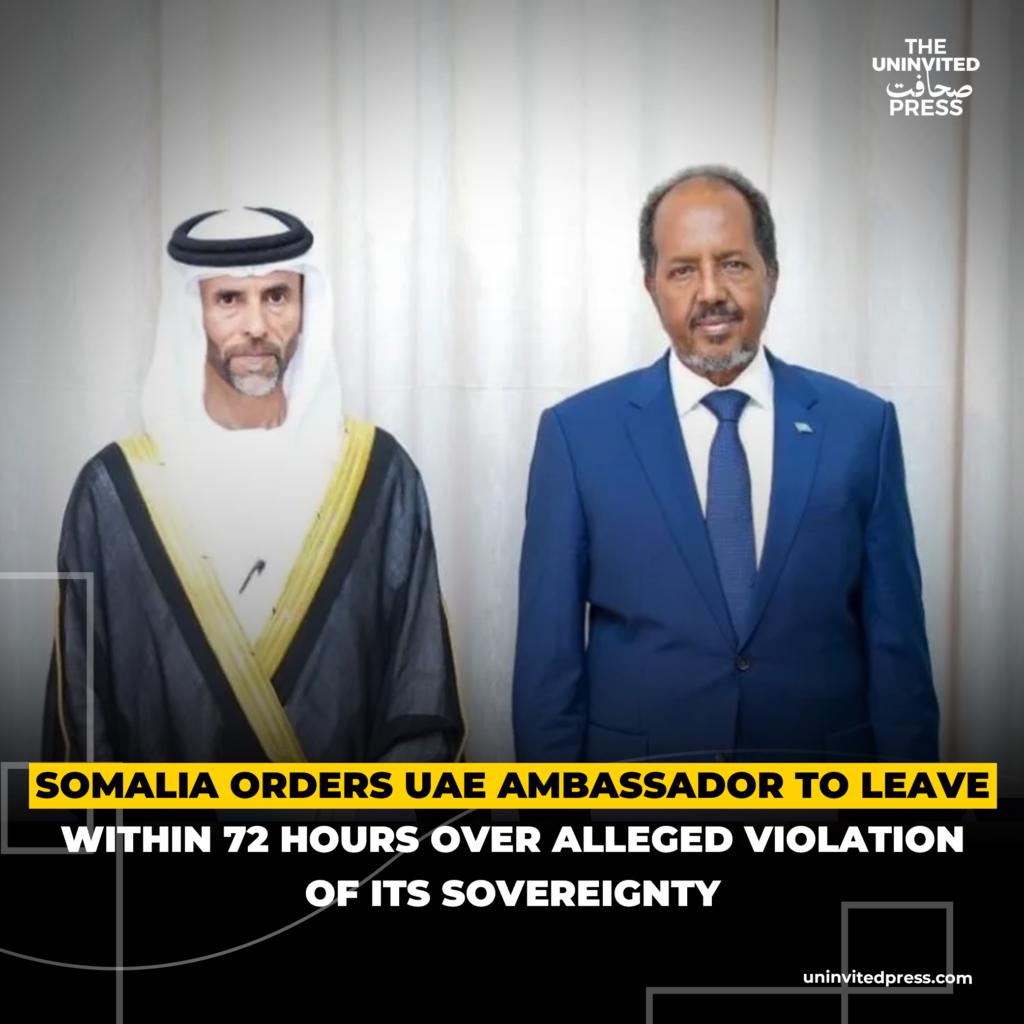
Mogadishu accuses Abu Dhabi of “open invasion” and interference with regional administrations; recalls its own envoy as diplomatic crisis deepens.
Somalia has ordered the United Arab Emirates ambassador to leave the country within 72 hours and has recalled its own envoy from Abu Dhabi, accusing the Gulf state of violations of its sovereignty that amount to an “open invasion.”
The decision was announced on Thursday by Information Minister Abdifatah Kasim Mohamud following a cabinet meeting chaired by Prime Minister Hamza Abdi Barre. The foreign ministry was instructed to notify UAE Ambassador Ahmed Jumaa Mohamed Alremeithi that he must depart and to summon Somalia’s ambassador in the UAE for consultations.
Somalia Warns Against UAE Cooperation Amid Sovereignty Dispute:
“Measures will be taken against anyone who cooperates with UAE in the invasion against Somalia,” Mohamud said in a statement broadcast on the state-run news agency. He urged all Somalis “to defend their country and unite against the open invasion of the UAE against the sovereignty, security, land and unity of Somalis.”
The move follows a televised address on Tuesday by President Hassan Sheikh Mohamud, in which he accused the UAE of providing economic and political support to regional Somali administrations in opposition to the federal government. According to the Somalia National News Agency, Mohamud specifically criticised agreements related to the ports of Berbera, Bosaso and Kismayo that were signed with regional authorities without federal approval. He also alleged that Abu Dhabi had helped establish military facilities and security forces outside the national command structure.
The cabinet said it had reviewed a foreign ministry report detailing what Mogadishu described as continued Emirati interference in Somalia’s internal affairs, territorial integrity and national security. Defence Minister Ahmed Moalim Fiqi struck a sharper tone on social media, telling the UAE ambassador to “pack your bags and leave,” and describing him as representing “strife and evil.”
Somalia-UAE Tensions Escalate as Diplomatic Rift Deepens:
The UAE Foreign Ministry responded by denouncing what it called the Somali government’s “escalatory and hostile approach.” It expressed regret over Mogadishu’s attempts to drag the UAE into its “internal power struggles,” saying such actions could harm the interests of both countries. The ministry noted that the UAE had closed its embassy in Mogadishu and withdrawn diplomatic staff in January 2026 over what it described as hostile actions by the Somali government, including the cancellation of bilateral agreements.
Relations between the two countries have deteriorated sharply over the past year. In January, Somalia’s federal government annulled all agreements with the UAE covering ports, government institutions, security and defence cooperation, citing threats to national sovereignty. Regional administrations in Somaliland, Puntland and Jubbaland rejected Mogadishu’s authority to cancel arrangements involving their territories, and commercial and security ties on the ground have largely continued.
The UAE has historically funded and trained elements of Somalia’s security forces and invested in port infrastructure as part of its broader strategic and commercial presence in the Horn of Africa and along key Red Sea and Gulf of Aden routes. Mogadishu maintains that these activities have increasingly undermined the federal government’s authority and fuelled internal divisions.
Thursday’s expulsion order does not formally sever diplomatic relations, but the strong language of “invasion” and the 72-hour deadline mark the most serious rupture yet between Somalia’s federal government and Abu Dhabi.