

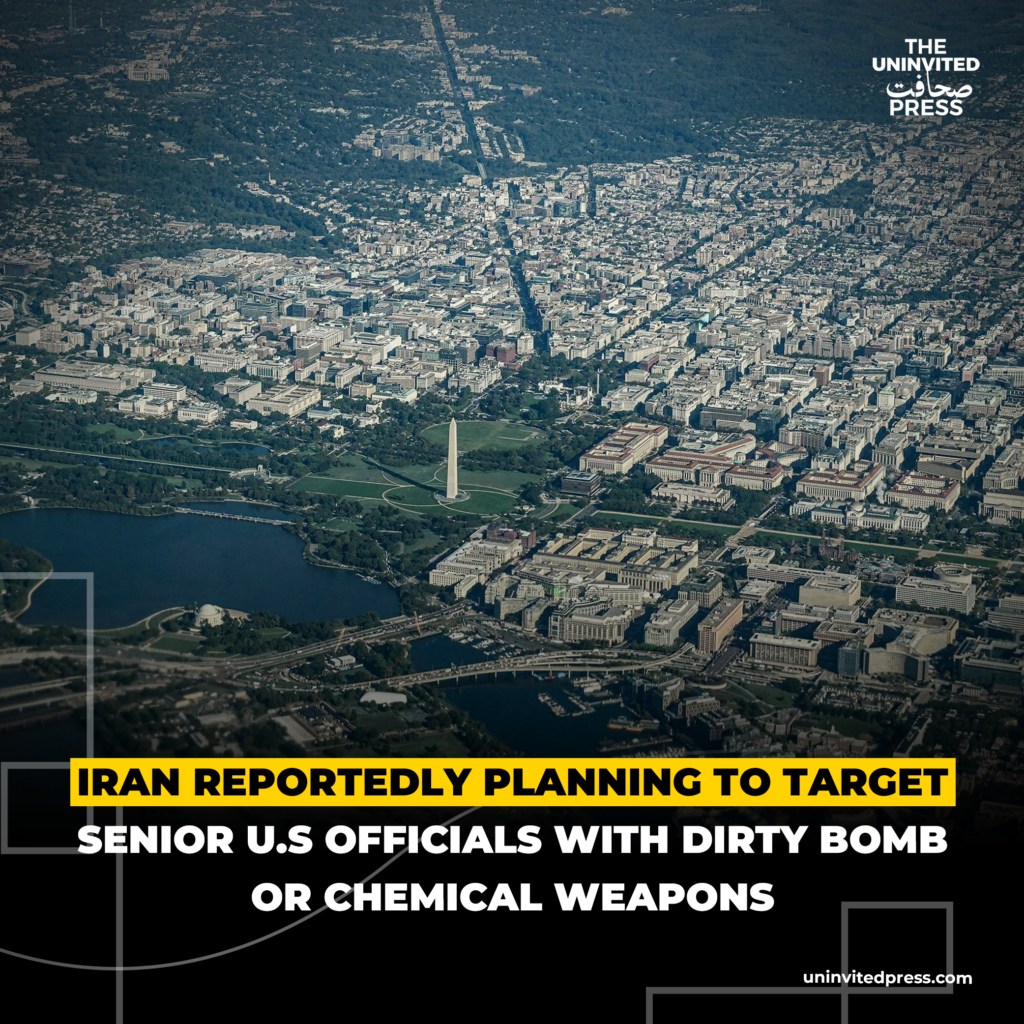
White House says no credible threats to the homeland as officials assess intelligence on potential attacks involving radiological or chemical agents.
United States intelligence agencies have assessed that Iran is developing plans that could involve targeting senior officials in President Donald Trump’s administration in Washington, DC, according to multiple US officials cited in recent reporting. The assessments, first detailed by CNN citing seven officials familiar with the matter, describe the activity as an effort by Tehran to create options rather than evidence of an imminent operation.
Sources characterised the intelligence as specific in identifying potential locations and targets, prompting contingency discussions and security planning within the US government over the past week. Officials remain divided on Iran’s current capability or intent to act on such plans. The White House has stated that it is monitoring potential threats but that there are “no credible threats to the homeland” at this time.
Iran Rejects Chemical Weapons Allegations Amid Rising US Tensions:
Iran’s Mission to the United Nations rejected the allegations. A spokesperson described claims involving chemical weapons as “false and fabricated,” stating that Tehran considers the use of such weapons under any circumstances “wholly illegitimate” and categorically rejects them.
The reporting comes amid heightened US-Iran tensions following Trump’s return to office and a series of earlier threats against current and former American officials. In one recent development, Treasury Secretary Scott Bessent was relocated from his Washington-area residence to military housing last week over security concerns linked to Iran. Separate intelligence has also raised concerns about possible Iranian consideration of chemical weapons use against US forces in the Middle East, though details remain limited and contested.
US-Iran Tensions Persist Amid Conflicting Intelligence Claims:
Analysts note that the intelligence reflects the broader pattern of mutual escalation and proxy pressures that have defined US-Iran relations for years. Washington has long accused Tehran of supporting regional armed groups and plotting against American personnel and interests; Iran consistently denies involvement in such activities and frames US actions as aggressive interference in its region.
US officials have emphasised that any such planning would face significant practical and operational hurdles, and the White House continues to stress that no credible immediate threat to the continental United States has been identified. Iranian officials, for their part, have reiterated their rejection of the specific claims while maintaining their broader criticism of American policy toward the Islamic Republic.
The situation underscores the persistent volatility in US-Iran relations and the challenges of distinguishing between contingency planning, signalling, and actionable intent in intelligence assessments. Both sides have historically used public disclosures of threats and counter-threats as tools of deterrence and domestic messaging. As of the latest statements, American authorities say they are treating the intelligence seriously while affirming that no confirmed imminent danger to the US homeland has been established.