

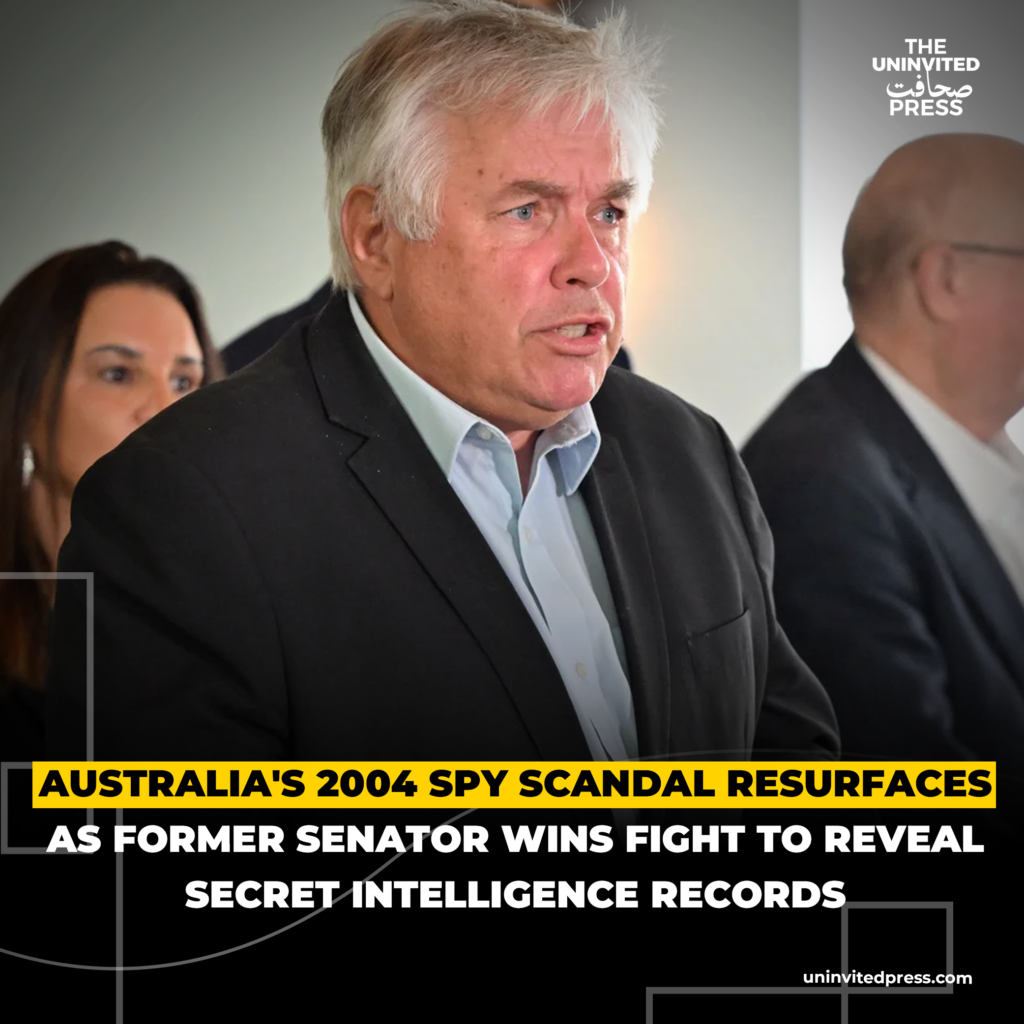
Rex Patrick secures public access to unclassified sessions in long-running battle over alleged ASIS bugging of Timor-Leste during oil and gas talks.
A decades-old Australian intelligence scandal has returned to the public spotlight after former senator Rex Patrick won a significant procedural victory in his campaign to uncover secret records linked to the alleged bugging of Timor-Leste’s government in 2004.
On Friday, the Administrative Review Tribunal (ART) ruled that unclassified portions of a three-day hearing scheduled for late November must be held in public. The decision rejected the Commonwealth’s attempt to keep even non-sensitive parts of the proceedings closed, with officials proposing instead to release a transcript only after review by the Australian Secret Intelligence Service (ASIS). Tribunal Deputy President Peter Britten-Jones described the risk of inadvertent disclosure of protected material as “negligible,” noting that the officials involved were highly qualified and experienced.
Australia’s Timor-Leste Spy Scandal Returns to Spotlight:
Patrick, a transparency advocate and former independent senator, has sought access to 2004 cabinet documents held by the National Archives of Australia concerning ASIS activities and maritime boundary negotiations with Timor-Leste. The government and ASIS have maintained a “neither confirm nor deny” (Glomar) stance, refusing to acknowledge whether relevant records exist or whether the bugging operation took place, citing potential harm to national security, defence or international relations.
The case centres on allegations that Australian spies installed listening devices in Timor-Leste government offices in Dili during sensitive negotiations over the Timor Sea’s oil and gas resources, including the Greater Sunrise fields estimated to be worth more than $50 billion. The operation, ordered under the Howard government, is said to have given Australia a commercial advantage in talks with its much poorer neighbour. The resulting treaty arrangements have long been criticised as unfair to Timor-Leste.
The scandal first became widely known years later when a former ASIS officer, known as Witness K, and his lawyer Bernard Collaery revealed details of the operation. Their disclosures supported Timor-Leste’s challenge to the treaty at the Permanent Court of Arbitration in The Hague. Both men later faced prosecution in Australia for allegedly communicating secret information; the charges against Collaery were eventually dropped, while Witness K pleaded guilty.
Australian Spy Scandal Faces Fresh Court Scrutiny:
Patrick’s latest legal push forms part of a sustained effort to force greater transparency around the episode. He has previously challenged redactions of related cabinet documents. Supporters argue that the continued secrecy protects not only intelligence methods but also the political and commercial interests that benefited from the alleged operation. Critics of the government’s position say the public has a right to know how Australia conducted itself toward a newly independent and vulnerable neighbour.
The ART ruling does not determine whether the documents exist or will ultimately be released. It does, however, ensure that at least part of the government’s justification for secrecy will be tested in open court. The full hearing is expected to last three days in late November, offering a rare public window into one of Australia’s most controversial intelligence operations.