

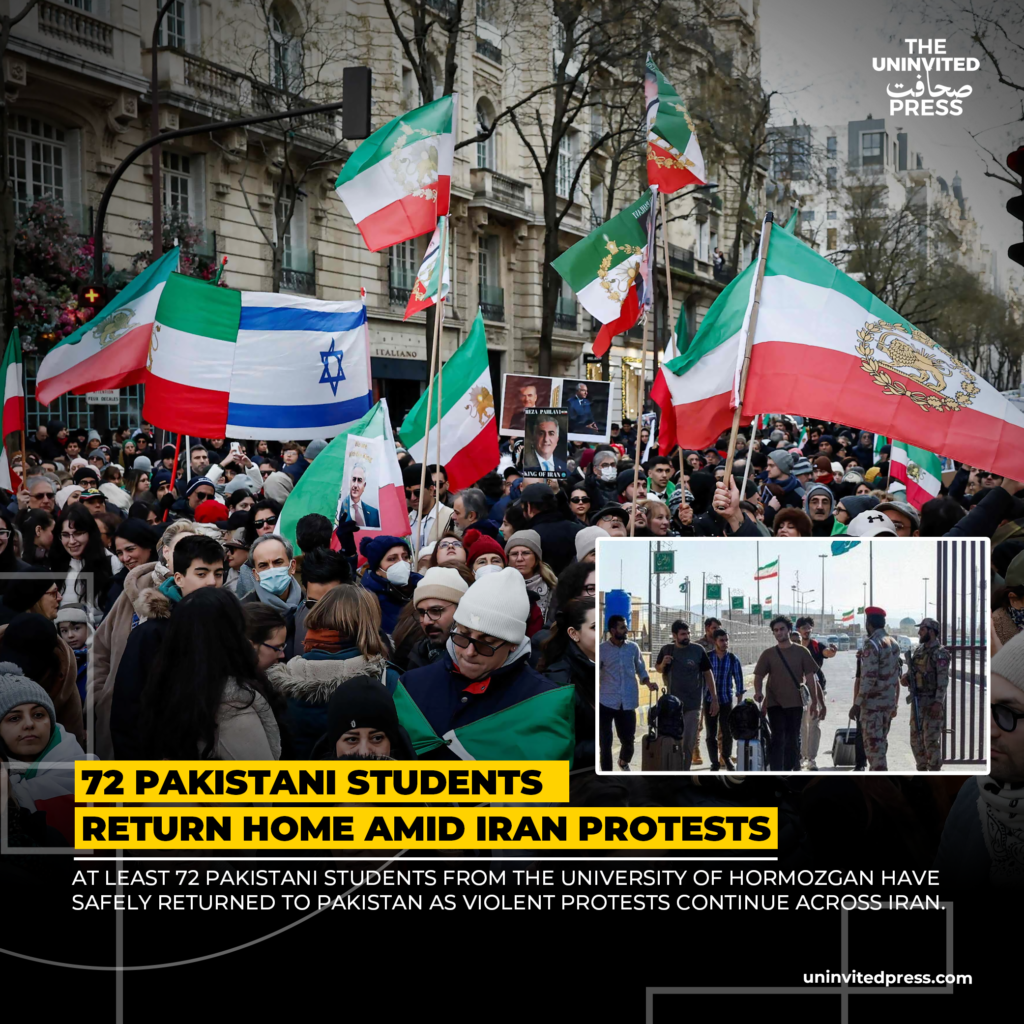
Evacuation from University of Hormozgan highlights foreign student risks as economic unrest spirals into anti-regime fury across all 31 Iranian provinces.
Pakistani Students Escape Iran's Unrest: 72 Safely Return Home from Hormozgan University Amid Violent Nationwide Protests:
At least 72 Pakistani students from Iran’s University of Hormozgan have safely crossed back into Pakistan, escaping violent protests that have gripped the country since late December 2025. Confirmed by Pakistan’s ambassador in Tehran, the group received embassy assistance amid a deepening crisis marked by soaring inflation, currency collapse, and clashes that have killed dozens. This repatriation underscores the human toll on international communities in Iran, where demonstrations have evolved from economic grievances into calls for regime change, prompting global concern over stability and safety.
Rapid Evacuation and the Spark of Nationwide Unrest:
On January 11, 2026, 72 Pakistani students enrolled at the University of Hormozgan in Bandar Abbas crossed into Pakistan at the Taftan border, marking the first major group repatriation amid Iran’s nationwide protests. Pakistan’s Ambassador to Iran, Muhammad Mudassir Tipu, confirmed the safe return in statements to media outlets, noting the embassy’s role in providing assistance and liaising with Iranian border officials. The students, primarily pursuing higher education in fields like medicine and engineering, had been advised to complete university clearances before departure.
The evacuation follows a travel advisory from Pakistan’s Ministry of Foreign Affairs, urging nationals in Iran to exercise caution, avoid protest areas, and limit non-essential travel. Ambassador Tipu emphasized that the embassy remains in contact with Iranian authorities to facilitate further returns, including from Zanjan University in northwestern Iran. No injuries or detentions among the Pakistani group were reported.
This development comes as protests, which ignited on December 28, 2025, in Tehran’s Grand Bazaar over skyrocketing food prices and rial devaluation, have intensified. By early January 2026, demonstrations spread to all 31 provinces, with clashes in over 180 cities. At the University of Hormozgan itself, students rallied on January 5, 2026, chanting anti-regime slogans like “This year is the year of bloody revolt, Seyed Ali (Khamenei) will be overthrown.” Such campus actions, part of broader university involvement across Iran, likely heightened safety concerns for foreign students.
Iranian security forces have responded with force, including tear gas, live ammunition, and arrests. Human rights groups report at least 51 deaths, including minors, and over 1,000 detentions since the protests began. A nationwide internet shutdown imposed on January 8, 2026, has reduced connectivity to about 1 percent of normal levels, complicating communication and reporting.
Pakistan has around 200-300 students in Iran, many in medical programs, drawn by affordable tuition. Similar concerns have affected other foreign nationals; Indian families reported anxiety over their students’ safety, with classes postponed at several universities.
Lessons for Foreign Students and Regional Neighbors:
Iran’s 2025-2026 protests stem from a severe economic downturn exacerbated by international sanctions, currency collapse, and mismanagement. The rial hit a record low of over 1.4 million to the US dollar in December 2025, driving annual inflation to 40 percent and food prices up 72 percent year-on-year. This follows a 12-day conflict with Israel in June 2025, which further strained resources.
What began as bazaar strikes in Tehran quickly escalated into anti-government chants like “Death to the dictator” and demands prioritizing domestic needs over foreign proxies in Gaza and Lebanon. By January 2026, protests had reached university campuses, including Hormozgan, where students joined nationwide calls for change.
This wave echoes past uprisings: the 2017-2018 economic protests, 2019 fuel price hikes (1,500 killed), and 2022’s Woman, Life, Freedom movement after Mahsa Amini’s death. However, the current scale-covering all provinces-and timing amid regional tensions make it particularly volatile.
For Pakistan, with strong ties to Iran via shared borders and trade, the unrest affects bilateral relations. Thousands of Pakistanis study or work in Iran, and previous evacuations occurred during COVID-19 and the 2025 Israel-Iran skirmish. The returns highlight vulnerabilities for diaspora communities in unstable regions.
The return of 72 students from Hormozgan University on January 11, 2026, is confirmed by Ambassador Tipu’s statements across multiple Pakistani media outlets. Protest start date (December 28, 2025) and economic triggers are corroborated by international reports. Death tolls vary (27-51), with human rights groups providing verified counts, though exact figures amid blackouts remain unclear. University-specific rallies are documented in independent media, but no direct link to the evacuation beyond general unrest is alleged.